
Author

admin

Browsing

The U.S. National Highway Traffic Safety Administration (NHTSA) has opened a new investigation into 2.88 million Tesla vehicles running ‘Full Self-Driving’ (FSD). Officials say the system may be breaking traffic laws, and worse, causing accidents. According to Reuters, 58 reports describe Teslas blowing through red lights, drifting into the wrong lanes and even crashing at intersections. Fourteen of those cases involved actual crashes, and 23 caused injuries.

Get my best tech tips, urgent security alerts and exclusive deals delivered straight to your inbox. Plus, you’ll get instant access to my Ultimate Scam Survival Guide — free when you join my CYBERGUY.COM newsletter.

Red lights, train tracks and trouble ahead

In one striking pattern, six Tesla vehicles reportedly ran red lights before colliding with other cars. One driver in Houston complained that FSD ‘is not recognizing traffic signals,’ saying the car stopped at green lights but ran through reds. The driver even said Tesla saw the issue firsthand during a test drive, but refused to fix it. The agency is also reviewing new reports that some Teslas using FSD failed to handle railroad crossings safely, with one case involving a near-collision with an oncoming train.

Mounting legal and safety scrutiny

This is far from Tesla’s first brush with regulators. The company is already facing several investigations tied to both its Autopilot and FSD systems. In one high-profile case, a California jury ordered Tesla to pay $329 million after an Autopilot-related crash killed a woman. Another investigation is looking into Tesla’s limited Robotaxi service in Austin, Texas, where passengers reported erratic driving and speeding — even with human safety drivers onboard. Meanwhile, Tesla is still fighting a false advertising lawsuit from California’s DMV. Regulators say calling the software ‘Full Self-Driving’ is misleading since it requires constant driver supervision. Tesla recently changed the name to ‘Full Self-Driving (Supervised)’ to reflect that reality.

Regulators say more crashes may come

Tesla’s latest FSD software update arrived just days before the investigation began. But the NHTSA says the system has already ‘induced vehicle behavior that violated traffic safety laws.’ This investigation, now in its early stages, could lead to a recall if the agency finds Tesla’s self-driving software poses a safety risk.

What this means for you

If you drive a Tesla with FSD enabled, stay alert. The system isn’t fully autonomous, no matter what the name suggests. You should:

  • Keep your hands on the wheel and eyes on the road at all times.
  • Manually override the system when approaching intersections, crosswalks or railroad tracks.
  • Check for Tesla software updates regularly — they may include critical safety fixes.
  • Report any unsafe FSD behavior to NHTSA.

For everyone else, this investigation is a reminder that ‘self-driving’ still means supervised driving.

Think your devices and data are truly protected? Take this quick quiz to see where your digital habits stand. From passwords to Wi-Fi settings, you’ll get a personalized breakdown of what you’re doing right and what needs improvement. Take my Quiz here: Cyberguy.com.

Kurt’s key takeaways

Tesla’s dream of a fully autonomous future keeps hitting speed bumps. With safety regulators circling and lawsuits piling up, the company’s next moves will shape public trust in AI-driven transportation. Still, the push toward automation isn’t slowing down; it’s just under heavier watch.

How much control would you give an AI behind the wheel? Let us know by writing to us at Cyberguy.com.

Get my best tech tips, urgent security alerts and exclusive deals delivered straight to your inbox. Plus, you’ll get instant access to my Ultimate Scam Survival Guide — free when you join my CYBERGUY.COM newsletter

Copyright 2025 CyberGuy.com.  All rights reserved.
This post appeared first on FOX NEWS

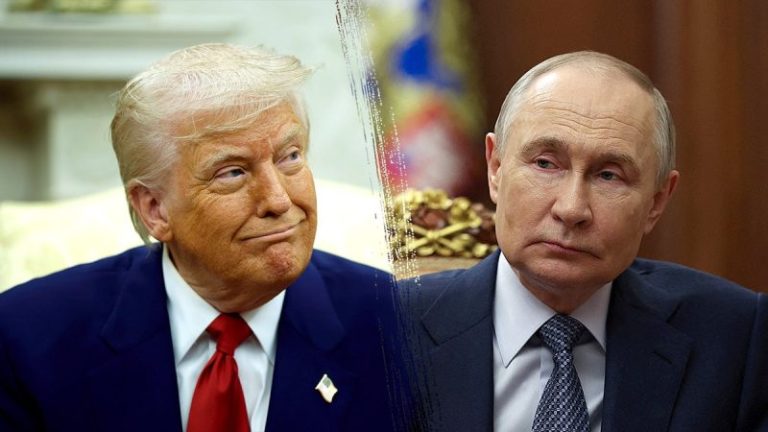
Tomahawks, Tomahawks, Tomahawks. That’s the word buzzing in the ears of Russian President Vladimir Putin, as President Donald Trump weighs providing America’s precision strike missile of choice to Ukraine.   

Since May, Trump has bombed the Houthis in Yemen, obliterated Iran’s nuclear facilities and hit narco-terrorist drug boats in the Caribbean.  Putin has to realize that Tomahawks could soon be in the skies over Russia.

What can Ukraine hit with the 1000-mile range Tomahawks? Start with the Shahed drone factory in Tatarstan, and at least 67 Russian airbases. Tomahawks in Ukraine’s hands rip open Russian energy infrastructure to precision attack with no warning.

If Ukraine launches Tomahawks, they’ll be flying as low as 100 feet, hugging the terrain, evading radar. TLAMs can each take separate routes at 500 mph then meet up over the Russian target for a coordinated strike.

Trump is baiting Putin. ‘Hopefully, they won’t need it,’ Trump said of the Tomahawks at Friday’s lunch with Ukrainian President Volodymyr Zelenskyy at the White House. Trump said he’d like to ‘get the war over without Tomahawks’ but then went on to describe the missiles as ‘very dangerous’ and ‘incredible.’

Here’s the backstory on the Tomahawks, and why Trump is keeping them on the table to pressure Putin.  

Built for the Russian target set

First tested in 1972, the Tomahawk Land Attack Cruise Missile or TLAM was actually developed by the U.S. Navy during the Cold War to attack targets on land in the Soviet Union. In case you haven’t seen one up close, the Tomahawk is 20 feet long but just 21 inches wide.  It looks like a white pole with wiglets, but inside is a powerful turbo-fan engine and sophisticated guidance. Today’s Block IV Tomahawks can be retargeted in flight, and loiter over a target for hours, taking electro-optical scans and waiting for other missiles to arrive before detonating. They carry a unitary warhead for harder targets, or dispense cluster munitions over a wide pattern to hit airfields, for example. (Yes, there was once a nuclear TLAM variant with a 200 Kiloton warhead, but they were placed in storage in 1991 and eliminated in 2010.) 

Air Defense Nightmare 

The presence of Tomahawks in Ukraine will set up an almost insoluble air defense problem for Putin. No way can Russia place air defenses at every remote gas pipeline point or cover all the airbases where planes park out in the open.  

Fast delivery

TLAMs could be in Ukraine in 24 hours. The Army Mid-Range Capability missile system is a tractor-trailer missile launcher that can be driven onto a U.S. Air Force C-17 cargo plane. The Army deployed TLAM launcher 8,000 miles away to North Luzon in the Philippines in under 15 hours last year for a wargame. Trump has plenty of time.  

Deterring Putin. The brutal escalation of mass attacks by Russia led Ukraine to ramp up its drone strikes on Russian energy starting in August. According to a Reuters study, Ukraine’s drones have hit 18 pumping stations, plus 32 strikes on refineries. Ukraine’s Liutyi drones have a range of about 600 miles and carry warheads of about 50 pounds. Mixing in TLAMs would intensify pressure on Russian energy, Putin’s single biggest source of government revenue. Zelenskyy has called Ukraine’s drone attacks on Russian energy ‘the sanctions that work the fastest.’

Don’t worry about depleting TLAM inventory

The U.S. still has about 4,000 Tomahawks in its inventory, and new missiles like the U.S. Navy’s SM-6 are already in action. The U.S. Army deployed its new Dark Eagle long-range hypersonic weapons to Australia in August and will have its first full battery by December. By the way, last year Japan bought 400 Tomahawks for targeting China and North Korea.  

Combat Record

Tomahawks have piled up an incredible combat record since Jan. 17, 1991, when 122 TLAMs hit Iraqi oil and command and control targets at the start of Operation Desert Storm. Eight-hundred TLAMs were fired in Operation Iraqi Freedom in 2003. Over the years, Tomahawks have hit targets in Iraq, Serbia, Afghanistan, Libya, Syria, Yemen and, of course, Iran. On June 22, TLAMs hit above-ground ‘key surface infrastructure targets’ in the nuclear complex at Isfhahan, according to Chairman of the Joint Chiefs of Staff Gen. Dan Caine. The TLAM strikes left the sprawling site visibly damaged and blackened. ‘We gave it a capper with 30 TLAMS,’ as Trump said Friday. 

Putin may yell and scream about Tomahawks for Ukraine. Pay no attention. He’s grumbled about each weapon system, from F-16s to Patriots. And no, Putin does not dare escalate with nuclear weapons in Ukraine, because the wind patterns blow radiation clouds back into Russia.  

As Trump said Friday: ‘Yeah, its escalation. But we’re going to talk about it anyway.’  

This post appeared first on FOX NEWS

Don Durrett of GoldStockData.com outlines current gold and silver market dynamics, explaining why the metals continue to rise and how high they could go in the future.

He also shares his current gold and silver stock strategy.

Securities Disclosure: I, Charlotte McLeod, hold no direct investment interest in any company mentioned in this article.

This post appeared first on investingnews.com

In theory, this should be a moment of vindication for the Free Palestine movement. A ceasefire holds. Israel has pulled back troops. International headlines finally reflect what activists have shouted for months: that Gaza’s suffering matters. 

And yet, the plazas are still. The hashtags have gone dormant. The chants that once shook campuses have faded into uneasy silence.

Why? 

Many activists can’t celebrate because celebration feels like surrender.

Behavioral science has some explanations. First, there’s cognitive dissonance at play. When the suffering that fueled your cause suddenly ends, any gesture toward happiness feels obscene. They still see bombed hospitals and displaced families. To cheer would feel like betrayal – not of Israel, but of grief itself.

Second, social identity theory tells us people bond most tightly when facing a common enemy. But when the enemy momentarily recedes, cohesion falters. You can see it in activist networks now debating purity tests and political hierarchies: who’s really anti-colonial, who’s performative. The silence isn’t apathy; it’s fragmentation.

And then there’s the matter of trust. The Free Palestine movement’s emotional currency is their perceived moral authenticity. That’s why President Donald Trump, despite questioning aid to Israel, gains no credit here. Even if he were to deliver every demand the Free Palestine movement has ever made – an end to occupation, full recognition, humanitarian aid – he would get no credit. 

To them, he is not a messenger; he is a metaphor. His name evokes everything they stand against: nationalism, hierarchy, cruelty disguised as strength. Their ears are hardened not by indifference, but by identity. When a message comes from a symbol of what you despise, its meaning dies on arrival. That’s not hypocrisy – it’s human nature. We hear only what affirms who we are. What remains is a vacuum of feeling – neither victory nor defeat, just unresolved tension.

For many, that tension is unbearable, so silence becomes self-protection. But silence has a cost.

A movement that cannot speak when conditions improve loses moral clarity. If the world only hears you when you’re angry, it stops listening when you’re right. The tragedy of the Free Palestine silence is not hypocrisy; it’s heartbreak. It reveals how thoroughly moral identity has replaced moral imagination.

To move forward, supporters must learn to celebrate small mercies without mistaking them for betrayal – to see progress not as perfection, but as proof that pain is finally being heard. Until then, the quiet will continue. Not because there’s nothing to say, but because joy, after so much rage, feels foreign on the tongue.

This post appeared first on FOX NEWS

Senate Majority Leader John Thune, R-S.D., believed that Senate Democrats were ‘in a bad place’ after they tanked Republicans’ push to consider the annual defense spending bill on Friday.

Thune argued during an exclusive interview with Fox News Digital that Democrats’ decision to vote against the procedural exercise seemed like ‘an extreme measure, and I think it’s coming from a very dysfunctional place right now.’

‘I think there’s a ton of dysfunction in the Democrat caucus, and I think this [‘No Kings’] rally this weekend is triggering a lot of this,’ he said.

Thune’s move to put the bill on the floor was a multipronged effort. One of the elements was to apply pressure on Senate Minority Leader Chuck Schumer, D-N.Y., and his caucus to join Republicans to jump start the government funding process as the shutdown continues to drag on.

Another was to test Democrats’ desire to fund the government on a bipartisan basis — a demand they had made in the weeks leading up to the shutdown.

‘I think the leadership is applying pressure,’ Thune said. ‘They were all being called into Schumer’s office this morning to be browbeaten into voting ‘no’ on the defense appropriations bill, something that most of them, you know, like I said, that should be an 80-plus vote in the Senate.’

To his point, the bill easily glided through committee earlier this year on a 26 to 3 vote, and like a trio of spending bills passed in August, typically would have advanced in the upper chamber on a bipartisan basis.

The bill, which Senate Republicans hoped to use as a vehicle to add more spending bills, would have funded the Pentagon and paid military service members.

But Senate Democrats used a similar argument to block the bill that they’ve used over the last 16 days of the government shutdown in their pursuit of an extension to expiring Obamacare subsidies: they wanted a guarantee on which bills would have been added to the minibus package.

‘What are you — are you gonna go around and talk to people about a hypothetical situation,’ Thune countered. ‘I think, you know, once we’re on the bill, then it makes sense to go do that, have those conversations, which is what we did last time.’

The Senate could get another chance to vote on legislation next week that would pay both the troops and certain federal employees that have to work through the shutdown, but it won’t be the defense funding bill. Instead, it’s legislation from Sen. Ron Johnson, R-Wis., and several other Senate Republicans.

As for the torpedoed defense bill, which was the last vote for the week in the Senate, Thune argued that it was emblematic of Senate Democrats being ‘in a place where the far-left is the tail wagging the dog.’

‘And you would think that federal workers, who you know, federal employee unions, public employee unions, who Democrats [count] as generally part of their constituency, right now, they’re way more concerned about what Moveon.org and Indivisible, and some of those groups are saying about them, evidently, than what some of their constituents here are saying,’ he said.

‘Because there’s going to be people who are going to start missing paychecks, and this thing gets real pretty fast,’ he continued. 
 

This post appeared first on FOX NEWS

A video shared on X shows Erika Kirk at the Turning Point USA office surrounded by staff members, proudly showing them the Presidential Medal of Freedom awarded to her late husband, Charlie Kirk.

In the clip posted by Mikey McCoy, Charlie Kirk’s former chief of staff, Erika speaks movingly to the assembled team.

In the clip, she can be heard saying, ‘I wanted you guys all to see the Medal of Freedom and be able to look at it and the back of it.’

‘You guys are all part of the legacy. Thank you,’ she says warmly.

The Presidential Medal of Freedom is the highest civilian award in the U.S. It was awarded posthumously to Charlie Kirk by President Donald Trump on Oct. 14, 2025, a date that would have been Kirk’s 32nd birthday. 

Erika accepted the award on her husband’s behalf at a ceremony in the Rose Garden at the White House. She also delivered remarks highlighting her husband’s beliefs and sacrifice.

Charlie Kirk was assassinated on September 10, 2025, while speaking at a Turning Point USA event at Utah Valley State University in Orem, Utah.

Following her husband’s death, Erika was unanimously appointed CEO and chair of Turning Point USA’s board.

This post appeared first on FOX NEWS

A teenage street musician has been jailed and charged with leading a public gathering in which she led a crowd in singing an anti-Putin rock song in St. Petersburg, a rare act of defiance, according to local reports.

Diana Loginova faces a single administrative charge for organizing an unauthorized public gathering and has been jailed for 13 days, The Moscow Times reported.

After serving her sentence, Loginova will face an additional administrative offense of ‘discrediting’ the Russian military, Reuters reported.

Loginova, who performs under the name Naoko with the band Stoptime, was arrested Tuesday after being filmed earlier leading a crowd in singing the lyrics to exiled rapper Noize MC’s hit song ‘Swan Lake Cooperative.’

Noize MC, the musician who wrote ‘Swan Lake Cooperative,’ is openly critical of the Kremlin and left Russia for Lithuania after the start of the war in Ukraine.

For its part, Moscow has added him to its list of ‘foreign agents,’ which includes hundreds of individuals and entities accused of conducting subversive activities with support from abroad, Reuters reported.

The song doesn’t reference Russian President Vladimir Putin or mention the war in Ukraine. It is a reference to Tchaikovsky’s Swan Lake, which was played on television after the deaths of Soviet leaders and during the 1991 coup attempt against President Mikhail Gorbachev.

In May, a St. Petersburg court banned the song on grounds it ‘may contain signs of justification and excuse for hostile, hateful attitudes towards people, as well as statements promoting violent changes to the foundations of the constitutional order.’

This post appeared first on FOX NEWS