Author

admin

Browsing

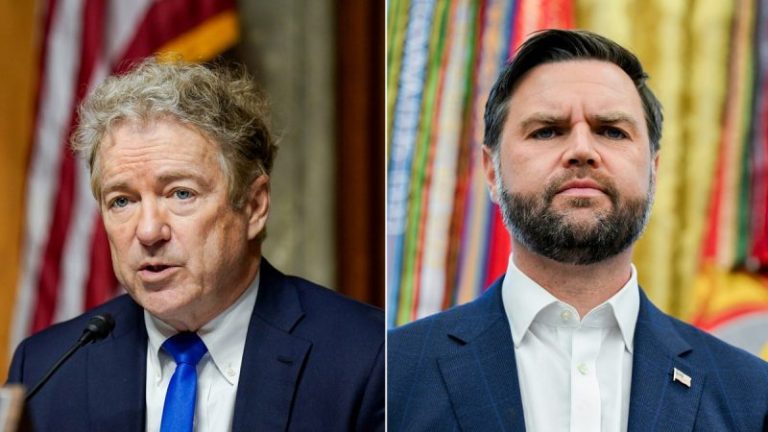
Republican Sen. Rand Paul of Kentucky strongly objected after Vice President JD Vance asserted in a Saturday post on X that ‘Killing cartel members who poison our fellow citizens is the highest and best use of our military.’

‘JD ‘I don’t give a s[—]’ Vance says killing people he accuses of a crime is the ‘highest and best use of the military.’ Did he ever read To Kill a Mockingbird? Did he ever wonder what might happen if the accused were immediately executed without trial or representation??’ Senator Paul wrote. ‘What a despicable and thoughtless sentiment it is to glorify killing someone without a trial.’ 

In a Truth Social post last week, President Donald Trump shared video footage of what he said was ‘a kinetic strike against positively identified Tren de Aragua Narcoterrorists’ who he said ‘were at sea in International waters transporting illegal narcotics, heading to the United States.’

Someone responded to Vance by writing that, ‘Killing the citizens of another nation who are civilians without any due process is called a war crime.’ 

But the vice president swiftly fired back.

‘I don’t give a s[—] what you call it,’ Vance declared.

GOP Sen. Bernie Moreno of Ohio pushed back against Paul.

‘What’s really despicable is defending foreign terrorist drug traffickers who are *directly* responsible for the deaths of hundreds of thousands of Americans in Kentucky and Ohio. JD understands that our first responsibility is to protect the life and liberty of American citizens,’ Moreno wrote on on X.

This post appeared first on FOX NEWS

President Donald Trump issued his ‘last warning’ to Hamas to accept his deal and release the remaining hostages or face the consequences.

‘Everyone wants the hostages HOME. Everyone wants this War to end,’ Trump wrote on Truth Social. ‘The Israelis have accepted my Terms. It is time for Hamas to accept as well.’

‘I have warned Hamas about the consequences of not accepting,’ he continued. ‘This is my last warning, there will not be another one! Thank you for your attention to this matter.’

Last month, Trump said the remaining hostages would only be returned when Hamas is ‘confronted and destroyed.’ At the time, Hamas was citing alleged progress in ceasefire talks.

In July, the U.S. and Israel pulled negotiators from Qatar after Trump’s envoy Steve Witkoff said Hamas showed a ‘lack of desire to reach a ceasefire’ and was likely not negotiating in good faith.

On Aug. 26, Witkoff told Fox News’ Bret Baier on ‘Special Report’ that he and Trump wanted the hostages home that week. 

‘There’s been a deal on the table for the last six or seven weeks that would have released 10 of the hostages out of the 20 who we think are alive,’ he said, noting that he believes Hamas is ‘100%’ to blame for the hold-up.

Witkoff did not elaborate on what is delaying the hostages’ return, nearly two years after they were taken in the Oct. 7, 2023, attack on Israel.

Fifty hostages continue to be held by Hamas, only 20 of whom are assessed to still be alive. 

Trump previously predicted in late August that there would be a ‘conclusive’ end to the war in Gaza within the next ‘two to three weeks,’ though he did not say how this would be accomplished. 

Israeli Prime Minister Benjamin Netanyahu has insisted that only a comprehensive ceasefire — one that ensures the return of all hostages and ends the war on Israel’s terms — will be considered.

Israel is preparing a new offensive in Gaza targeting Hamas, the Israel Defense Forces (IDF) said, as it expanded ground operations under Operation Gideon’s Chariots II.

IDF spokesperson Col. Avichay Adraee warned Palestinians in parts of Gaza City to leave ahead of an expected escalation. The warning included a map marking the area and highlighting one building the IDF planned to strike, citing ‘the presence of Hamas terrorist infrastructure inside or nearby.’

Fox News Digital’s Rachel Wolf and Danielle Wallace contributed to this report.

This post appeared first on FOX NEWS

Shares of Kenvue fell more than 10% on Friday after a report that Health Secretary Robert F. Kennedy Jr. will likely link autism to the use of the company’s pain medication Tylenol in pregnant women.

HHS will release the report that could draw that link this month, The Wall Street Journal reported on Friday.

That report will also suggest a medicine derived from folate — a water-soluble vitamin — can be used to treat symptoms of the developmental disorder in some people, according to the Journal.

In a statement, an HHS spokesperson said, “We are using gold-standard science to get to the bottom of America’s unprecedented rise in autism rates.”

“Until we release the final report, any claims about its contents are nothing more than speculation,” they added.

Tylenol could be the latest widely used and accepted treatment that Kennedy has undermined at the helm of HHS, which oversees federal health agencies that regulate drugs and other therapies. Kennedy has also taken steps to change vaccine policy in the U.S., and has amplified false claims about safe and effective shots that use mRNA technology.

Kennedy has made the disorder a key focus of HHS, pledging in April that the agency will “know what has caused the autism epidemic” by September and eliminate exposures. He also said that month that the agency has launched a “massive testing and research effort” involving hundreds of scientists worldwide that will determine the cause.

In a statement, Kenvue said it has “continuously evaluated the science and [continues] to believe there is no causal link” between the use of acetaminophen, the generic name for Tylenol, during pregnancy and autism.

The company added that the Food and Drug Administration and leading medical organizations “agree on the safety” of the drug, its use during pregnancy and the information provided on the Tylenol label.

The FDA website says the agency has not found “clear evidence” that appropriate use of acetaminophen during pregnancy causes “adverse pregnancy, birth, neurobehavioral, or developmental outcomes.” But the FDA said it advises pregnant women to speak with their health-care providers before using over-the-counter drugs.

The American College of Obstetricians and Gynecologists maintains that acetaminophen is safe during pregnancy when taken as directed and after consulting a health-care provider.

Some previous studies have suggested the drug poses risks to fetal development, and some parents have brought lawsuits claiming that they gave birth to children with autism after using it.

But a federal judge in Manhattan ruled in 2023 that some of those lawsuits lacked scientific evidence and later ended the litigation in 2024. Some research has also found no association between acetaminophen use and autism.

In a note on Friday, BNP Paribas analyst Navann Ty said the firm believes the “hurdle to proving causation [between the drug and autism] is high, particularly given that the litigation previously concluded in Kenvue’s favor.”

This post appeared first on NBC NEWS

In 1947, the United States War Department became the Department of Defense, as our nation was entering what would be four decades of Cold War with the Soviet Union, and taking its place as a global superpower.

On Friday, President Donald Trump signed an executive order bringing the original name back to the department created by George Washington in 1789. It brings with it a change that would have earned the hearty approval of our first president.

In the 78 years in which the United States has had a ‘Department of Defense,’ we never declared war a single time, but that didn’t stop thousands upon thousands of American soldiers from sacrificing their lives in Korea, Vietnam, and later, the Middle East.

During this time, the United States widely became known as the world’s policeman. Without actually declaring wars, we played a violent game of Twister across the globe, our Defense Department dipping its toes into conflicts across continents.

Too often, the role of our soldiers was not to kill the enemy, but to maintain order, and just as a police force is restrained from using total force against criminals, our military was too often simply not allowed to bring its full force to bear.

There is a fundamental and important difference between war and policing. Wars can be won, policing cannot. Policing is a never-ending struggle, and that is exactly what America’s military interventions felt like under the reign of the Department of Defense.

‘I want offense too,’ Trump has quipped about the name change. But what he really means is that he wants wars we can win, not endless nation-building boondoggles meant to maintain balance in a world full of conflagrations from Ukraine to Gaza.

Secretary of War, as he is now known, Pete Hegseth has made clear his priority is lethality, not just being a stick for diplomats to use. He wants an army, not a police force.

It was Carl von Clausewitz, the early 19th Century father of modern war, who defined military victory as compelling the enemy to do your will by destroying their desire and means to resist. That is something our military has not done in some time.

But that may be changing.

It was no accident that this cabinet-level name change occurred in the wake of the Trump administration blowing an alleged speedboat full of drugs and drug smugglers from Venezuela to smithereens.

Under the old rubric, that boat might have been stopped, its crew given Miranda rights. In other words, it would have been policed.

But does this mere police work actually work, per Clausewitz, to destroy the Venezuelan gangs’ and government’s will and means to flood our country with deadly drugs? It does not, it just maintains the status quo from the border to the graveyard.

But now, the next guys in line to jump aboard a drug-laden boat headed for Florida aren’t looking at possible jail time, in facilities all but run by their gangs. No, they are looking at a quick exit to eternity under the sea.

Likewise, Trump’s direct attack on Iran’s nuclear facilities sent a new message to the Ayatollah that if he goes too far, we will destroy him and his nation.

The Department of Defense, may it rest in peace, was a noble idea. It was launched in the spirit of ending war, not winning wars. It was meant to prop up democracies around the planet until all nations found the right and just path of freedom and capitalism.

It may have been worth a shot, but it just didn’t work, and that is why the Trump administration is returning to the original premise, that armies don’t exist to protect and serve the world, they exist to kill our enemies.

Not long after President Washington established the War Department, he would give a farewell address in which warned against engaging in foreign entanglements, and yet under the name Department of Defense, our military seemed to do little else.

CLICK HERE TO DOWNLOAD THE FOX NEWS APP

President Trump is sending the message that the United States will no longer be defending itself through proportional half measures and never-ending peace missions. No, from here on out, the Department of War does not exist to contain or constrain our enemies, it exists, as it should, to destroy them.

This post appeared first on FOX NEWS

Senate Republicans are getting closer to changing the upper chamber’s rules to allow for a slew of President Donald Trump’s lower-level nominees to be confirmed, and they’re closing in on a revived proposal from Democrats to do it.

The hope among Republicans is that using a tool that Senate Democrats once considered would allow them to avoid turning to the ‘nuclear option,’ meaning a rule change with a simple majority vote.

‘The Democrats should support it, because it was their original proposal that we’re continuing on,’ Senate Majority Whip John Barrasso, R-Wyo., told Fox News Digital. ‘And I wouldn’t be surprised if they won’t. This historic obstruction by the Democrats is all playing to their far-left liberal base, who hate President Trump.’

Republicans met throughout the week behind closed doors to discuss their options and have begun to coalesce around a proposal that would allow them to take one vote to confirm a group of nominees, also known as ‘en bloc,’ for sub-Cabinet level positions.

So far, the only nominee to make it through the Senate with ease was Secretary of State Marco Rubio in January. Since then, various positions throughout the bureaucracy have stacked up and have not received a voice vote or gone through unanimous consent — two commonly-used fast-track procedures for lower-level positions in the administration.

Senate Majority Leader John Thune, R-S.D., said that before Senate Minority Leader Chuck Schumer, D-N.Y., was in charge of the Democrats, ‘this was always done in a way where, if you had some of the lower-level nominees in the administration, those were all voted en bloc, they were packaged, they were grouped, they were stacked.’

‘This is the first president in history who, at this point in his presidency, hasn’t had at least one nominee clear by unanimous consent or voice vote,’ he said. ‘It is unprecedented what they’re doing. It’s got to be stopped.’

And the number of nominees on the Senate’s calendar continues to grow, reaching 149 picks awaiting confirmation this week. The goal would be to make that rule change before lawmakers leave town for a week starting Sept. 22.

The idea comes from legislation proposed in 2023 by Sens. Amy Klobuchar, D-Minn., Angus King, I-Maine, and former Sen. Ben Cardin, D-Md. Republicans are eyeing their own spin on it, such as possibly not limiting the number of en bloc nominees in a group or excluding judicial nominees.

Republicans would prefer to avoid going nuclear — the last time the nuclear option was used was in 2019, when then-Senate Majority Leader Mitch McConnell, R-Ky., lowered debate time on nominees to two hours — but they are willing to do so, given that Democrats haven’t budged on their blockade.

They may only be making a public display of resistance, however.

‘Democrats privately support what Republicans are talking about,’ a senior GOP aide familiar with negotiations told Fox News Digital. ‘They’re just too afraid to admit it.’

Sen. James Lankford, who worked with Thune and Barrasso over the recess to build a consensus on a rule change proposal, told Fox News Digital that his Democratic colleagues acknowledged that they’ve ‘created a precedent that is not sustainable.’

‘But then they’ll say, ‘but my progressive base is screaming at me to fight however I want to. I know I’m damaging the Senate, but I got to show that I’m fighting,’’ the Oklahoma Republican said.

‘We feel stuck, I mean, literally,’ Lankford continued. ‘Some of my colleagues have said, ‘We’re not the ones going nuclear. They’re the ones that are going nuclear.’’

Klobuchar told Fox News Digital that she appreciated the prior work she’s done with Lankford on ‘ways to make the Senate better’ but wasn’t ready to get behind the GOP’s version of her legislation.

‘When I proposed that, it was meant to pass as legislation, which means you would have needed bipartisan votes, and the reason that’s not happening right now is because the president keeps flaunting the law,’ she said.

Not every Senate Democrat is on board with the wholesale blockade, however.

Sen. John Fetterman, D-Pa., told Fox News Digital that lawmakers should all behave in a way in which administrations, either Republican or Democratic, get ‘those basic kinds of considerations’ for nominees.

‘That’s not the resistance,’ he said. ‘I just think that’s kind of unhelpful to just move forward. I mean, you can oppose people like the big ones, whether it’s [Health and Human Services Secretary Robert F.] Kennedy or others.’

Fox News Digital reached out to Schumer’s office for comment but did not immediately hear back. 

This post appeared first on FOX NEWS

The deadly U.S. strike in the Caribbean this week is being cast by experts as the latest move in a broader campaign to dismantle Iran and Hezbollah’s growing narco empire in Venezuela.

U.S. officials say Tren de Aragua works closely with the Cartel of the Suns — a network of Venezuelan military elites long accused of moving cocaine in collaboration with Hezbollah.

White House spokesperson Anna Kelly told Fox News Digital that ‘President Trump has taken numerous actions to curtail Iran’s terrorist proxies like Hezbollah, such as sanctioning senior officials and financial facilitators. The President has proven that he will hold any terrorist group accountable that threatens the national security of our country by smuggling narcotics intended to kill Americans.’

Brian Townsend, a retired DEA special agent, told Fox News Digital, ‘This was a decisive blow against narco-terrorists,’ and said Hezbollah’s role is rarely visible but essential, ‘They don’t get their hands dirty. Instead, they launder and provide networks to help cartels send money through the Middle East. Simply, they take a cut from the drug trade, which then funds their operations in the Middle East.’

Townsend added that Hezbollah has become ‘a main finance and money launderer for narco-terrorism groups like Tren de Aragua,’ ensuring that when cocaine moves, Hezbollah-linked facilitators are often processing at least part of the proceeds.

Dani Citrinowicz, a senior fellow at Israel’s Institute for National Security Studies, said Hezbollah’s reach depends heavily on the region’s Lebanese diaspora. ‘Most of the Shia diaspora, at least in Central and South America, is Lebanese,’ he told Fox News Digital. ‘Hezbollah is the connector between the diaspora and Iran.’

Citrinowicz said the group uses family ties, language and community institutions to cement its influence across Latin America. ‘They appoint imams, fund religious centers and control educational programs … through these networks, Hezbollah can interact with local cartels, sell drugs, and channel the profits back to Lebanon through elaborate schemes.’

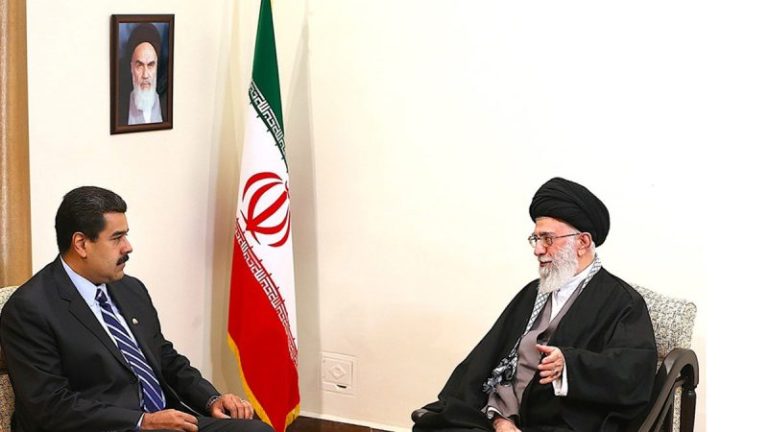
He said this role as a connector makes Hezbollah indispensable to Iran’s strategy in the Western Hemisphere. ‘The connection starts and ends with enmity towards the West in general, specifically to the United States,’ he said. ‘As long as Maduro is there, the Iranians will be there. But if Maduro goes, Iran will lose the most important stronghold of its activity in Latin America.’

Townsend stated the partnership works for both sides. ‘Iran’s partnership with Maduro enables Hezbollah to operate in Venezuela. Iran gets to safely operate, through Hezbollah, in the West without prosecution, and Maduro and his officials get paid well. Ultimately, Iran uses and exploits Maduro. Maduro doesn’t care — he and his friends benefit financially.’

Both experts pointed to state complicity as the key enabler. ‘Under Maduro and Chávez, Venezuela has become a major transshipment hub for Colombian cocaine,’ Townsend said. ‘There have been several indictments in the U.S. and Treasury OFAC designations that tie senior government officials directly to the use of state infrastructure — ports, air bases, even military convoys — to move massive shipments of cocaine. Cartel of the Suns, high-ranking military officers, run and protects these shipments. Who launders all of this drug money? Hezbollah.’

Citrinowicz emphasized Iran’s investment in Venezuelan power structures. ‘The enhancement is illustrated by several aspects: first and foremost, the military cooperation, especially Iranian factories building UAVs for the Venezuelan army, and constant Quds Force flights from Iran through Africa toward Venezuela,’ he said. ‘Iran is also teaching Venezuela how to bypass sanctions and has invested billions into the economy.’

Experts say Washington’s best leverage lies in choking the finances. ‘We need to aggressively target and choke these financial networks,’ Townsend said. ‘The priority is to attack the financial and logistical networks, indict everyone we can and pressure Maduro. If we can cut off the financial arteries, the cocaine won’t be as profitable.’

Citrinowicz agreed that the strike fits into a broader effort. ‘By weakening Maduro, the U.S. weakens the Iranian presence in Latin America and weakens Iran’s ability to threaten U.S. soil,’ he said. ‘The best way to weaken Venezuela is also to aim against the Iranian presence over there.’

For Washington, experts say Hezbollah’s narcotics empire in Venezuela is no longer just a regional problem. It is increasingly being treated as a direct threat to America’s security at home.


This post appeared first on FOX NEWS

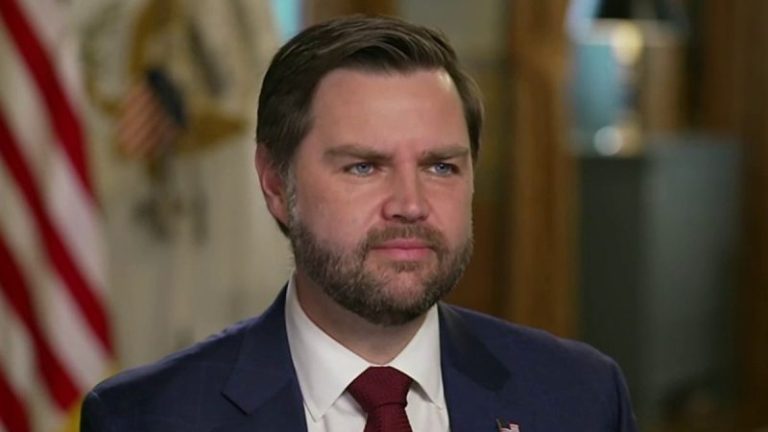
Vice President JD Vance stopped short of confirming a 2028 White House run during an appearance on My View with Lara Trump Saturday night, but he acknowledged the possibility—noting if he does his job well, ‘the politics will figure itself out.’

Vance, whose resilience amid an upbringing marked with family turmoil and economic hardship won over the nation, said he ‘doesn’t like thinking about’ a potential presidential bid and insisted his attention remains on his current role.

‘If we do a good job in 2025 and 2026, then we can talk about the politics in 2027,’ Vance said. ‘I really think the American people are so fed up with folks who are already running for the next job, seven months into the current one.’

The second-in-command added if he ends up running, he knows he will have to work for it.

‘There are a lot of great people,’ Vance said. ‘If I do end up running, it’s not going to be given to me—either on the Republican side or on the national side. I’m just going to keep on working hard. … [This] may be the most important job I ever had, outside of being a father to those three beautiful kids. So I’m going to try to do my best job, and I think if I do that, the politics will figure itself out.’

When asked specifically about potential 2028 Democratic candidates, he noted most of them ‘obviously have very bad records.’

Vance mainly focused on discussing his own ticket, praising President Donald Trump’s relentless work ethic and trusting leadership style and explaining the president ‘doesn’t have an off switch.’

‘Sometimes, the president will call you at 12:30 or 2 a.m., and then call you at 6 a.m. about a totally different topic,’ Vance said. ‘It’s like, ‘Mr. president, did you go to sleep last night.’ … What’s made this so much fun is the president, all the time, just saying, ‘JD you go and do this,’ or ‘JD you go and talk to these leaders about this particular issue.’ That ability to delegate and trust his people has been really amazing.’

This post appeared first on FOX NEWS

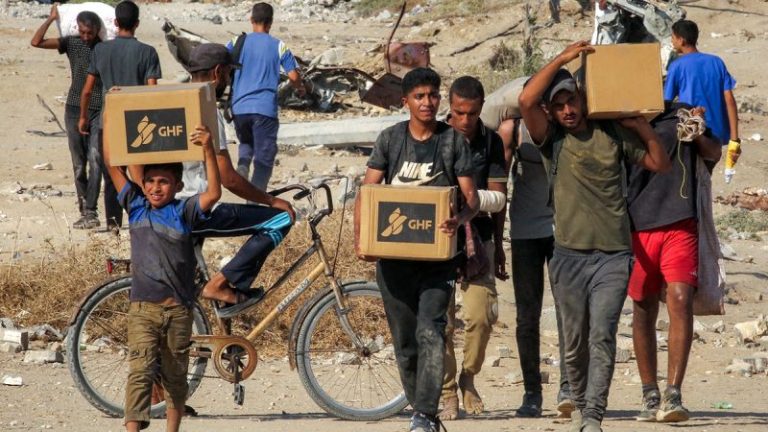
Following unrelenting criticism from the United Nations, the U.S.-backed Gaza Humanitarian Foundation (GHF) is once again being targeted by NGOs, even as it delivered its 155 millionth meal to Gazans on Saturday.

Doctors Without Borders, known by its French acronym MSF has launched ads criticizing GHFMeta’s Ad Library shows that in August it ran several Facebook ads targeting the foundation. One ad read ‘This is not aid. This is orchestrated killing.’ Another said, ‘In MSF’s 54 years, rarely have we seen such levels of systemized violence.’

Both allegations are taken from an Aug. 6 article on MSF’s website in which General Director Raquel Ayora describes accounts received from patients reportedly injured around GHF sites. Ayora says aid seekers claimed to have witnessed ‘children shot in the chest while reaching for food. People crushed or suffocated in stampedes. Entire crowds gunned down at distribution points.’ 

GHF spokesperson Chapin Fay called MSF’s accusations, ‘false and disgraceful,’ saying that it is ‘amplifying a disinformation campaign orchestrated by the Hamas-linked Gaza Health Ministry. They know better. By repeating these lies, they’re not aiding civilians, they’re aiding Hamas.’

‘No civilians have ever been shot at any of our distribution sites,’ Fay told Fox News Digital.

Fay said that ‘Nearly every day, Nasser Hospital issues false reports to the media of civilians killed near our sites, based solely on testimony from others. Not a single MSF doctor has ever witnessed an incident near our sites. Any conflict between Israel and Hamas, sometimes several kilometers away, the Gaza Health Ministry falsely links to GHF.’

In response to questions about whether MSF employees have witnessed injuries or deaths at GHF sites firsthand, a spokesperson told Fox News Digital that, ‘MSF has documented the impacts of violence and chaos at GHF sites in Gaza, based on firsthand accounts of our personnel and patients at two clinical sites, as well as a body of medical data.’

MSF declined to respond to questions about how much money it has spent on ads targeting GHF, or whether it has advocated for medical care for Israeli hostages taken by Hamas. 

The MSF spokesperson added, ‘For the past 22 months, humanitarian organizations working in Gaza and the West Bank have consistently faced baseless and inaccuratesmear campaigns.’

Though there is growing outcry about purported violence near GHF sites, reporting from the United Nations indicates that there were twice as many deaths surrounding humanitarian aid convoys (576) as there were deaths around GHF sites (259) between July 21 and Aug. 18. 

A U.N. Office for the Coordination of Humanitarian Affairs update from August states there were 1,889 deaths near aid sites between May 27 and Aug. 18, 1,025 ‘near militarized distribution sites’ and 864 ‘along convoy supply routes.’ As of July 21, U.N. News reported there were 1,054 deaths at food distribution sites, with 766 near GHF sites, and 288 near U.N. and humanitarian aid convoys.

The U.N. Human Rights Office did not respond to a request for confirmation of these figures by press time. 

Amid tensions between GHF and humanitarian aid organizations, Fay said that GHF nonetheless provided support to MSF in early August after it requested help to ‘safeguard their medical aid from the elements.’ A GHF post on X from Aug. 7. showed what it said were pallets of MSF aid in GHF care. MSF did not respond to Fox News Digital’s request to confirm that they asked GHF for assistance with their supplies. 

When GHF staff were brought to Nasser Hospital after a Hamas attack in June that killed eight, they did not receive care from MSF staff, according to Fay.

A GHF employee’s written statement provided to Fox News Digital describes how wounded workers were taken to Nasser Hospital, where doctors refused to treat them. The witness said survivors were placed in a courtyard, where hospital staff incited others to beat them. One GHF employee was reportedly stabbed.

‘Three more GHF staff died due to their lack of treatment by Nasser Hospital. MSF doctors work there, yet claim they weren’t aware of the situation,’ Fay said.

In an Aug. 25 report following the Israeli bombing of Nasser Hospital, MSF said that it ‘has been operational in Nasser since before the conflict escalated in October 2023, providing trauma and burn care, physiotherapy, neonatal and pediatric services, and treatment for malnourished children, among other critical services.’

The Foundation for Defense of Democracies has reported multiple times since October 2023 that Hamas fighters have been operating out of Nasser Hospital. On Aug. 26, FDD senior research analyst Joe Truzman shared photos on X of two Hamas summonses that reportedly ordered individuals to come to Nasser Hospital for questioning.

MSF did not respond to questions about GHF employees failing to receive care or whether its staff at Nasser Hospital were aware of Hamas’ operations at the site.

In an online statement about the incident, MSF said it ‘has seen no credible evidence that healthcare was refused by Ministry of Health or other medical staff.’ The group also said ‘MSF staff have not been present in the emergency department of Nasser Hospital since 2024.’
 

On Saturday, the Gaza Humanitarian Foundation announced a new initiative to provide medical care to Gazans through a program with Samaritan’s Purse.

In a statement on X, the Gaza Humanitarian Foundation said that in addition to treating wounds, injuries and infections, it was also helping pregnant women.

This post appeared first on FOX NEWS

Statistics Canada released its August job numbers on Friday (September 5). The report indicated a loss of 66,000 jobs in the Canadian economy and an increase in the unemployment rate to 7.1 percent from the 6.9 percent recorded in July.

The losses were primarily felt in the professional, scientific and technical services sector with a decrease of 26,000 jobs, followed by losses of 23,000 jobs in the transportation and warehousing sector and 19,000 jobs in manufacturing.

One small caveat: of the 66,000 jobs lost, 60,000 were part-time workers, while full-time employment saw little change after shedding 51,000 positions the previous month.

South of the border, the US Bureau of Labor Statistics (BLS) also released its August jobs report on Friday. The report is the first jobs report since Donald Trump fired the head of the BLS after the release of July’s labor report showed weakness trickling into the economy.

The economy added an estimated 22,000 jobs during August, well below analysts’ expectations of 75,000 new jobs. The unemployment rate also ticked up to 4.3 percent from 4.2 percent in July.

The federal workforce saw the largest job decline, losing 15,000 jobs. The mining, quarrying and oil and gas extraction sector also saw its most significant change over the last 12 months, shedding 6,000 workers.

Additionally, the BLS revised June and July’s figures. While July’s numbers rose to 79,000 added jobs from the 73,000 first reported, the agency made a significant downward revision to June’s numbers, indicating the economy lost 13,000 jobs for the month instead of gaining 14,000.

Jobs data from the last few months will play an important role when the Federal Reserve next meets on September 16 and 17 to discuss changes to the Federal Funds Rate, which is currently set in the 4.25 to 4.5 percent range. Most analysts are predicting the Fed to make a 25 point cut to the benchmark rate, with some now eyeing a larger 50 point cut.

Markets and commodities react

Canadian equity markets were mostly positive during the shortened trading week. The S&P/TSX Composite Index (INDEXTSI:OSPTX) set another new record high on Friday, closing the week up 1.7 percent to 29,050.63. The S&P/TSX Venture Composite Index (INDEXTSI:JX) did even better, climbing 3.34 percent to finish Friday at 857.25. However, the CSE Composite Index (CSE:CSECOMP) went the opposite direction, falling 5.16 percent to end the week at 158.32.

US equity markets were volatile this week, falling sharply at the open of the trading week Tuesday (September 2) before moving back into positive territory. Although the S&P 500 (INDEXSP:INX) pulled back slightly on Friday’s weak jobs data, it ultimately ended the week up 0.33 percent at 6,481.51. The Dow Jones Industrial Average (INDEXDJX:.DJI) took a larger hit Friday, and closed down 0.32 percent on the week at 45,400.87. Of the three, the Nasdaq 100 (INDEXNASDAQ:NDX) was the week’s biggest winner, rising 1.01 percent to 23,652.44.

The gold price was in focus this week as it climbed to a new record high Wednesday (September 3) on expectations of a September rate cut by the Federal Reserve and news on August 29 that a Federal Appellate court had struck down the majority of Donald Trump’s reciprocal tariffs. Gold ended the week up 4.03 percent at US$3,586.27 per ounce after the lackluster jobs report pushed gold above Wednesday’s highs.

Silver had a similarly explosive week, climbing past US$40 for the first time since 2011 and moving as high as US$41.38 on Wednesday. The precious metal finished Friday with a 3.32 percent weekly gain at US$41.07 per ounce.

On the other hand, copper was off this week, shedding 0.87 percent to US$4.54 per pound. The S&P Goldman Sachs Commodities Index (INDEXSP:SPGSCI) posted a decrease of 1.17 percent by close on Friday, finishing at 543.28.

Top Canadian mining stocks this week

How did mining stocks perform against this backdrop?

Take a look at this week’s five best-performing Canadian mining stocks below.

Stocks data for this article was retrieved at 4:00 p.m. EDT on Friday using TradingView’s stock screener. Only companies trading on the TSX, TSXV and CSE with market caps greater than C$10 million are included. Mineral companies within the non-energy minerals, energy minerals, process industry and producer manufacturing sectors were considered.

1. Carlton Precious (TSXV:CPI)

Weekly gain: 77.78 percent
Market cap: C$17.74 million
Share price: C$0.24

Carlton Precious is a mineral exploration company focused on a portfolio of precious metals projects in the Americas and Australia.

Its flagship Esquilache silver project, located in Peru, consists of two mining concessions covering an area of 1,600 hectares. Unsubstantiated records from the property indicate historic mining produced 10 million ounces of silver between 1950 and 1962. Exposed structures on the property show mineralization of silver, lead, zinc, copper and gold.

On March 19, Carlton reported assay results from a 2024 surface channel sampling program, with grades peaking at 13.45 grams per metric ton (g/t) gold and 1,018 g/t silver.

The company’s most recent announcement came on July 14, when Carlton signed an agreement with the community of San Antonio de Esquilache for the project allowing for further exploration at the property. Carlton added that its staff has designed a program of up to 40 drill holes that it expects to commence in fall 2025.

In its September 2025 investor presentation, the company stated it is submitting its drill permit applications.

2. Quantum Critical Metals (TSXV:LEAP)

Weekly gain: 73.68 percent
Market cap: C$17.31 million
Share price: C$0.165

Formerly Durango Resources, Quantum Critical Metals is a polymetallic exploration company developing a portfolio of projects in Québec and British Columbia, Canada.

Its flagship NMX East critical metals project is in the Eeyou Istchee James Bay region of Québec and lies adjacent to Nemaska Lithium’s Whabouchi mine. According to the project page, the company has drilled four holes at the property, producing a highlighted assay of 107.68 meters from surface containing average grades of 38.85 g/t gallium, 701.03 g/t rubidium, 24.98 g/t cesium and 3.61 g/t thallium.

Quantum Critical Metals has also been working to advance its Victory antimony project in Haida Gwaii, British Columbia. The site was initially discovered in the 1980s and hosts mineralization of arsenic, antimony and mercury. On August 25, the company announced it submitted an application to expand the property to 1,444 hectares.

The company’s most recent news came on Thursday (September 4), when it identified mica as a key carrier of critical minerals at its NMX project. Quantum selected samples from the 107 meter interval mentioned above, and the samples with the highest mica content returning significantly higher grades of critical metals, including gallium, rubidium, lithium and niobium.

Quantum has now sent the samples for further testing. If the testing confirms the results, stated the discovery will allow for easier removal of these elements from the rock, as the company can first isolate the mica.

3. Electric Metals (TSXV:EML)

Weekly gain: 66.67 percent
Market cap: C$79.98 million
Share price: C$0.45

Electric Metals is a mineral development company focused on advancing its flagship North Star manganese project in Minnesota, US. According to the company, the asset is North America’s highest-grade manganese resource. It plans to produce high-purity manganese sulphate monohydrate for lithium-ion batteries.

On August 26, Electric Metals released its preliminary economic assessment (PEA) for North Star. The assessment demonstrated a base-case after-tax net present value of US$1.39 billion, with an internal rate of return of 43.5 percent and a payback period of 23 months.

The report also included an updated mineral resource estimate with an indicated resource of 7.6 million metric tons of ore grading 19.07 percent manganese, 22.33 percent iron and 30.94 percent silicon, and an inferred resource of 3.73 million metric tons of ore grading 17.04 percent manganese, 19.04 percent iron and 30.03 percent silicon.

Momentum from the PEA release landed Electric Metals on this list of top performers last week, and its shares climbed even higher this week after the company announced the results of its annual and special shareholder meeting.

Shareholders approved all resolutions, including two related to Electric Metals’ plan to redomicile its business in Delaware, US. The first is continuance from the Canada Business Corporations Act to the Business Corporations Act of British Columbia. Shareholders also voted to authorize a continuance of the company to the Delaware General Corporation Law, with the condition of a successful corporate move to BC.

Electric Metals CEO Brian Savage said the change is intended to align its corporate home with the company’s mission to build a fully domestic US supply of manganese.

4. Valhalla Metals (TSXV:VMXX)

Weekly gain: 66.67 percent
Market cap: C$11.53 million
Share price: C$0.15

Valhalla Metals is a polymetallic exploration company working to advance a pair of projects in Alaska’s Ambler Mining District. Its Sun project consists of 392 claims that cover an area of 25,382 hectares.

A May 2022 technical report states that the indicated mineral resource for the project is 1.71 million metric tons of ore containing 162.96 million pounds of zinc, 55.85 million pounds of copper, 42.04 million pounds of lead, 3.3 million ounces of silver and 12,000 ounces of gold.

It also reported an inferred resource of 9.02 million metric tons containing 831.33 million pounds of zinc, 239.64 million pounds of copper, 290.26 million pounds of lead, 23.68 million ounces of silver and 73,000 ounces of gold.

The project is largely dependent on the construction of the 211 mile Ambler Access Road, which Donald Trump approved in his first term as president. Joe Biden rescinded the federal permit in 2024 due to environmental concerns.

Shares in Valhalla gained momentum this week after Congress voted 215 to 210 on Wednesday to move ahead with the project. It’s expected that the Senate will follow suit when it votes on the resolution in the next few weeks.

5. Orosur Mining (TSXV:OMI)

Weekly gain: 65.31 percent
Market cap: C$108.97 million
Share price: C$0.405

Orosur Mining is an exploration company focused on the development of early to advanced-stage assets in South America.

Exploration has revealed multiple gold deposits at its flagship Anzá gold project in Colombia, which is located 50 kilometers west of Medellin and sits along Colombia’s primary gold belt.

Orosur acquired the project, previously a 49/51 joint venture between Newmont and Agnico Eagle, in November 2024.

Since that time, the company has been working to explore the property and has made several announcements regarding its exploration efforts. The most recent came on August 26, when it reported highlights from infill drilling being carried out at the property, including one hole with 6.13 g/t gold over 71.85 meters from near surface at the Pepas gold prospect.

Orosur also owns several early-stage projects, the El Pantano gold-silver project in Argentina, the Lithium West project in Nigeria and the Ariquemes project in Brazil, which is prospective for tin, niobium and rare earths.

On Monday (September 1), Orosur reported that in August, it had issued 3.28 million new common shares for a total consideration of US$174,711.67 following its exercise of the same number of warrants. It also stated that 31.51 million warrants remained outstanding.

FAQs for Canadian mining stocks

What is the difference between the TSX and TSXV?

The TSX, or Toronto Stock Exchange, is used by senior companies with larger market caps, and the TSXV, or TSX Venture Exchange, is used by smaller-cap companies. Companies listed on the TSXV can graduate to the senior exchange.

How many mining companies are listed on the TSX and TSXV?

As of May 2025, there were 1,565 companies listed on the TSXV, 910 of which were mining companies. Comparatively, the TSX was home to 1,899 companies, with 181 of those being mining companies.

Together, the TSX and TSXV host around 40 percent of the world’s public mining companies.

How much does it cost to list on the TSXV?

There are a variety of different fees that companies must pay to list on the TSXV, and according to the exchange, they can vary based on the transaction’s nature and complexity. The listing fee alone will most likely cost between C$10,000 to C$70,000. Accounting and auditing fees could rack up between C$25,000 and C$100,000, while legal fees are expected to be over C$75,000 and an underwriters’ commission may hit up to 12 percent.

The exchange lists a handful of other fees and expenses companies can expect, including but not limited to security commission and transfer agency fees, investor relations costs and director and officer liability insurance.

These are all just for the initial listing, of course. There are ongoing expenses once companies are trading, such as sustaining fees and additional listing fees, plus the costs associated with filing regular reports.

How do you trade on the TSXV?

Investors can trade on the TSXV the way they would trade stocks on any exchange. This means they can use a stock broker or an individual investment account to buy and sell shares of TSXV-listed companies during the exchange’s trading hours.

Article by Dean Belder; FAQs by Lauren Kelly.

Securities Disclosure: I, Dean Belder, hold no direct investment interest in any company mentioned in this article.

Securities Disclosure: I, Lauren Kelly, hold no direct investment interest in any company mentioned in this article.

This post appeared first on investingnews.com

Residents in five Western Québec municipalities of have overwhelmingly rejected a proposed open-pit graphite mine, with 95 percent voting against the La Loutre project in a referendum.

Nearly 3,000 ballots were cast on Sunday (August 31) across Duhamel, Lac-des-Plages, Lac-Simon, Chénéville and Saint-Émile-de-Suffolk. Of those, 2,754 citizens voted against the asset, while only 115 were in favor.

The organizers say the result leaves no room for ambiguity about local opposition.

Located near Lac Bélanger, roughly 80 kilometers northeast of Gatineau, La Loutre is owned by Lomiko Metals (TSXV:LMR,OTCQB:LMRMF), which says it is a potential source of graphite for electric vehicle batteries.

China is the world’s largest producer of graphite by far, and countries around the world are looking to lock down supply of the material. In 2024, Lomiko received a US$8.35 million grant from the US Department of Defense, as well as C$4.9 million from Natural Resources Canada, as the countries looked to strengthen North America’s supply chain.

But for many locals, the referendum on La Loutre was not about global supply chains, but about protecting the lakes, forests and tourism-driven economy that sustain the Petite-Nation region.

Duhamel Mayor David Pharand, long opposed to the mine, said the scale of the rejection will shape what comes next.

“I can assure the population that the percentage of the results of this referendum will have a major impact on the decision of the government and the action that will be taken,” Pharand told CBC. “We will work based on those numbers with our political, federal, and provincial members of parliament to see that this project is not funded.”

Provincial officials struck a similar tone. Papineau MRC prefect Paul-André David said in a statement that the results reflect widespread environmental concerns and will guide the region’s stance in discussions with Québec City:

“The MRC will have to take the necessary measures to protect the interests of the community, by demanding that governments ensure that the sustainable management of water, air and landscapes is at the heart of discussions.’

Mathieu Lacombe, the Coalition Avenir Québec member of Québec’s National Assembly for Papineau, called the outcome “unequivocal” and pledged in a Facebook post to “ensure that the will of citizens is respected.”

Premier François Legault has repeatedly said in recent years that “if there is no social acceptability, there will be no mining activity,” a promise the Coalition du NON is now urging him to uphold.

Coalition presses for government action

The referendum was organized with support from the Alliance des municipalités Petite-Nation Nord and spearheaded by local business and land-use groups under the banner of the Coalition du NON.

The coalition is demanding that both provincial and federal governments move quickly to halt the project and declare the territory incompatible with mining activity. Louis St-Hilaire, president of the Petite-Nation Lake Protection Group and co-spokesperson for the coalition, said the result represents a clear directive.

“Through this referendum, citizens have shown that mining is clearly not what they want for their region and that they will continue to oppose it. Mr. Legault, the public is now asking you, in the public interest, to revoke Lomiko Metals’ mining rights in this area,” St-Hilaire said.

Lomiko acknowledges challenge of social license

Lomiko received permits from the Québec government to begin a 250 metric ton bulk sample at La Loutre on July 1, also saying in the update that it was in a permitting phase to start geotechnical site investigations.

In a statement to CBC on Tuesday (September 2), the company acknowledged the referendum outcome, while stressing that “the many outstanding questions will become clearer as it carries out additional studies.”

Last year, Lomiko expressed disappointment after Québec’s government declined to fund the project, saying the province appeared to be drawing “pre-emptive conclusions” before technical assessments were completed.

Local leaders say the onus is now squarely on provincial and federal authorities to respect the verdict.

Securities Disclosure: I, Giann Liguid, hold no direct investment interest in any company mentioned in this article.

This post appeared first on investingnews.com