Author

admin

Browsing

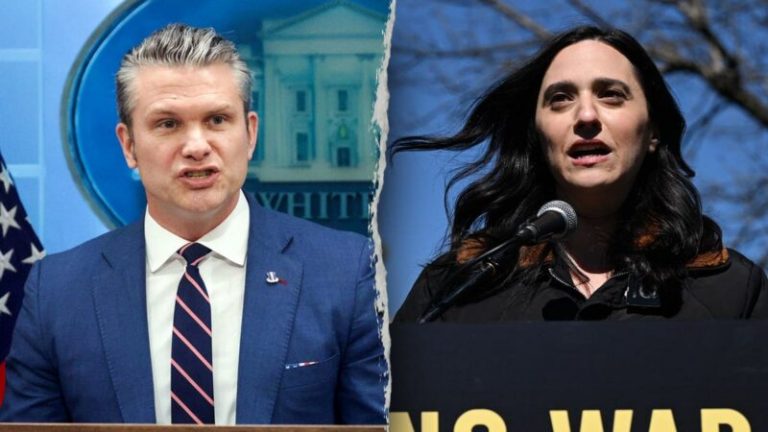
A Democratic congresswoman whose parents fled the regime of Ayatollah Ruhollah Khomeini decades ago announced Monday she would file articles of impeachment against Secretary of War Pete Hegseth for alleged war crimes amid the current conflict.

Rep. Yassamin Ansari of Arizona previously told the New York Times she initially “felt a rush of hope, but also unease” when she learned Americans and Israelis had taken out Ayatollah Ali Khamenei in February.

But she has since been harshly critical of how the Trump administration has overseen the conflict, including President Donald Trump’s Easter message to what’s left of Iranian leadership to “open the f—ing Strait” of Hormuz by Tuesday or risk strikes on critical infrastructure.

“Donald Trump’s deranged statements — including one on Easter Sunday — are further entrenching our country and our world in another devastating, never-ending war,” Ansari said in a statement announcing her plans to impeach Hegseth.

77-YEAR-OLD HOUSE DEM FACING YOUNGER PRIMARY CHALLENGERS SEEKS TO IMPEACH DONALD TRUMP

Ansari claimed Trump is threatening war crimes in violation of the Geneva Convention and has already committed “illegal actions and atrocities already committed at his direction — including violence that has destroyed schools, hospitals, and critical civilian infrastructure.”

“As the daughter of Iranian immigrants who fled this regime, and as an American Congresswoman who swore an oath to the United States Constitution, I know that this cannot go on,” she said.

Ansari’s father was a medical student studying in the United States when the Iranian Revolution broke out and couldn’t return to Iran, while her mother fled and was sent to live with another family in Delaware at age 17 after the Khomeini regime continually restricted women’s rights, according to the UK Guardian.

Ansari urged invocation of the 25th Amendment to remove Trump from office and said she would file articles of impeachment and seek to formally impeach Hegseth “next week.”

DEMOCRATS THREATEN TO GRIND SENATE TO A HALT TO FORCE PUBLIC IRAN HEARINGS

She alleged the Pentagon chief “repeatedly violat[ed] his oath of office and his duty to the Constitution. Only Congress has the power to declare war, not a rogue president or his lackeys.”

“Hegseth’s reckless endangerment of U.S. servicemembers and repeated war crimes, including bombing a girls’ school in Minab, Iran, and willfully targeting civilian infrastructure, are grounds for impeachment and removal from office.”

Hegseth and Trump recently engineered the rescue of an airman shot down by Iranian forces over the weekend, with the president telling the press at the White House that a large military operation was required.

Gen. Dan “Raizin” Caine declined to state how many troops were involved, likely for security reasons.

When reached for comment, Pentagon Press Secretary Kingsley Wilson slammed the plan to impeach her boss, telling Fox News Digital that Ansari is “just another Democrat trying to make headlines” as an ongoing Mideast military operation and two “daring and successful” rescue operations were conducted.

“Secretary Hegseth will continue to protect the homeland and unleash epic fury on Iran’s radical regime,” Wilson said.

“This is just another charade in an attempt to distract the American people from the major successes we have had here at the Department of War.”

Fox News Digital reached out to the White House for comment.

A new national poll is the latest to indicate that Democrats are facing major problems with their party’s image as they try to win back congressional majorities from the Republicans in this year’s midterm elections.

Just 28% of Americans questioned in a CNN poll view the Democratic Party positively, with 56% seeing Democrats in an unfavorable light.

The poll, the most recent over the past year to indicate the Democratic Party brand hitting historic lows, comes with just over six months to go until the midterms, when they hope to escape the political wilderness.

The GOP, which is working to defend its fragile House and slim Senate majorities in the 2026 ballot box showdowns amid President Donald Trump’s underwater approval ratings and a rough political climate that doesn’t favor the party in power, doesn’t fare much better in the poll, which was conducted March 26-30.

WHAT OUR LATEST FOX NEWS NATIONAL POLL SAYS 

Thirty-two percent of Americans said they viewed the Republican Party positively, with 55% seeing the GOP in a negative light.

An average of the most recent national polls that asked how respondents viewed the two major political parties show the Republicans’ favorability 15 points in negative territory but the Democrats 20 points underwater.

Helping to sink the Democratic Party’s underwater ratings are Democrats themselves.

A healthy percentage of Democrats feel that their leaders in Congress aren’t fighting back more vocally against Trump and his unprecedented second-term agenda. That’s fueling a less favorable view of the Democratic Party among Democrats compared to a noticeably more favorable view of the GOP among Republicans.

That’s a departure from 2006 and 2018, the most recent midterms, when the Democrats rode blue waves to win back the House when Republicans controlled the White House. In those years, Democrats led by double digits in net favorability.

Democrats were ecstatic two weeks ago after flipping a Republican-controlled legislative seat in a right-leaning, Palm Beach, Florida-anchored district that includes Mar-a-Lago, Trump’s home turf. The same day, Democrats also flipped a state Senate seat in Florida in a separate special election. The Democrats’ Sunshine State victories were their latest wins or overperformances in a slew of special elections from coast to coast since Trump returned to power in the White House 14 months ago.

DNC CHAIR KEN MARTIN BOASTS ‘WIN AFTER WIN,’ SHRUGS OFF MASSIVE TRUMP, REPUBLICAN MONEY LEAD

Democrats also scored larger than expected victories in last November’s gubernatorial elections in blue-leaning Virginia and New Jersey.

Partially fueling the Democrats’ ballot box performances is their laser focus on affordability amid persistent inflation. And the victories are further energizing Democrats as they work to win back control of Congress in the midterms.

“From now until November, Democrats are all gas and no brakes as we compete across every corner of Florida and the nation,” Democratic National Committee Chair Ken Martin said after the Florida special elections.

But along with their brand issues, also troubling for Democrats ahead of the midterms is their standing in the generic ballot, the closely watched polling indicator that asks respondents whether they’d back the Democrat or Republican in their congressional district without offering specific candidate names.

Democrats are up over the Republicans by five points in the CNN poll, and an average of all the most recent national surveys to ask the generic ballot question gives the Democrats an edge over the GOP of just under six points. That margin for the Democrats is smaller than at the same point in the 2018 and 2006 cycles, when they won back the House.

National polls also indicate that when it comes to how both parties are handling the key issues that matter to voters, Democrats don’t enjoy any overwhelming advantage.

The most recent Fox News national poll, which was conducted March 20–23, indicated Democrats with a slight three-point margin over Republicans on which party has a clear plan to bring down prices and make things more affordable. The vast majority of voters questioned in the Fox News poll gave a big thumbs down to both parties.

Veteran political scientist Wayne Lesperance, the president of New England College, told Fox News Digital that Democrats “have no room to coast.”

“Voters remain unimpressed with their brand and for far too many voters the party continues to be defined by Biden and Harris. Democrats are expected to win big in November. But, there is a great deal of work to rehabilitate their brand with voters for 2026 and 2028,” Lesperance said.

Americans are getting smaller pay raises while tariffs and higher gas prices are threatening to make everything more expensive.

Translation: The affordability problem isn’t improving.

New government data released Friday showed non-supervisory workers getting a 3.4% pay raise on average hourly earnings over the last year. That’s the slowest pace of wage gains since 2021, and a downshift from the last two years, when pay bumps were closer to 4%.

The slowdown comes as economists worry about rising inflation, with the Iran war choking off oil tankers and pushing gas prices up over $1 per gallon in just a month, to a national average of $4.09 on Friday.

As diesel costs break $5.50 a gallon (compared to just $3.89 a month ago), retailers and grocers are now contending with higher transportation costs. Amazon said Thursday it will begin charging sellers a 3.5% “fuel and logistics-related surcharge” beginning on April 17.

Airlines like United and JetBlue are raising bag fees in an effort to offset sky-high jet fuel costs. The International Air Transport Association says the price of jet fuel is up 104% in the past month.

“With the recent uptick in inflation driven by energy prices, real wage growth is likely to decelerate further, putting increased pressure on consumers,” said Thrivent’s chief financial and investment officer, David Royal.

For now, Americans are still seeing their earnings rise at a faster pace than the increase in price tags at the store. As pay rose by 3.4%, the most recent inflation data showed prices rising by 2.4% year-over-year.

Wage gains for non-supervisory employees — a category that includes roughly four out of every five non-farm workers — have been outpacing price increases since March 2023, when post-pandemic inflation finally began to cool.

But the concern is that the story could change soon. Because of the bump from oil prices, Navy Federal Credit Union Chief Economist Heather Long said it’s possible inflation could pace at 4% this month.

“Four percent is above that 3.5 percent annual wage gain, and that’s where you see a lot of squeeze on workers, particularly middle-class and moderate-income workers,” Long said.

Warning signs are flashing that slowing wage growth could ripple beyond the gas station and prices at the grocery store. Higher mortgage rates now have some worried about icing out even more potential homebuyers.

The average 30-year fixed mortgage rate rose from 5.99% at the start of the war to 6.45% on April 3, according to Mortgage News Daily. The rise is due in part to concerns that the Federal Reserve will have to raise interest rates to tamp down on war-driven inflation.

“With choppy job growth, weaker labor-force attachment and rising uncertainty, many households — especially renters and first-time buyers — could become more cautious as weaker inflation-adjusted wages erode recent affordability improvements,” said Zillow senior economist Orphe Divounguy.

If wages can’t keep up with rising costs across the board, it’s likely that affordability will become a larger issue than it already was prior to the war. An NBC News poll conducted during the first week of the war with Iran found that, for a plurality of respondents, inflation and the cost of living was the most important issue facing the country.

Economists feel the same way.

Responding to a question from NBC News at a March 18 news conference, Federal Reserve Chair Jerome Powell noted that “real” wage gains — a measure of wages adjusted for inflation — need to be positive in order for Americans to feel better about affordability.

“it will take some years of positive real earning gains for people to feel good again, we think. But you’re right — when you talk to people, they do feel squeezed,” Powell said.

Attorney General Pam Bondi’s departure last week was the latest in a series of high-profile firings or resignations of America’s top law enforcement officer, from a key Watergate figure to a well-respected attorney whose differences with the president became irreconcilable.

Former President George Washington appointed Founding Father and former Virginia Gov. Edmund Randolph the nation’s first attorney general in 1789, and in the years since, there have been dozens of successors, some lost to history and others more memorable.

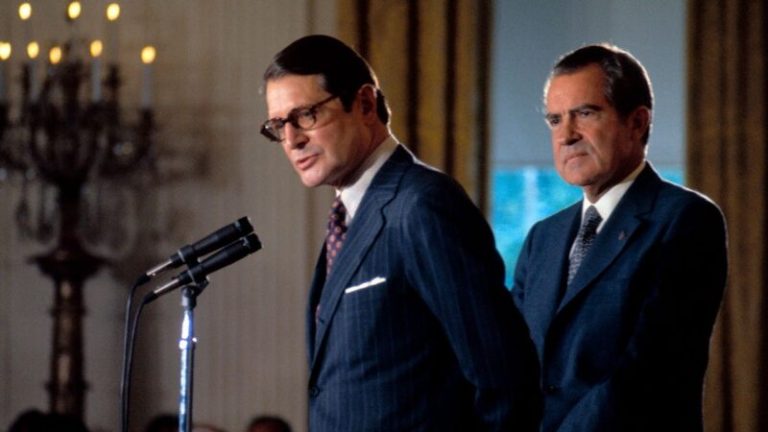
Eliot Richardson and Richard Kleindienst — Nixon

Eliot Richardson, the secretary of defense at the time of the Watergate burglary, was named to succeed Attorney General Richard Kleindienst, who resigned amid the scandal after reportedly being pressured by a member of the Watergate “plumbers” to assuage the situation.

“Plumbers” was the moniker for the group accused in the burglary at the DNC headquarters, then located at the Watergate Hotel in Foggy Bottom, D.C. They were organized by CIA officer E. Howard Hunt and FBI agent-turned-future conservative talk radio star G. Gordon Liddy. The name purportedly came from the dual meaning of “leaks” — political versus pipes.

TOP DOJ OFFICIALS TO BRIEF HOUSE OVERSIGHT COMMITTEE FOR JEFFREY EPSTEIN PROBE

Kleindienst was playing golf at Burning Tree in Bethesda, Md., in June 1972 when Liddy reportedly approached him to say that the Committee to Re-elect the President (Nixon’s committee) was involved in the burglary, according to an account from the UK Guardian.

Kleindienst reportedly told the G-man to get lost, and the federal investigation ensued as normal.

As the scandal raged on April 30, 1973, Nixon announced he had accepted the resignations of Kleindienst, and presidential assistants John Ehrlichman and H.R. Haldeman — and fired White House Counsel John Dean — who has often called President Donald Trump’s tenure worse than that of his old boss.

“Mr. Kleindienst asked to be relieved as Attorney General because he felt that he could not appropriately continue as head of the Justice Department now that it appears its investigation of the Watergate and related cases may implicate individuals with whom he has had a close personal and professional association,” Nixon said in a public letter that day.

Richardson’s tenure began thereafter and ended with one of the most significant executive branch departures in history: the “Saturday Night Massacre.”

On October 20, 1973, Nixon ordered Richardson to fire Watergate special prosecutor Archibald Cox shortly after Cox subpoenaed the Oval Office recordings. Richardson, who appointed Cox and reportedly pledged not to fire him without cause, refused and resigned.

TRUMP FIRES JUDGE-PICKED US ATTORNEY AS TOP DOJ OFFICIAL WARNS COURTS TO STAY IN THEIR LANE

Nixon then asked Richardson’s deputy, William Ruckelshaus, to fire Cox, and he also resigned instead of carrying out the order.

Nixon then ordered Ruckelshaus’ deputy, Solicitor General Robert Bork, who is better known for his unsuccessful nomination to the Supreme Court by President Ronald Reagan, to fire Cox. Bork did so and reportedly considered resigning but stayed on at the urging of his predecessors to ensure stability at the DOJ.

That November, an LBJ-appointed federal judge found that Cox’s firing had been unlawful.

Nixon himself ultimately resigned almost one year later on August 9, 1974.

Richardson’s legacy became that of a cabinet official who, in times of crisis, sacrificed professional status for personal integrity, as described by the Constitution Center and others.

Alberto Gonzales — G.W. Bush

Alberto Gonzales was one of President George W. Bush’s closest advisers, going back to his time as Texas governor. He was also the first Hispanic attorney general and the highest-ranking Hispanic cabinet official until Trump named Marco Rubio to secretary of state in 2025.

Gonzales ultimately resigned the top cop post in 2007 amid mounting bipartisan criticism of the DOJ’s firing of several U.S. attorneys and allegations that he was not forthright during congressional inquiries about whether politics played a role in the firings.

Bush lamented his friend’s resignation, saying “it is sad that we live in a time when a talented and honorable person like Alberto Gonzales is impeded from doing important work because his good name was dragged through the mud for political reasons.”

Gonzales faced mounting pressure and criticism amid the firings and regarding comments defending enhanced interrogation techniques against suspected terrorists.

He stated “I do not recall” or similar framings of the statement dozens of times during a contentious Senate hearing where he battled Republicans like Pennsylvania’s Arlen Specter and Democrats including California’s Dianne Feinstein.

Sen. Charles Schumer, D-N.Y., later confronted Gonzales over his responses.

KARL ROVE: TRUMP DROPPED BONDI, BUT THE REAL POLITICAL FIGHT IS JUST BEGINNING

“You’ve answered ‘I don’t know’ or ‘I can’t recall’ to close to a hundred questions. You’re not familiar with much of the workings of your own department. And we still don’t have convincing explanations of the who, when and why, in regard to the firing of the majority of the eight U.S. attorneys,” Schumer fumed, according to a transcript posted to the left-wing outlet DemocracyNow.

In his testimony, Gonzales said U.S. Attorneys indeed serve at the pleasure of the president, and that the Justice Department makes “decisions based on the evidence, not whether the target is a Republican or a Democrat.”

“I know that I did not, and would not, ask for a resignation of any individual in order to interfere with or influence a particular prosecution for partisan political gain,” Gonzales said. “I also have no basis to believe that anyone involved in this process sought the removal of a U.S. Attorney for an improper reason.”

Bush nonetheless remained behind his pick, rebuking a “no confidence” resolution drafted by Schumer, Feinstein and Sen. Sheldon Whitehouse, D-R.I. as the controversy continued.

Ultimately, Gonzales announced on August 27, 2007, that he would be stepping down on September 17.

“Yesterday I met with President Bush and informed him of my decision to conclude my government service as attorney general… let me say that it’s been one of my greatest privileges to lead the Department of Justice,” Gonzales said in his resignation announcement.

“I have great admiration and respect for the men and women who work here. I have made a point as attorney general to personally meet as many of them as possible, and today I want to again thank them for their service to our nation.”

Jeff Sessions — Trump

Former Alabama Sen. Jeff Sessions was the first in the upper chamber to endorse then-developer Donald Trump in his 2016 presidential bid.

The immigration enforcement hardliner and Trump loyalist, however, saw his relationship with the new president fray early in their term.

Sessions recused himself from the Trump-Russia investigation, citing his own campaigning for Trump amid reports he also met personally with Russian envoy Sergey Kislyak.

The recusal incensed Trump and led him to regularly bash Sessions in the press, and also to blame Sessions for the appointment of former FBI Director Robert Mueller III as special counsel in the Russia case.

Trump also faulted Sessions for declining to criminally pursue Hillary Clinton.

Sessions’ tenure ended the day after Republicans lost the House in the 2018 midterm elections, but left the Alabamian with a successful professional record in reversing Obama-era policies and cracking down on sanctuary city policies.

US INTERIM ATTORNEY GENERAL TODD BLANCHE CALLS SPECULATION SURROUNDING BONDI’S FIRING ‘SIMPLY NOT TRUE’

But Trump’s firing of Sessions only further invigorated his Democratic critics, as New Jersey Sen. Cory Booker called it an “alarming development that brings us one step closer to a constitutional crisis.”

Booker claimed Trump fired Sessions because he was scared Mueller would “implicat[e]” him in the Russia investigation.

William Barr — Trump

Former Attorney General William Barr resigned from his second tenure as the nation’s top cop in December 2020, amid disputes over whether the prior month’s election had been subject to widespread fraud.

Barr, who previously served under President George H.W. Bush, appeared to irritate Trump when he told The Associated Press he had not seen “fraud on a scale that could have effected a different outcome in the election.”

In announcing the departure, Trump tweeted that he had a “nice meeting” with Barr and that his relationship “has been a very good one; he has done an outstanding job.”

Barr also touted Trump’s first-term record amid what he called a “partisan onslaught” and “relentless, implacable resistance.”

In comments to NBC News in 2022 ahead of the release of his book “One Damn Thing After Another,” Barr said he told Trump at the White House that he understood the president was frustrated with him, and that he was willing to submit his resignation.

“Accepted,” Trump supposedly said, but the president himself reportedly claimed he asked for Barr’s resignation, not that the AG quit.

PAM BONDI IS OUT AS AG — HERE ARE THE CONTENDERS WHO COULD REPLACE HER

“The absurd lengths to which he took his stolen election claim led to the rioting on Capitol Hill,” Barr said, while adding that Trump’s actions still wouldn’t reach the legal level of “incitement” as claimed by Democrats.

In his resignation letter, Barr applauded Trump’s ability to “weather” the Russia investigation and Democrats’ attempts to “cripple if not oust [the] administration,” and said the president restored the U.S. military and curbed illegal immigration.

Harry Daugherty — Harding and Coolidge

The first attorney general of the modern era to be ousted was Harry Daugherty, a member of President Warren Harding’s administration.

Daugherty was part of the so-called “Ohio Gang” of longtime Harding confidants from his home state.

Daugherty’s fall began amid the Teapot Dome Scandal — the most infamous incident prior to Watergate — which led to the imprisonment of Interior Secretary Albert Fall.

Fall was implicated in low- or no-bid oil leases at Teapot Dome, Wyoming, in 1923, and jailed for accepting bribes from energy companies.

Daugherty was later investigated for allegedly failing to prosecute people involved in Teapot Dome, and was allegedly implicated in a handful of other scandals, including being charged with conspiracy amid the sale of illegal liquor permits during prohibition.

He was also accused of influence peddling and members of the “Ohio Gang” were accused of selling government appointments.

Daugherty’s brother Mal was president of a bank, which was later closed by the state of Ohio after the Senate was unable to “pry” during its investigation into Attorney General Daugherty, according to a 1930 TIME report.

The sibling’s bank recorded “heavy withdrawals” during that time, which caught the attention of regulators in Columbus.

Harry Daugherty ultimately met his ouster after Harding died in office in August 1923.

New President Calvin Coolidge booted him from the DOJ over loss of public trust and refusal to turn over departmental records regarding alleged corruption.

Daugherty was never convicted.

In a scene that unfolded like a Hollywood script, hundreds of American troops descended into the rugged mountains of southwestern Iran on Saturday to rescue a wounded airman who spent nearly two days hiding from Iranian forces. 

What followed was a high-stakes combat search-and-rescue mission deep inside Iran, with U.S. forces racing to locate and extract the wounded officer before Iranian troops could reach him, deploying a large contingent of special operations forces and aircraft into hostile territory.

CIA Director John Ratcliffe compared the mission to find the downed airmen to finding “a grain of sand in the desert” in a news briefing Monday.

In total, the U.S. sent in more than 150 aircraft, President Donald Trump Monday, which took on “very, very heavy enemy fire” during the rescue operation. Several different teams: Navy SEALs, Air Force Special Operations, Army Special Operations Aviation, search and rescue and combat medics, also took part.

US PILOT RESCUED FROM DOWNED F-15E FIGHTER JET IN IRAN, SEARCH FOR SECOND CREW MEMBER ONGOING

“This was an incredibly dangerous mission, an incredibly dangerous undertaking,” Gen. Dan Caine, chairman of the joint chiefs of staff, said Monday at the White House press briefing. 

One of the two crew members was flown to Landstuhl regional medical center in Germany, typically the first stop for U.S. soldiers wounded in combat zones, and the other is being flown there Monday, a senior U.S. defense official told Fox News.

As the rescue unfolded Easter Sunday, the pilot radioed a brief message to help U.S. forces identify him: “God is good,” officials said.

Here’s a look at how the scene unfolded. 

Friday — The shoot down and the first rescue 

A U.S. F-15E Strike Eagle fighter jet was shot down over Iran Friday, according to U.S. officials. Both the pilot and the weapons systems officer ejected from the aircraft. 

The aircraft was operating as part of ongoing U.S. combat operations over Iran when it was shot down.

While details of the incident were not immediately clear, Iranian state media released images of an ejection seat and debris that appeared consistent with an F-15E. Iran initially claimed it had downed a more advanced F-35 stealth fighter, but U.S. officials later confirmed the aircraft was an F-15 Strike Eagle. 

The F-15E Strike Eagle is a two-seat fighter jet flown by a pilot and a weapons systems officer, who manages targeting, sensors and weapons. The aircraft is designed for both air-to-air combat and deep strike missions against ground targets, allowing it to operate far inside enemy territory.

After the crew ejected and aircraft went down, rescue beacons went off, which send out a radio or GPS signal, officials said Monday at the press briefing, and U.S. forces quickly launched a combat search-and-rescue mission, deploying rescue helicopters into Iranian territory to recover the downed pilot. 

“We flew for seven hours in daylight over Iran to get the first pilot, and we flew seven hours in the middle of the night to get the second,” War Secretary Pete Hegseth said Monday. 

The pilot was rescued later that day, within hours of the shoot down, in what Trump described as a daylight operation.

Rescue helicopters, including HH-60W Jolly Green II aircraft, came under Iranian small-arms fire as they moved in to extract the pilot, according to U.S. officials. Crew members aboard the helicopter carrying the pilot were injured, but the aircraft was able to fly safely out of Iranian territory.

An A-10 Thunderbolt II providing close air support for the rescue effort was also hit by enemy fire, according to U.S. officials. The aircraft was damaged, and the pilot later ejected over Kuwaiti airspace and was recovered.

Caine said the A-10s were flying in the “Sandy” role — a mission focused on protecting downed airmen and guiding rescue forces into hostile territory. 

“A Sandy has one mission, get to the survivor, bring the rescue force forward and put themselves between that survivor on the ground and the enemy,” Caine said Monday. 

“While this was ongoing and out in front of them, the Sandy flight of A-10s and other remotely piloted aircraft, drones and other tactical aircraft were violently suppressing and engaging the enemy in a close-in gunfight to keep the objective area,” he said. 

Saturday The hunt for the weapons system officer (WSO) 

While the Pentagon remained tight-lipped about the mission, Iranian state media blasted images from the crash and called on civilians to join in the search for the second crew member, an Air Force colonel, according to Trump.  

The Pentagon has not publicly released the names of the crew members, a standard practice while operations are ongoing. Both airmen have been recovered and are receiving medical care at a U.S. military facility, according to officials. 

Iranian state media urged civilians to help locate the missing crew member and offered a reward for his capture, while Islamic Revolutionary Guard Corps (IRGC) forces launched a search in the region.

The weapons systems officer, a colonel with SERE training, was using his survival and evasion training to stay one step ahead of Iranian forces. He reportedly climbed 7,000 feet up a ridge and remained hidden there for nearly 48 hours, a senior defense official told Fox News. 

“He was injured quite badly,” Trump said during a news briefing Monday. “He scaled cliff faces, bleeding rather profusely, treated his own wounds.”

The colonel hid in a mountain crevice while the CIA launched a deception campaign to convince the Iranian regime they had already located him and were moving him to the ground for exfiltration. While the Iranians were confused and uncertain of what was happening, the agency used its specialized capabilities to locate the American airman, a senior administration official told Fox News.

AIRMAN RESCUE SHOWS U.S. CAN PENETRATE ENEMY TERRITORY ‘ANYWHERE’ IN IRAN, FORMER PENTAGON OFFICIAL WARNS

Trump said the American aviator was being “hunted down” by enemies who were “getting closer and closer by the hour.” 

The U.S. used MQ9 Reaper drones to protect the area around where the U.S. believed the airman was hiding and fired on anything that came close to that area and any area where U.S. forces were operating, an administration official told Fox News. 

“At the president’s direction, we deployed both human assets and exquisite technologies,” Ratcliffe said, calling it “a daunting challenge, comparable to hunting for a single grain of sand in the middle of a desert.”

At the same time, the U.S. launched strikes on nearby areas to keep Iranian forces away.

“We executed multiple large scale strikes in the surrounding area using every tactical jet in the U.S. inventory + B-1 Bombers to keep him safe,” a senior U.S. official said. 

In between the rescue of the pilot and the rescue of the weapons officer, U.S. forces flying B2 bombers from Whiteman Air Force Base in Missouri dropped “bunker buster” massive ordnance penetrator bombs on an IRGC headquarters, a senior defense official told Fox News.

Sunday The final rescue

At the right moment, Trump said, he directed the military to send dozens of heavily armed aircraft to rescue the crew member, who the president said is “seriously wounded” but will recover. 

When the colonel finally made radio contact to coordinate the pickup, he sent the message: “God is good.” 

U.S. officials were not sure it was him at first. Trump told Axios they feared it was a trap. But those who knew the colonel said he was a man of deep faith. 

Rescue helicopters, including HH-60 Pave Hawk aircraft, came under Iranian small-arms fire during the extraction, sources told Air and Space Forces magazine. 

U.S. forces established a remote airstrip inside Iran to support the rescue. 

“This was not much of a runway,” Trump said. “This was a farm, not a runway.” 

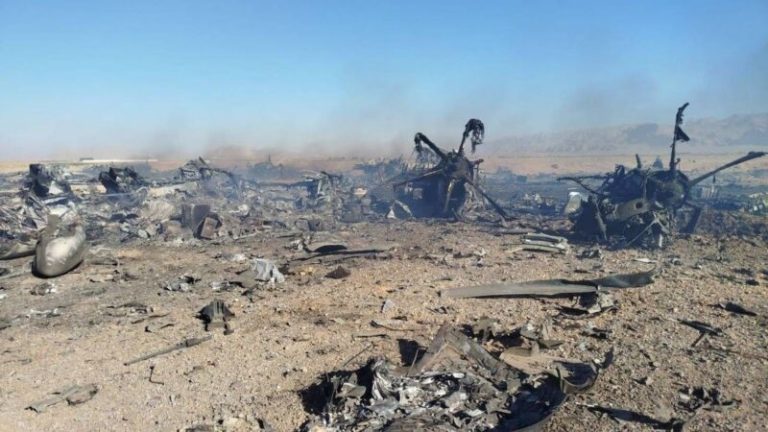
Problems with two other transport planes prompted U.S. forces to blow them up rather than leave them behind in Iran, according to The Associated Press.

“The fact that we were able to pull off both of these operations, without a SINGLE American killed, or even wounded, just proves once again, that we have achieved overwhelming Air Dominance and Superiority over the Iranian skies,” Trump said on social media.

The Associated Press contributed to this report.

The ballot box battle for the House majority resumes this week.

Special U.S. House contests in Georgia and New Jersey and a Virginia referendum that is the latest face-off between President Donald Trump and Republicans and Democrats in the high-stakes congressional redistricting wars — with the House majority on the line — will all draw national attention this month.

Also on tap in April: a state Supreme Court election in battleground Wisconsin.

The consequential elections come as the 2026 primary calendar, which kicked off in March, takes a break this month before returning with a vengeance in May.

TRUMP-BACKED FULLER ADVANCES IN RACE TO FILL MTG’S CONGRESSIONAL SEAT

Here’s a closer look at the four ballot box showdowns.

April 7 — GA-14 special election

Trump-backed Republican House candidate Clay Fuller faces off with Democratic candidate Shawn Harris to fill a vacant congressional district in solidly red northwest Georgia that was once held by MAGA firebrand Marjorie Taylor Greene.

Harris, a retired brigadier general and cattle farmer, and Fuller, a local prosecutor and Air National Guard member, were the top two finishers in a field of 17 candidates, including 12 Republicans, in the early March special election. With no candidate topping 50%, Harris and Fuller advanced to a runoff.

SPECIAL ELECTION TO FILL MARJORIE TAYLOR GREENE’S OLD SEAT IN CONGRESS HEADS INTO OVERTIME

The special election comes as Republicans cling to a razor-thin 218–214 majority in the House. That means the GOP cannot afford any surprises or allow Democrats to pull an upset in a district that extends from Atlanta’s northwest exurbs to Georgia’s northwestern border with Alabama and northern border with Tennessee, which Trump carried by 37 points in his 2024 presidential victory.

Fuller, who is expected to consolidate the Republican vote that was divided in the first round, is considered the clear frontrunner in the race. But if Harris holds Fuller’s margin to the mid-teens or less, national Democrats will argue the election is the latest in the 14 months since Trump returned to the White House in which they’ve overperformed.

The congressional seat was left vacant when Greene stepped down at the beginning of January. Greene quit Congress with a year left in her term, after a very public falling out with Trump mostly over her push to release the Jeffrey Epstein files.

April 7 — Wisconsin Supreme Court election

While officially a non-partisan contest, state Supreme Court elections in the Midwestern battleground have become extremely partisan in recent years.

HEAD HERE FOR THE LATEST FOX NEWS REPORTING FROM THE CAMPAIGN TRAIL

With the court’s majority on the line in last year’s contests, outside money poured in and out-of-state door knockers blanketed Wisconsin. One of the biggest spenders was Trump ally Elon Musk, who headlined a rally days before the election and donned a cheesehead hat worn by fans of the Green Bay Packers.

Democrats won that election by a larger-than-expected margin and currently hold a 4-3 majority on Wisconsin’s highest court.

With a conservative justice retiring, the majority isn’t at stake in this year’s election, although liberals with a win could expand their majority to 5-2.

But if the conservative candidate wins, or keeps it close, the GOP may claim a moral victory.

April 16 — NJ-11 special election

Republican Joe Hathaway, a local mayor, is hoping to pull off an upset in the special election to fill the congressional seat left vacant after now-Gov. Mikie Sherrill stepped down after winning last November’s gubernatorial election.

Hathaway, who was unopposed in February’s primary, faces off in the election against Democrat Analilia Mejia, a progressive organizer backed by left-wing champions Sen. Bernie Sanders and Rep. Alexandria Ocasio-Cortez.

Mejia pulled off an upset, narrowly edging out front-runner former Rep. Tom Malinowski in a field of 11 candidates. The face-off was one of the latest between progressives and more mainstream Democrats.

The 11th Congressional District in northern New Jersey‘s New York City suburbs was once the kind of seat where Republicans excelled at the ballot box. Hathaway, who has pointed out his differences with Trump, is the type of Republican who could attract crossover voters.

Add in that Mejia may be too far to the left for some voters in the district, and there’s a chance for some intrigue on Election Day.

April 21 — Virginia redistricting referendum

Voters in Virginia are casting ballots on a Democrat-pushed referendum that would give the competitive state up to four more left-leaning U.S. House districts in time for this year’s midterm elections.

That could result in a 10-1 advantage for Democrats in the state’s U.S. House delegation, up from their current 6-5 edge. 

With two weeks until Election Day, early voting is surging, according to officials, with turnout outpacing early voting from last autumn’s general election. Despite being vastly outraised by Democrats, Republicans see positive signs in early turnout.

Republicans call the Democrats’ redistricting effort an “unconstitutional power grab.” Democrats counter that it’s a necessary step to balance out partisan gerrymandering already implemented in other states by the GOP.

Virginia is the latest redistricting battleground, with Florida on deck, to alter congressional maps ahead of November’s elections.

Republicans are defending their razor-thin House majority in the midterms, and Democrats need a net gain of just three seats to win back control of the chamber. That means the redistricting efforts in Virginia and other states may very well decide which party controls the House next year.

The United States added 178,000 jobs in March, blowing past expectations and showing a resilient labor market just as the war with Iran began escalating, sending up oil prices.

The unemployment rate fell to 4.3% last month, down from 4.4%. The gains were concentrated in health care, construction, transportation and warehousing.

Despite the outsized headline figure, there were further indications that the job market remains wobbly. Wage growth declined to 3.5% in March from 3.8% in February, falling short of forecasts.

Jobs report estimates from January and February were also revised, upward and downward respectively. Combined, they show that U.S. payrolls fell by a net 7,000 over those two months.

The labor force participation rate, or the share of the overall population either employed or looking for work, fell to its lowest level since November of 2021.

“While this month’s jobs report delivered an upside surprise, we continue to believe that risks to the labor market remain elevated and higher oil prices from the Iran conflict could prove an additional impediment in the months ahead,” Scott Helfstein, head of investment strategy at Global X financial group, said in a note to clients.

Surveys conducted by the BLS for this report were completed by March 12. At the time, the full brunt of the war had yet to hit the job market.

Three weeks later, gasoline prices have surged to more than $4 a gallon, a level that, if it is sustained, would sap U.S. consumers of hundreds of dollars in annual discretionary income.

On Wednesday, the Atlanta Federal Reserve lowered its real-time gross domestic product estimate to 1.9%, down from more than 3% just before the start of the war.

On Tuesday, the BLS reported the hiring rate in February fell to just 3.1% of the U.S. workforce, a level last recorded in April 2020, as the Covid pandemic bore down.

Job openings also fell in February, though they appear to be stabilizing overall. The rate of layoffs also remains at an all-time low.

Meanwhile, many Americans’ views of the economy and Trump’s handling of it continue to sink to new depths.

A CNN poll out this week found that just 31% of respondents approved of how Trump is managing U.S. economic performance, with just 27% saying they approved of his handling of inflation, down from 44% a year ago. His overall approval rating appears to have stabilized at about 35%.

A construction worker at a new building in Pasadena, Calif.Mario Tama / Getty Images file

A debate is now underway about how many jobs the U.S. would need to add each month to keep the unemployment rate — 4.3% as of Friday — stable.

Over the past year, a massive drop in overall immigration to the U.S., coupled with a growing number of baby boomers leaving the workforce, mean fewer overall jobs need to be created for the economy to absorb newcomers to the labor force and keep the overall unemployment rate steady, according to economists with the Dallas Federal Reserve.

That overall number of new jobs needed is known as the “breakeven” employment rate. The economists wrote in a note published this week that the breakeven employment rate now may be close to zero.

If the overall workforce continues to shrink, even fewer new jobs will be needed to incorporate workers entering the labor force, such as recent college graduates or parents who put their careers on hold for a few years.

That won’t necessarily make looking for a job any easier. The median spell of unemployment is now about 2½ months, with the average much longer — about six months. About 25% of all unemployed workers are out of work for at least 27 weeks.

Oil prices surged Thursday, threatening to further drive up the price of gas as hopes for a near-term resolution to the Iran war faded following President Donald Trump’s address to the nation.

Stocks were volatile, with major indexes plunging early in the day before moving higher at the close on shifting headlines about the war in the Middle East.

U.S. indexes recovered their early losses on news that Iran’s deputy foreign minister said his country would outline a “new navigation regime” in the Strait of Hormuz after the war ended, injecting fresh optimism into markets over the future of the key waterway.

At the closing bell at 4 p.m. ET, the S&P 500 closed up 0.11%, the Nasdaq Composite ended higher by 0.18%, and the Dow Jones Industrial Average fell 61 points. The Russell 2000 index, which tracks smaller companies, rose 0.7%.

Fourth-generation Iowa farmer Mark Mueller is no stranger to the ups and downs of the agriculture industry. But right now, he thinks America is on the cusp of a farm crisis.

“I am more concerned now than I have been in my 30 years of farming,” Mueller told NBC News.

Even before the Iran war, Mueller said, many farmers felt they were being squeezed. Consolidation in the fertilizer industry and increased competition from abroad have resulted in higher prices for fertilizer and feed — and smaller returns on Mueller’s corn and soybean crops.

Many farmers who couldn’t pay their bills in recent years went under. In 2025, the number of Chapter 12 farm bankruptcies reached 315, according to the American Farm Bureau Federation. That was up 46% from the previous year.

Now, the Iran war is putting even more pressure on farmers.

Before the war, roughly a third of the world’s fertilizer ingredients and a fifth of its oil supplies passed every day through the Strait of Hormuz, a narrow waterway off Iran’s southern coast. But since the U.S. and Israel attacked Iran on Feb. 28, the strait has been effectively closed by Tehran, leaving scores of tankers stranded.

The strait’s closure has driven up global prices for fertilizer and for the diesel fuel that powers most of America’s heavy agricultural equipment.

The double whammy is hitting farmers just as they head into the spring planting season.

“This is that perfect storm where everything comes together and hammers the farmer,” said Mueller, who also serves as the president of the Iowa Corn Growers Association.

Mueller said his fertilizer supplier was selling a nitrogen fertilizer he needs for $795 per ton on Feb. 22, a few days before the war started. At the end of March, it was $990, Mueller said, a nearly $200 jump in just a few weeks.

Meanwhile, the price he’s paying for diesel has jumped, too. Diesel is now averaging $5.51 nationwide, up from $3.76 right before the war, according to AAA.

Mueller said he got most of the fertilizer he needs for spring before the war — but had to buy some at the higher prices. He’s holding off on purchasing the additional fertilizer he needs for summer, hoping prices will come down.

Mark Mueller, a farmer and president of the Iowa Corn Growers Association, thinks America is on the cusp of a farm crisis.Courtesy of Iowa Corn

President Donald Trump’s tariffs have also added to the cost of goods that farmers import from overseas — and frustrated many of the foreign buyers of America’s agricultural products.

“Our government made our life more difficult by walking away from trade deals or instituting tariffs or just basically making our customers angry — our customers being other nations and companies in other nations,” said Mueller.

Lance Lillibridge, a corn and cattle farmer from Vinton, Iowa, told NBC News he plans to use less fertilizer this year.

“I’m probably going to see a reduction in yield,” said Lillibridge. “If there’s not the supply out there, then the price is going to go up.”

If the war continues, the higher prices could ripple through the supply chain and ultimately result in higher prices at the supermarket.

“We’re talking about all the crops and all the food products that we consume on a daily basis,” said Gregory Daco, chief economist at EY-Parthenon.

“Anything that is grown and that requires fertilizers, which is most of everything that we consume, is potentially affected by this rise in fertilizer prices,” said Daco. “And as a result, we may see these prices rise rapidly across grocery stores in the U.S.”

Take corn, for example. If corn prices spike, then feeding cattle becomes more expensive for many farmers. Plus cattle farmers are also dealing with the higher fuel prices. The cost of beef has already hit record highs — in part from shrinking cattle herds and drought — and it could surge even more.

“I worry about how much more consumers will continue to pay for beef,” said Will Harris, a fourth-generation cattle farmer in Bluffton, Georgia. “I think that I can produce it as cheap as anybody else, but I don’t know where consumers draw their lines.”

It may take a while for price increases on the farm to show up at the grocery store. Farmers are just planting their spring crops now, and it could take months for them to be harvested and sent off to distribution centers and eventually grocery stores.

But consumers may see higher prices sooner rather than later, because of higher transport costs with pricier diesel.

“If you’re feeling these costs now, it’s only going to continue to increase as the supply chain fills with higher-cost goods,” said Lillibridge.

“Corn is used in over 4,000 products,” he added. “It’s not just food — it’s industrial products, like your paper that you would put in your printer has cornstarch in it, plastics, just tons of things have industrial uses from corn.”

Economists say the longer the war stretches on, the larger the effects could be.

Newly harvested corn in Inwood, Iowa. Consumers may see higher prices sooner rather than later because of higher transport costs with pricier diesel. Jim West / UCG/Universal Images Group via Getty images file

“Right now, our farmers can get the product — it’s just really expensive,” said Faith Parum, an economist at the American Farm Bureau Federation, an advocacy group for farmers and ranchers. “We’re slowly starting to hear the longer this goes on, we’re also going to have issues with even the availability of the fertilizer.”

That could further strain farmers.

“We’re going on to year four of losses across the farm economy,” said Parum. “It’s going to become harder and harder for them to put a crop in the ground.”

Before the war, the Agriculture Department estimated that farm sector debt could reach a record $624.7 billion in 2026.

Farmers have received some financial assistance from the federal government over the years. In December, the Trump administration announced a new tranche of $12 billion in aid to farmers.

At a White House event for farmers in March, Trump said that he would push for more aid and urged Congress to pass a new farm bill.

Trump also pledged to ask Congress to permit year-round sales of E15, an unleaded fuel blended with 15% ethanol that the American Farm Bureau Federation says could save consumers money at the gas pump and create markets for American-grown crops.

Farmers listen as President Donald Trump speaks at the White House on Friday. During the event, Trump urged Congress to pass a new farm bill. Alex Wong / Getty Images

Mueller was among the farmers last month at the White House, where he listened to Trump.

“I guess I would liken it to empty calories,” he said of the president’s remarks. “It was like a pep rally with very little being said.”

Mueller fears that the mounting pressures on farmers, exacerbated by the war, could lead some to hang up their hats for good.

“I really do see fewer farmers when it’s all done,” he said. “In the end, the consumer will still have fewer choices, probably have a little higher prices, and farmers will have less margin than they did before.”

President Donald Trump touted the “historic” rescue of the downed F-15E airmen behind enemy lines and issued a warning to Iran to make a deal before Tuesday night’s 8 p.m. ET deadline or face being “taken out.”

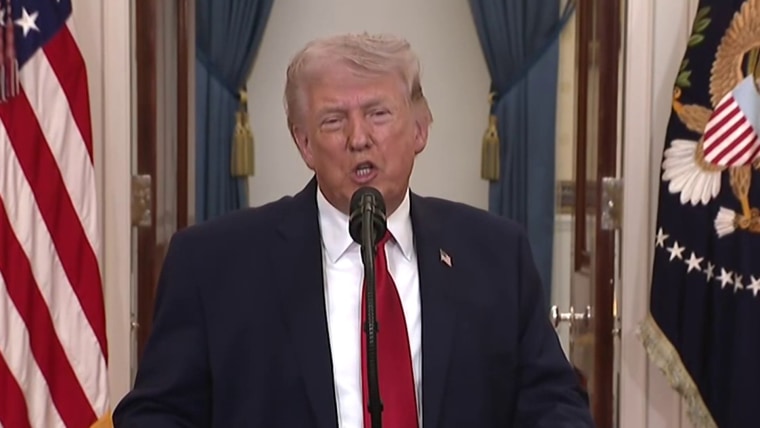
“This is a rescue that’s very historic,” Trump told the White House press corps in a Monday news conference. “It’ll go down to the books.”

“Late Thursday night, an American F-15 fighter jet went down deep inside enemy territory in Iran while participating in Operation Epic Fury, where we’re doing unbelievably well. Well, at a level that nobody’s ever seen before.”

Trump quickly paused his hailing of the rescue to add a warning for Iran to come to peace.

TRUMP REVEALS IRAN MADE ‘SIGNIFICANT PROPOSAL’ AFTER ULTIMATUM, BUT ‘NOT GOOD ENOUGH’

“The entire country can be taken out in one night, and that night might be tomorrow night,” Trump said.

Trump continued to press Iran to come to a peace deal, hours after saying the offers thus far are “not enough,” and War Secretary Pete Hegseth vowed the heaviest bombing of Iran to date.

TRUMP SAYS IRAN ‘NO LONGER A THREAT’ AFTER 32 DAYS — OUTLINES NEXT PHASE OF US WAR

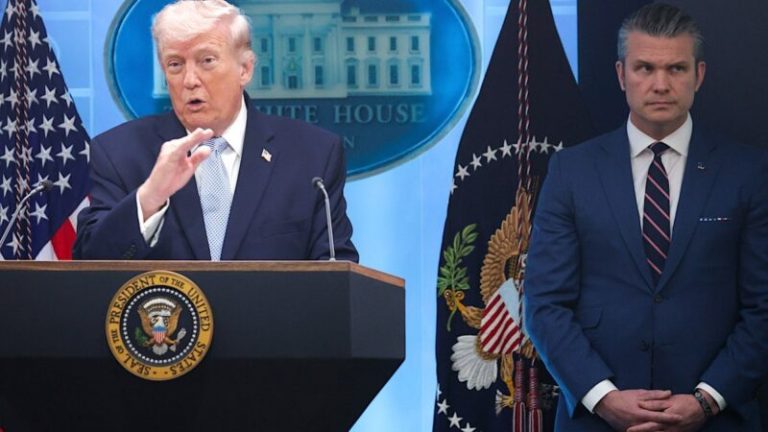
“By the way, per the president’s direction, [Monday] will be the largest volume of strikes since day one of this operation,” Hegseth vowed, taking the mic just before Chair of the Joint Chiefs of Staff Gen. Dan “Raizin’” Caine. 

“Tomorrow, even more than today. And then Iran has a choice,” Hegseth added. “Choose wisely, because this president does not play around. You can ask Soleimani, you can ask Maduro. You can ask Khamenei.”

Trump, responding to a question from Fox News, noted there were military leaders warning against the dangerous exfiltration of the two airmen, citing the risks to a multitude of troops.

“There were military people, very professional, that preferred not doing it: These two were totally on board, which was very important,” Trump said, noting Hegseth and Gen. Caine. 

IDF CONFIRMS IRGC INTEL CHIEF KILLED; QUDS FORCE COMMANDER ALSO ELIMINATED IN STRIKE

“But, no, there were military people that said, ‘You just don’t do this; you don’t go into the heart of a very powerful military.”

Trump noted that “half the people are wearing uniforms” in Iran, exacerbating the challenges of extracting the American airmen.

“I was surprised somebody said it’s the only time it’s ever been done,” Trump continued. “I said, that’s not possible, but it is possible because you’re going into hundreds of thousands of soldiers along the path. I mean, look at some of the helicopters, how they got hit.”

Trump, in a moment that went from serious to lighter, asked Caine “how many” people conducted the rescue.

INSIDE THE DARING RESCUE OF AIRMAN BEHIND ENEMY LINES: HOW CIA ASSISTED WITH ‘DECEPTION CAMPAIGN’

“I’d love to keep that a secret,” Caine shot back.

“I’ll keep it a secret, but it was hundreds and hundreds of these people,” Trump said. 

“Hundreds of people went into this journey. Hundreds of people could have been killed. Forget about the equipment. A lot of equipment. Nobody cares of it. Hundreds of people could have been killed,” Trump added.

“So we had people that were within the military that said, ‘This is not a wise move,’” Trump said.

“And I understood that, but I decided to do it.”