Author

admin

Browsing

The Senate’s compromise to end the ongoing partial government shutdown survived an important hurdle on Monday night, teeing up the legislation for a vote in the House of Representatives on Tuesday.

The House Rules Committee, the final gatekeeper before most bills get a chamberwide vote, advanced the upper chamber’s deal with the White House with little internal discord among Republicans on the panel.

But the measure could face issues on the House floor during a second procedural hurdle called a ‘rule vote,’ which needs a simple majority of lawmakers to unlock debate and a vote on final passage. House votes normally fall along partisan lines, and Speaker Mike Johnson, R-La., will need virtually all GOP lawmakers to vote in lockstep to succeed.

The current partial shutdown, affecting roughly 78% of the federal government, is in its third day after Congress failed to send its remaining spending bills to President Donald Trump’s desk by Jan. 30.

House lawmakers passed an initial set of bipartisan bills to finish funding the government through the end of fiscal year (FY) 2026, Sept. 30, but Democrats rebelled against the plan en masse in protest of Trump’s immigration crackdown in Minneapolis.

Senate Democrats walked away from the deal in protest of its funding for the Department of Homeland Security (DHS), after federal law enforcement shot and killed a second U.S. citizen during anti-Immigration and Customs Enforcement (ICE) demonstrations in Minneapolis.

Trump has responded by removing Customs and Border Protection (CBP), whose agents shot the second person, from the Midwest city, and replacing senior officials leading the crackdown there.

But Democrats are demanding further guardrails, like judicial warrants, to restrict agents in Minneapolis even further.

The resulting compromise would fund areas of government that were caught up in the political standoff — the departments of War, Health and Human Services, Transportation, Housing and Urban Development, Labor, and Education — while simply extending the current federal spending levels for DHS for two weeks.

That two-week span is aimed at giving lawmakers time for more bipartisan negotiations on a longer-term deal.

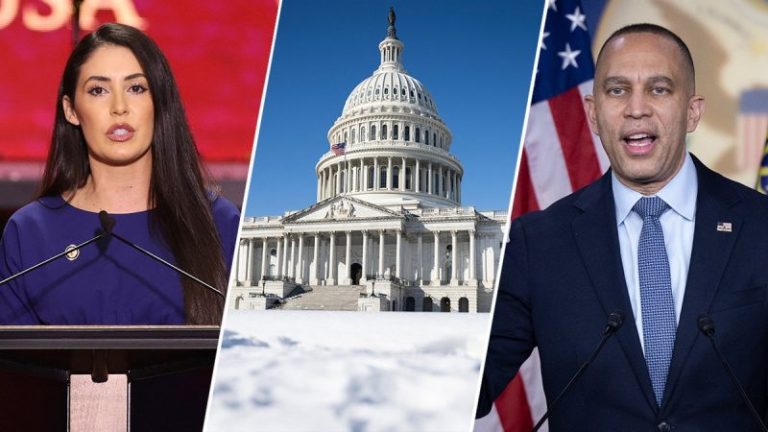
The Senate passed the new deal on Friday, but House Minority Leader Hakeem Jeffries, D-N.Y., is sharply divided from his counterpart, Senate Minority Leader Chuck Schumer, D-N.Y., in his position.

Despite Schumer and Senate Democrats negotiating the plan with Trump’s White House, Jeffries told Johnson not to rely on House Democrats’ support to pass the bill.

It’s a stunning division between the top two Democrats in Congress, and one that will leave House Republicans largely on their own for much of the process of ending the shutdown.

But Trump managed to quell another rebellion on the conservative side earlier on Monday, easing at least one headache for House GOP leaders.

At least four House Republicans signaled they could vote against their own party during the rule vote on Tuesday over its exclusion of an unrelated measure requiring proof of citizenship in the voter registration process.

The president posted on Truth Social earlier Monday demanding ‘NO CHANGES’ to the current deal, effectively undercutting conservatives’ push for the legislation.

Rep. Anna Paulina Luna, R-Fla., had been leading a group of conservatives threatening to tank the rule vote if the SAVE America Act was not attached.

But Luna told reporters on Monday night that she and Rep. Tim Burchett, R-Tenn., both changed their minds after getting assurances from the White House that Senate Majority Leader John Thune, R-S.D., would force a vote on the bill — called the SAVE America Act.

‘As of right now, with the current agreement that we have, as well as discussions, we will both be a yes on the rule,’ Luna said. ‘There is something called a standing filibuster that would effectively allow Senator Thune to put voter ID on the floor of the Senate. We are hearing that that is going well and he is considering that…so we are very happy about that.’

It’s not clear if it’s enough for other House Republicans, however, some of whom are upset over the new deal opening up the need for bipartisan discussions on reining in Trump’s immigration crackdown.

Johnson can only lose one House GOP vote for the funding deal to survive a chamber-wide rule vote.

In the meantime, nearly 14,000 air traffic controllers are expected to work without pay. Members of the military could also miss paychecks if the shutdown goes on long enough, and the Centers for Disease Control and Prevention (CDC) will be limited in its ability to communicate public health updates to Americans.


This post appeared first on FOX NEWS

Planned Parenthood announced it is voluntarily dropping its lawsuit challenging the Trump administration’s ability to withhold Medicaid payments under a provision in President Donald Trump’s tax bill.

The organization sued in July after President Donald Trump signed a spending bill that included prohibiting federal funding from going to abortion providers, a section of the legislation that Planned Parenthood attorneys argued unfairly targeted their clinics and would leave patients with even fewer health care options.

In December, a federal appeals court ruled that the administration could continue to withhold Medicaid funding from Planned Parenthood and other abortion providers.

A separate lawsuit filed by a group of mostly Democratic states suffered a similar setback in January but remains ongoing, and a related case filed in Maine was voluntarily dismissed in October.

A third lawsuit filed in Maine by a network of medical clinics that was also impacted by the spending bill was voluntarily dismissed in October.

Planned Parenthood moved on Friday to voluntarily dismiss the lawsuit in the U.S. District Court of Massachusetts.

‘The goal of this lawsuit has always been to help Planned Parenthood patients get the care they deserve from their trusted provider. Based on the 1st Circuit’s decision, it is clear that this lawsuit is no longer the best way to accomplish that goal,’ the Planned Parenthood Federation of America, Planned Parenthood League of Massachusetts and Planned Parenthood Association of Utah said in a joint statement.

Under the tax provision in Trump’s spending bill, Medicaid payments would be stopped if providers like Planned Parenthood primarily offered certain services, including abortion, and received more than $800,000 from Medicaid in 2023.

Planned Parenthood was not specifically named in the legislation, but the organization’s leaders have said the law is intended to affect their clinics across the country, as Republicans at the federal and state level continue to target the organization.

Federal law bans taxpayer money from covering most abortions, but many Republicans have long argued that abortion providers such as Planned Parenthood used Medicaid money for other health services to subsidize abortion.

Planned Parenthood said 23 of their health clinics have been forced to close due to Trump’s spending bill. More than 50 clinics closed in 18 states last year, with most located in the Midwest.

‘President Trump and his allies in Congress have weaponized the federal government to target Planned Parenthood at the expense of patients — stripping people of the care they rely on,’ Alexis McGill Johnson, president and CEO of Planned Parenthood Federation of America, said in a statement.

‘Through every attack, Planned Parenthood has never lost sight of its focus: ensuring patients can get the care they need from the provider they trust,’ she continued. ‘That will never change. Care continues, as does our commitment to fighting for everyone’s freedom to make their own decisions about their bodies, lives, and futures.’

The Associated Press contributed to this report.

This post appeared first on FOX NEWS

Jeff Clark, founder of Paydirt Prospector, remains bullish on the outlook for gold and silver, emphasizing that cash is key when prices correct.

‘Even though I’m very long, and even though I haven’t taken profits on a lot of things, the number one antidote to a crash or a correction is your cash level,’ he said.

Securities Disclosure: I, Charlotte McLeod, hold no direct investment interest in any company mentioned in this article.

This post appeared first on investingnews.com

Speaking ahead of this week’s gold and silver price correction, Chris Vermeulen, chief market strategist at TheTechnicalTraders.com, said the metals were due for a ‘significant pullback.’

After that, they’ll be positioned for a new leg up.

‘There will be a time definitely to get back into metals, because I think metals will go dramatically higher from where they are right now,’ he explained. ‘But I do think that’s a year or two out.’

Securities Disclosure: I, Charlotte McLeod, hold no direct investment interest in any company mentioned in this article.

This post appeared first on investingnews.com

Andy Schectman, president of Miles Franklin, weighs in on the factors moving gold and silver, emphasizing that their long-term drivers remain in place.

‘Nothing goes straight up without taking a breather, but you can still coexist. That can coexist with long-term bullishness, and I am hugely long-term bullish,’ he said.

Securities Disclosure: I, Charlotte McLeod, hold no direct investment interest in any company mentioned in this article.

This post appeared first on investingnews.com

Apollo Silver Corp. (‘Apollo Silver’ or the ‘Company’) (TSX.V:APGO, OTCQB:APGOF, Frankfurt:6ZF) is pleased to announce that it has received acceptance into the U.S. Defense Industrial Base Consortium (‘DIBC’), a U.S. Department of Defense-supported initiative designed to support collaboration across industry, academia, and government in advancing solutions relevant to U.S. defense and national security priorities.

The DIBC focuses on strategic and critical materials and technologies essential to U.S. national security, including initiatives to improve the resilience and security of domestic critical mineral supply chains that support defense and industrial applications1.

Apollo Silver’s U.S.-based Calico Project hosts significant silver mineralization alongside barite and zinc, which are classified as critical minerals on the USGS List of Critical Minerals and play important roles in industrial, infrastructure, and defense-related applications.

As a member of the DIBC, Apollo Silver joins a network of traditional and non-traditional defense contractors, research institutions, and federal agencies working to advance innovation at speed. Membership provides the Company with opportunities to engage in federally sponsored initiatives related to critical materials supply chains, including the mining and processing of silver, zinc, and barite.

‘Apollo Silver’s acceptance into the DIBC reflects the growing strategic importance of U.S.-based critical mineral assets, including silver, following its inclusion on the USGS List of Critical Minerals in November 2025,’ said Ross McElroy, President and CEO of Apollo Silver. ‘With one of the largest undeveloped primary silver assets in the United States and meaningful exposure to industrial critical minerals such as barite and zinc, we believe Apollo Silver is well positioned to align with U.S. priorities focused on supply-chain security, industrial resilience, and national defense.’

ABOUT Apollo Silver Corp.

Apollo Silver is advancing the second largest undeveloped primary silver projects in the US. The Calico Project hosts a large, bulk minable silver deposit with significant barite and zinc credits – recognized as critical minerals essential to the U.S. energy, industrial and medical sectors. The Company also holds an option on the Cinco de Mayo Project in Chihuahua, Mexico, which is host to a major carbonate replacement (CRD) deposit that is both high-grade and large tonnage. Led by an experienced and award-winning management team, Apollo is well positioned to advance the assets and deliver value through exploration and development.

Please visit www.apollosilver.com for further information.

ON BEHALF OF THE BOARD OF DIRECTORS

Ross McElroy
President and CEO

For further information, please contact:

Email: info@apollosilver.com

Telephone: +1 (604) 428-6128

Neither the TSX Venture Exchange nor its Regulation Services Provider (as that term is defined in the policies of the TSX Venture Exchange) accepts responsibility for the adequacy or accuracy of this release.

Cautionary Statement Regarding ‘Forward-Looking’ Information

This news release includes ‘forward-looking statements’ and ‘forward-looking information’ within the meaning of Canadian securities legislation. All statements included in this news release, other than statements of historical fact, are forward-looking statements including, without limitation, statements with respect to the expected benefits of the Company’s acceptance into the U.S. Defense Industrial Base Consortium (‘DIBC’), the Company’s ability to maintain its membership in the DIBC and pursue opportunities arising therefrom, and the advancement and development potential of the Company’s projects, including the Calico Project and the Cinco de Mayo Project. Forward-looking statements include predictions, projections and forecasts and are often, but not always, identified by the use of words such as ‘anticipate’, ‘believe’, ‘plan’, ‘estimate’, ‘expect’, ‘potential’, ‘target’, ‘budget’ and ‘intend’ and statements that an event or result ‘may’, ‘will’, ‘should’, ‘could’ or ‘might’ occur or be achieved and other similar expressions and includes the negatives thereof.

Forward-looking statements are based on the reasonable assumptions, estimates, analysis, and opinions of the management of the Company made in light of its experience and its perception of trends, current conditions and expected developments, as well as other factors that management of the Company believes to be relevant and reasonable in the circumstances at the date that such statements are made. Forward-looking information is based on reasonable assumptions that have been made by the Company as at the date of such information and is subject to known and unknown risks, uncertainties and other factors that may have caused actual results, level of activity, performance or achievements of the Company to be materially different from those expressed or implied by such forward-looking information, including but not limited to: risks associated with the Company’s ability to maintain DIBC membership and realize anticipated benefits therefrom; changes in government priorities, programs, funding or procurement processes; the risk that membership in the DIBC does not result in any specific contracts, funding, or other opportunities; risks associated with mineral exploration and development; metal and mineral prices; availability of capital; accuracy of the Company’s projections and estimates; realization of mineral resource estimates, interest and exchange rates; competition; stock price fluctuations; availability of drilling equipment and access; actual results of current exploration activities; government regulation; political or economic developments; environmental risks; insurance risks; capital expenditures; operating or technical difficulties in connection with development activities; personnel relations; and changes in Project parameters as plans continue to be refined. Forward-looking statements are based on assumptions management believes to be reasonable, including but not limited to the price of silver, gold and barite; the demand for silver, gold and barite; the ability to carry on exploration and development activities; the timely receipt of any required approvals; the ability to obtain qualified personnel, equipment and services in a timely and cost-efficient manner; the ability to operate in a safe, efficient and effective matter; and the regulatory framework regarding environmental matters, and such other assumptions and factors as set out herein. Although the Company has attempted to identify important factors that could cause actual results to differ materially from those contained in forward-looking information, there may be other factors that cause results not to be as anticipated, estimated or intended. There can be no assurance that forward-looking statements will prove to be accurate and actual results, and future events could differ materially from those anticipated in such statements. Accordingly, readers should not place undue reliance on forward looking information contained herein, except in accordance with applicable securities laws. The forward-looking information contained herein is presented for the purpose of assisting investors in understanding the Company’s expected financial and operational performance and the Company’s plans and objectives and may not be appropriate for other purposes. The Company does not undertake to update any forward-looking information, except in accordance with applicable securities laws.

__________________________________
1
https://www.dibconsortium.org/

News Provided by GlobeNewswire via QuoteMedia

This post appeared first on investingnews.com

Matthew Piepenburg, partner at Von Greyerz, breaks down what’s really driving the gold price, going beyond headlines to the ongoing debasement of the US dollar.

He also discusses silver market dynamics.

Securities Disclosure: I, Charlotte McLeod, hold no direct investment interest in any company mentioned in this article.

This post appeared first on investingnews.com

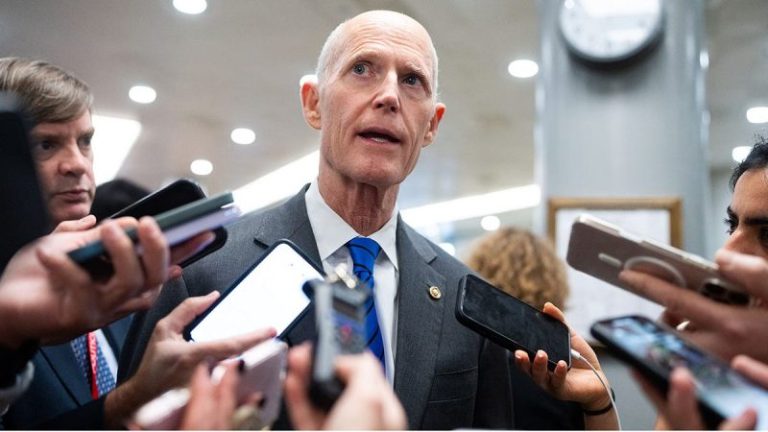
A pair of Senate Republicans are pushing their House counterparts to reject the Trump-backed shutdown deal unless it includes Homeland Security funding and election integrity legislation. 

Sens. Rick Scott, R-Fla., and Mike Lee, R-Utah, are calling on House Republicans to push back against the Senate-passed funding package, which includes bills to fund five agencies, including the Pentagon, as a partial government shutdown continues. 

They contended that the package needs to be retooled, and must include a modified version of the Safeguarding American Voter Eligibility Act, dubbed the SAVE America Act, and the Homeland Security (DHS) funding bill, which was stripped out after Senate Democrats threatened to blow up the government funding process. 

Doing so could extend what was expected to be a short-term shutdown.

Scott said congressional Democrats would ‘NEVER fund DHS’ and Immigration and Customs Enforcement (ICE). He voted against the package twice, arguing that the spending levels would further bloat the nation’s eye-popping $38 trillion national debt, and that the billions in earmarks betrayed Republicans’ previous vows of fiscal restraint.

‘If House Republicans don’t put the DHS bill back in, add the SAVE America Act and remove the wasteful earmarks, Democrats win,’ Scott said. ‘We must protect our homeland, secure our elections and end the reckless spending NOW!’

Lee also rejected the package in the Senate because of earmarks. He also agreed with Scott, and pushed for his SAVE America Act, which he introduced alongside Rep. Chip Roy, R-Texas, to be included.

‘To my friends in the House GOP: Please put DHS funding back in, then add the SAVE America Act,’ Lee wrote on X. 

The updated version of the SAVE Act would require that people present photo identification before voting, states obtain proof of citizenship in-person when people register to vote and remove noncitizens from voter rolls. 

But their demands run counter to the desire of President Donald Trump, who brokered a truce with Senate Minority Leader Chuck Schumer, D-N.Y., to strip the DHS bill following the fatal shooting of Alex Pretti during an immigration operation in Minneapolis in order to ram the funding package through the Senate.

And any changes to the deal, like including the SAVE America Act or adding the DHS bill, would send the package back to the Senate, where Schumer and his caucus would likely reject it. 

That would create a back-and-forth between the chambers that would further prolong what was meant to be a temporary shutdown.

Their demands also place House Speaker Mike Johnson, R-La., in a precarious position, given that several House Republicans want to extract concessions from congressional Democrats. Rep. Anna Paulina Luna, R-Fla., is already leading a charge to include the SAVE Act in the funding package. 

Johnson will have to shore up any resistance among his conference, given that House Minority Leader Hakeem Jeffries, D-N.Y., made clear to the speaker that any attempt to fast-track the legislation on Monday, when the House returns, would fail.

This post appeared first on FOX NEWS

President Donald Trump has threatened legal action against author Michael Wolff and the estate of Jeffrey Epstein, insisting a newly released trove of Epstein-related files clears him of wrongdoing.

Trump was aboard Air Force One during a flight to Palm Beach, Florida, on Saturday when he responded to a reporter’s question about the more than 3 million Epstein-related records and personal emails that the Justice Department released Friday.

‘It looked like this guy, Wolff, was a writer, was conspiring with Epstein to do harm to me,’ Trump said. ‘I didn’t see it myself, but I was told by some very important people that not only does it absolve me, it’s the opposite of what people were hoping, you know, the radical left, that Wolff, who’s a third-rate writer, was conspiring with Jeffrey Epstein to hurt me, politically or otherwise, and that came through loud and clear.’

Trump said there was a high likelihood that he would sue Wolff and the Epstein estate ‘because he was conspiring with Wolff to do harm to me politically. That’s not a friend.’

In one March 2016 email between Epstein and Wolff that Fox News Digital reviewed, Wolff is encouraging Epstein to come up with an ‘immediate counter narrative’ to James Patterson’s book about him, ‘Filthy Rich: A Powerful Billionaire, the Sex Scandal that Undid Him, and All the Justice that Money Can Buy.’

‘You do need an immediate counter narrative to the book,’ Wolff writes. ‘I believe Trump offers an ideal opportunity. It’s a chance to make the story about something other than you, while, at the same time, letting you frame your own story.’

‘Also, becoming anti-Trump gives you a certain political cover which you decidedly don’t have now,’ Wolff continues.

In a February 2016 email previously released, Wolff had suggested to Epstein that the disgraced financier is the ‘bullet’ that could end Trump’s 2016 presidential campaign.

Regarding the latest Epstein document dump, Deputy Attorney General Todd Blanche told Fox News Digital on Friday that ‘in none of these communications, even when doing his best to disparage President Trump, did Epstein suggest President Trump had done anything criminal or had any inappropriate contact with any of his victims.’

Fox News Digital’s Brooke Singman contributed to this report.

This post appeared first on FOX NEWS

A Russian drone strike hit a bus carrying miners in Ukraine’s Dnipropetrovsk region on Sunday, killing at least 12 people.

Ukrainian emergency services later reported the death toll had risen to 15 in one of the deadliest single attacks on energy workers since the start of the war. 

The attack Sunday came a few hours after President Volodymyr Zelenskyy announced a new round of peace talks between Ukraine and Russia had been postponed.

A spokesperson for DTEK, Ukraine’s largest private energy firm, which employed the workers, told Fox News Digital that drones had targeted the bus as it traveled ‘roughly 40 miles from the front line in central and eastern Ukraine.’

The DTEK spokesperson also described the incident as a ‘terrorist attack on civilian infrastructure.’

‘This strike was a targeted terrorist attack against civilians and another crime by Russia against critical infrastructure,’ the spokesperson added.

The bus was transporting miners after the end of their shift when it was hit by a Russian drone, the State Emergency Service of Ukraine also confirmed.

At least seven workers were injured, and a fire sparked by the impact was later extinguished by emergency crews.

‘The epicenter of one of the attacks was a company bus transporting miners from the enterprise after a shift in the Dnipropetrovsk region,’ the company also said in a statement.

Zelenskyy condemned the strike late Sunday, calling it another deliberate attack on civilians.

Earlier in the day, he announced that the next round of trilateral talks involving Ukraine, Russia and the U.S. would now take place Feb. 4-5 in Abu Dhabi, after originally being expected for Sunday.

‘Ukraine is ready for a substantive discussion, and we are interested in ensuring that the outcome brings us closer to a real and dignified end to the war,’ Zelenskyy said on X, adding that the delay had been agreed to by all sides.

The delay followed a surprise meeting Saturday in Florida between Steve Witkoff, President Donald Trump’s special envoy, and Kirill Dmitriev, the Kremlin’s special envoy and head of Russia’s sovereign wealth fund.

The talks in Abu Dhabi are now expected to include representatives from Ukraine, Russia and the U.S., according to the Associated Press.

Meanwhile, Zelenskyy warned Russia is stepping up its aerial campaign against civilian and logistical targets. 

‘Over the past week, Russia has used more than 980 attack drones, nearly 1,100 guided aerial bombs, and two missiles against Ukraine,’ he wrote on X on Sunday. ‘We are recording Russian attempts to destroy logistics and connectivity between cities and communities.’

In a statement, DTEK CEO Maxim Timchenko also explained the bus attack marked the company’s ‘single largest loss [of] life of DTEK employees since Russia’s full-scale invasion.’

‘We can already say with certainty that this was an unprovoked terrorist attack on a purely civilian target, for which there can be no justification,’ Timchenko said.

The attack marked ‘one of the darkest days in our history,’ he added. ‘DTEK teams are working with emergency services on the ground in Dnipropetrovsk region to ensure the injured, and families who have lost loved ones, get all the care and support they need. Their sacrifice will never be forgotten,’ he added.

This post appeared first on FOX NEWS