Author

admin

Browsing

Iron ore prices have strengthened since bottoming out in September 2024, but the base metal faced headwinds in 2025 as tariff threats and investor uncertainty weighed on the market.

Usage in steel makes iron ore one of the most widely used and essential materials in the world, and as a result its fortune is highly dependent on the strength of the construction and manufacturing sectors.

Iron ore has also seen increased demand from electric vehicle (EV) batteries over the last several years.

Among all countries, China leads the world in steel production, but lacks domestic supply to meet demand; it is also the world’s largest importer of base metals. As one of the biggest manufacturing bases and a significant source of demand for construction and EV production, China exerts considerable influence on iron ore prices.

Additionally, as 2026 begins, the definitive period for the EU’s Carbon Border Adjustment Mechanism (CBAM) is starting — it will apply levies to high-carbon imports such as steel.

How did iron ore prices perform in 2025?

Iron ore started 2025 at US$99.44 per metric ton (MT) on January 6, then hit US$107.26 on February 12.

The start of March saw a steep decline for prices as they retreated toward the US$100 mark, then climbed back to US$104.25 on April 2; a rout in the base metals market saw prices fall to US$99.05 on April 9.

While other metals recovered, iron ore continued to track lower, reaching US$97.41 on May 5 and ultimately sinking to a yearly low of US$93.41 on July 1. During the third quarter, iron ore prices gained momentum, rising above the US$100 mark in August and reaching a quarterly high of US$106.08 on September 8.

Prices were largely rangebound in Q4, dropping below US$104 only once on November 7, then recovering to post a yearly high of US$107.88 on December 4. Prices had retreated to US$106.13 by December 5.

Key iron ore price drivers in 2025

All in all, prices for iron ore didn’t fare too badly in 2025.

The biggest factor affecting growth was a significant fall-off during the first half of the year as pressures mounted from a continuing slump in the Chinese property sector and the threat of US tariffs.

The Chinese real estate sector has been in steep decline since 2021, when two of the nation’s top developers — Country Garden and Evergrande — declared bankruptcy after incurring hundreds of billions of dollars in debt. Since then, the government has introduced various stimulus measures, but has failed to turn the sector around.

As mentioned, because of the sheer size of the property market in China, it is a significant demand driver for steel products and has an outsized influence on the global iron ore market.

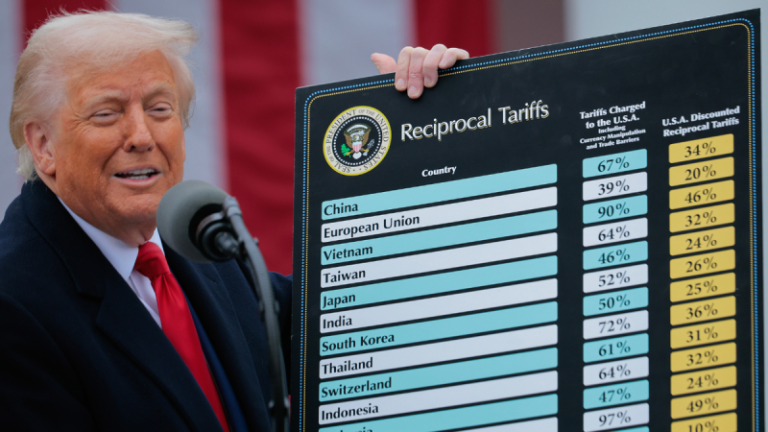
Another noteworthy headwind for iron ore price levels this past year was the threat of US tariffs. In early April, US President Donald Trump announced his “Liberation Day” tariffs, which applied a 10 percent levy across the board, and threatened retaliatory tariffs to close trade deficits with most countries.

The move sparked fears of a global recession and triggered a rout in equities and commodities markets, sending prices plunging. However, most markets rebounded quickly as plans were dialed back after a squeeze in the bond market that sent 10 year treasury yields up by more than half a percentage point.

Further iron ore price pressures came later in the year, when the massive Simandou mine in Guinea shipped its first iron ore, destined for smelters in China, on December 2.

Two consortia of companies own the mine. Blocks three and four have a 45/40/15 ownership split between Rio Tinto (ASX:RIO,NYSE:RIO,LSE:RIO), Chinalco and the Guinea government, and blocks one and two have a 45/35/20 split between Winning International, China Hongquiao Group (HKEX:1378,OTCPL:CHHQF) and United Mining Supply.

The mine will ramp up production over the next 30 months, and is expected to produce 15 million to 20 million MT in 2026 and 40 million to 50 million MT in 2027.

What trends will move the iron ore market in 2026?

“Construction accounts for about 50 percent of steel consumption in terms of end users. The weakness of the property market has, of course, weighed on steel demand and therefore pig iron production. However, the driver for China’s steel production has been industrialisation and urbanisation during the past two decades,” he said.

Sardain went on to state that despite a shift in focus from fixed assets to manufacturing, services and technology, overall steel demand is set to move lower. Although the decline won’t last forever and the property market will stabilize, the effect of even a mild rebound on steel production will be limited:

“However, steel production and iron ore demand have been supported by strong exports in markets such as Southeast Asia, East Asia, the Middle East, Latin America and Africa, mitigating the impact of a lower domestic steel demand. Whether steel exports can increase from their current level is debatable, and we forecast a lower steel production in China over time.’

On the tariff front, US levies aren’t likely to have much impact. Sardain pointed out that while US steel demand exceeds its production capacity, Chinese imports remain a minimal factor.

Meanwhile, the US is primarily producing steel in lower-carbon electric arc furnaces from ferrous scrap.

Although steel tariffs from Canada and Brazil are set at 25 and 50 percent, respectively, both countries have exemptions for iron ore pellets, and Canadian ferrous scrap is covered under CUSMA provisions.

But with the trade pact set to be renegotiated in 2026, it’s uncertain what it means for steel and, by extension, iron products, in the midterm. The best-case scenario is that Canadian steel will receive an exemption.

Still, the risk remains that current CUSMA blanket exemptions will be removed, allowing the US to apply additional tariffs on Canadian goods crossing the border. Likewise, in Europe, the CBAM came into effect on January 1, 2026.

While the impact may take some time to work through the market, it will still have downstream effects for producers that want to avoid tariffs on imported products. This may be one reason Chinese steel producers are switching from higher-carbon blast furnaces to electric arc furnaces in the smelting process.

“Currently, electric arc furnaces account for about 12 percent of China’s steel production, set to increase to 18 percent by the first part of the next decade,” Sardain said, noting that China is looking to cap its emissions by 2030.

The main challenge for iron ore is waning demand, as the primary input for electric arc furnaces is scrap steel, not raw iron. “Countries which will see their steel production increasing (primarily India, but to some extent Russia, Brazil or Iran) are not iron ore importers because they are self-sufficient. Steel production in the EU is flat to lower with more production coming from electric arc furnaces as part of the decarbonisation process,” Sardain said.

Soft demand growth, however, is expected to meet increasing mine supply, further dragging on prices in 2026.

Sardain suggested that all major iron ore miners will increase their production in 2026, with the largest boost coming from Guinea’s Simandou, which could shake up supply chains.

“The blocks one and two are owned by a Chinese-Singaporean consortium. It will provide China with the opportunity to diversify its supply from the major Australian producers (something that the country tried to do for the past 15 years unsuccessfully) and it will shift the supply-demand momentum in favour of China,” he said.

Additionally, the mine is important because of its 65 percent iron content.

Iron ore price forecast for 2026

Sardain expects iron ore prices to remain muted in 2026.

“We believe that price should drop below the US$100 per MT mark, although it could stay above this level in H1 due to seasonality … so, overall, prices staying between US$100 to US$105 per MT in H1, then declining below US$100 per MT in H2, with the ramp-up of the Simandou mine being a determining factor,” he said.

This is largely in line with estimates from other firms. BMI is predicting a 2026 price of US$95, while RBC Capital Markets sees iron ore averaging US$98; the overall consensus stands at US$94.

Securities Disclosure: I, Dean Belder, hold no direct investment interest in any company mentioned in this article.

This post appeared first on investingnews.com

Andy Schectman, president of Miles Franklin, breaks down recent silver market dynamics, including the massive rise in entities standing for delivery of physical metal, increased CME Group (NASDAQ:CME) margin requirements and China’s silver export controls.

‘We’re beginning to see at the highest level a change of mentality, a change of perception of what these metals truly are,’ he said in the interview.

Securities Disclosure: I, Charlotte McLeod, hold no direct investment interest in any company mentioned in this article.

This post appeared first on investingnews.com

The cobalt market entered 2025 under pressure from a prolonged supply glut, but the balance shifted sharply as the year unfolded, due almost entirely to intervention from the Democratic Republic of Congo (DRC).

After starting the year near nine year lows of US$24,343.40 per metric ton, cobalt metal prices had risen to US$53,005 by the end of December, pushed upward by supply concerns stemming from export limits in the DRC.

“The cobalt market in 2025 was characterised by a significant price recovery following the DRC banning the export of all cobalt from its borders in February,” said Aubry. “By the end of 2025, sulphate prices increased 266 percent, hydroxide increased by 328 percent and metal prices by 130 percent year-to-date.”

Q1: Cobalt moves from glut to supply shock

As mentioned, cobalt metal prices hit their weakest level since 2016 in January. Global mine output had more than doubled over five years, far outpacing demand growth from electric vehicles and other end uses.

That dynamic changed abruptly in late February, when the DRC — which supplies roughly three-quarters of the world’s cobalt — imposed a four month suspension on cobalt hydroxide exports.

The news lifted cobalt from US$24,495 at the start of the year to above US$34,000 by the end of March, with intra-month highs nearing US$36,300. The move marked the sector’s first meaningful rebound in nearly two years.

As the DRC exhibited control over cobalt supply, the market began to look to the world’s second largest cobalt-producing nation: Indonesia. Indonesia’s cobalt output is largely a by-product of its laterite nickel industry, produced through high-pressure acid leaching (HPAL) plants that process nickel-rich ores.

These facilities generate mixed hydroxide precipitate (MHP), an intermediate containing both nickel and cobalt that can be further refined into battery-grade materials. The model has enabled Indonesia to rapidly scale its cobalt supply, leveraging its dominant nickel position and integrated processing infrastructure.

Indonesia produced about 31,000 metric tons of cobalt in 2024 — roughly 10 percent of global supply — cementing its position as the world’s second largest producer behind the DRC.

Output growth is being driven by HPAL projects targeting up to 500,000 tons per annum (tpa) of mixed hydroxide precipitate, potentially yielding 50,000 tpa of cobalt, though scaling up may prove challenging.

Indonesian MHP, a lower-cost intermediate that is rich in nickel and cobalt, is increasingly viewed by Chinese refiners as a substitute for DRC-sourced cobalt hydroxide.

Q2 and Q3: A fragile equilibrium forms

The DRC’s export ban continued to underpin prices through the second quarter.

Standard-grade cobalt metal was trading near US$15 to US$16 per pound at the time, while cobalt sulfate posted even sharper gains. Despite the rally, sentiment remained cautious. Chinese refiners drew on existing inventories, and trade data showed cobalt units still flowing into China, particularly from Indonesia.

By June, prices had begun to ease as uncertainty mounted over how long the DRC would maintain controls.

Although China imported significant volumes earlier in the year, analysts warned Indonesian supply would be insufficient to fully offset reduced DRC cobalt shipments. Later that month, the DRC extended its export restrictions through September, reinforcing expectations that the market would move toward balance.

By mid-year, Chinese import data confirmed the impact — cobalt hydroxide inflows had fallen sharply, with analysts projecting constrained refinery feed into late 2025 or early 2026.

Prices stabilized in a broad US$33,000 to US$37,000 range through Q3, supported by tightening supply and diminishing inventories. Market participants increasingly viewed the DRC’s actions as a structural shift rather than a temporary correction, signaling the end of the cobalt surplus that had defined the previous two years.

By late 2025, the cobalt market had transformed from one of chronic oversupply to one approaching equilibrium — a reset driven not by demand growth, but by decisive supply-side intervention.

Q4: Cobalt quotas replace DRC ban, prices climb

After months of supply disruption, the DRC lifted its full cobalt export ban in mid-October, replacing it with a rigid quota system that will shape the market through 2026.

Under the new framework, annual DRC exports are capped at about 96,600 metric tons, roughly half of 2024 levels, with just 18,125 metric tons scheduled for shipment in Q4 2025.

This structural tightening helped sustain elevated prices that surged above US$47,000 by late October, levels not seen since early 2023, amid persistent feedstock shortages and constrained exports.

DRC quotas have provided a degree of market clarity, with major producers like CMOC Group (OTCPL:CMCLF) receiving significant allocations that underpin production plans. Despite robust output guidance, inventories outside the DRC remain tight, and market participants see continued upward price pressure as the quota system curtails supply.

“The DRC’s quota system is set to squeeze supply in the next two years — unless the country revises quotas higher,” wrote Fastmarkets’ Oliver Masson in a December market update.

“Prices are already considerably higher than they were at the beginning of the year, and they are likely to remain elevated for as long as current quota levels remain in force,’ he said. ‘Cobalt is mostly used in batteries, and the longer prices remain elevated, the more likely it is that EV manufacturers will seek to move to low-cobalt or cobalt-free chemistries where feasible. This could slow demand in the medium term.”

Cobalt price forecast for 2026

Looking ahead to 2026, analysts see the cobalt market shifting into a deficit as export caps bite and global feedstock availability shrinks. Fastmarkets projects a structural shortfall of about 10,700 metric tons against demand near 292,300 metric tons, driven by DRC quota limits and ongoing drawdowns of stocks.

Industry forecasters also anticipate that reduced shipments, combined with a stubbornly tight pipeline, will support stronger average prices next year. Some forecasts suggest cobalt could average near US$55,000 in 2026 as export quotas supplant the 2025 ban. Indonesian supply is emerging as a secondary source, with production climbing, but most analysts agree it will be insufficient to offset DRC constraints in the near term.

After a year of dramatic swings driven by supply policy in the DRC, 2026 is shaping up as the first sustained deficit environment in the cobalt market, with prices expected to remain elevated amid structural tightening.

“Prices have substantially recovered over 2025 and are expected to remain elevated in 2026 as the DRC limits exports,” said Aubry. “There is a significant potential upside risk as dwindling ex-DRC stocks present the risk of demand destruction towards the end of the year.”

Securities Disclosure: I, Georgia Williams, hold no direct investment interest in any company mentioned in this article.

This post appeared first on investingnews.com

VANCOUVER, BRITISH COLUMBIA / ACCESS Newswire / January 14, 2026 / CoTec Holdings Corp. (TSX-V:CTH)(OTCQB:CTHCF) (‘CoTec’ or the ‘Company’) is pleased to announce that the Company’s CEO, Julian Treger, will host an investor update on Friday, January 16, 2026, at 8:00 a.m. PST / 11:00 a.m. EST.

The update will highlight recent platform and strategic developments across the CoTec portfolio. Management will provide a high-level update on progress at MagIron, a CoTec investment advancing a U.S.-based iron ore and metallics strategy, as well as HyProMag USA, and discuss other key initiatives currently being advanced by the Company. The presentation will also include management’s outlook for 2026, outlining priorities, upcoming milestones, and areas of focus for the year ahead. A Q&A session will follow the presentation.

Investors who wish to attend the presentation may do so by clicking here to register.

Should the above link not work, please copy and paste the following link to your web browser: https://us06web.zoom.us/webinar/register/WN_0NBXb4IIRXOVP0d2l7j5Vg#/registration

About CoTec

CoTec Holdings Corp. (TSX-V:CTH)(OTCQB:CTHCF) is redefining the future of resource extraction and recycling. Focused on rare earth magnets and strategic materials, CoTec integrates breakthrough technologies with strategic assets to unlock secure, sustainable, and low-cost supply chains for the United States and its allies.

CoTec’s mission is clear: accelerate the energy transition while strengthening U.S. economic and national security. By investing in and deploying disruptive technologies, the Company delivers capital-efficient, scalable solutions that transform marginal assets, tailings, waste streams, and recycled products into high-value critical minerals.

From its HyProMag USA magnet recycling joint venture in Texas, to iron tailings reprocessing in Québec, to next-generation copper and iron solutions backed by global majors, CoTec is building a diversified portfolio with long-term growth, rapid cash flow potential, and high barriers to entry. The result is a differentiated platform at the intersection of technology, sustainability, and strategic materials.

For more information, please visit www.cotec.ca

For further information, please contact:
Eugene Hercun, VP Finance, +1 604 537 2413

Forward-Looking Information Cautionary Statement

Statements in this press release regarding the Company and its investments which are not historical facts are ‘forward-looking statements’ that involve risks and uncertainties, including statements relating to management’s expectations with respect to its current and potential future investments and the benefits to the Company which may be implied from such statements. Since forward-looking statements address future events and conditions, by their very nature, they involve inherent risks and uncertainties. Actual results in each case could differ materially from those currently anticipated in such statements. For further details regarding risks and uncertainties facing the Company, please refer to ‘Risk Factors’ in the Company’s filing statement dated April 6, 2022, a copy of which may be found under the Company’s SEDAR+ profile at www.sedarplus.ca

Neither TSX-V nor its Regulation Services Provider (as that term is defined in the policies of the TSX-V) accepts responsibility for the adequacy or accuracy of this news release.

SOURCE: CoTec Holdings Corp.

View the original press release on ACCESS Newswire

News Provided by ACCESS Newswire via QuoteMedia

This post appeared first on investingnews.com

The interim government in Venezuela has released at least four U.S. citizens who were imprisoned under President Nicolás Maduro’s regime, Fox News confirmed.

The release marks the first known release of Americans in the South American country since the U.S. military completed an operation to capture authoritarian Venezuelan President Nicolás Maduro, who is now facing federal drug trafficking charges in New York.

‘We welcome the release of detained Americans in Venezuela,’ a State Department official said Tuesday. ‘This is an important step in the right direction by the interim authorities.’

The release of American citizens was first reported by Bloomberg.

President Donald Trump said Saturday that Venezuela had begun releasing political prisoners.

‘Venezuela has started the process, in a BIG WAY, of releasing their political prisoners,’ Trump wrote on Truth Social. ‘Thank you! I hope those prisoners will remember how lucky they got that the USA came along and did what had to be done.’

Venezuela’s interim government has reported that 116 prisoners have been released, although only about 70 have been verified by the non-governmental organization Justicia, Encuentro y Perdón, according to Bloomberg.

National Assembly President Jorge Rodríguez said prisoner releases would continue, according to the outlet.

The U.S. government issued a new security alert Saturday urging Americans in Venezuela to leave the country immediately, citing security concerns and limited ability to provide emergency assistance, the U.S. Embassy in Caracas said.

‘U.S. citizens in Venezuela should leave the country immediately,’ the embassy said in the alert.

The warning pointed to reports of armed groups operating on Venezuelan roads.

Following the military operation, Trump suggested that the U.S. would ‘run’ Venezuela for an extended period.

‘We’re going to run the country until such time as we can do a safe, proper and judicious transition,’ he said.

This post appeared first on FOX NEWS

A South Korean court heard arguments Tuesday seeking the death penalty for former President Yoon Suk Yeol, as prosecutors accused the ousted leader of orchestrating a rebellion through his controversial martial law declaration in December 2024.

Independent counsel Cho Eun-suk asked the Seoul Central District Court to impose the sentence, arguing that Yoon’s actions amounted to ‘anti-state activities’ and describing the decree as a ‘self-coup.’

Yoon, a conservative who was removed from office last spring, remains in custody while facing multiple criminal proceedings tied to the martial law episode and other controversies from his presidency. Prosecutors say the rebellion charge carries the most severe potential punishment.

Cho’s team argued in court that Yoon sought to prolong his hold on power by undermining South Korea’s constitutional system of governance.

Yoon has rejected the accusations, telling the court that the investigations into his conduct have been ‘frenzied’ and marked by ‘manipulation’ and ‘distortion.’

He has maintained that the declaration of martial law was intended to alert the public to what he viewed as the growing threat posed by the opposition Democratic Party, which used its legislative majority to block his political agenda. 

Yoon argued that the exercise of presidential emergency powers cannot be treated as rebellion under the law.

The court is expected to deliver a verdict next month. Legal experts have said a life sentence is more likely than execution, noting that South Korea has not carried out a death penalty since 1997.

Yoon is the first South Korean president who has faced a potential death penalty after leaving office since Chun Doo-hwan was sentenced to death in 1996 for various crimes. Chun’s death sentence was later commuted to life in prison, and he was subsequently pardoned and freed.

The Associated Press contributed to this report.

This post appeared first on FOX NEWS

President Donald Trump is setting the stage for the U.S. to be involved in overseeing Venezuela for a significant period of time, after conducting strikes and capturing dictator Nicolás Maduro and labeling himself ‘acting’ president of Venezuela. 

The move marks his boldest interventionist move yet — a foreign policy approach by which one country intervenes in another state’s affairs — and follows other major military operations from the Trump administration, including strikes in Syria in December 2025 against Islamic State operatives after an ambush against U.S. troops there, and strikes in June 2025 against the Iranian nuclear sites of Fordow, Natanz and Isfahan.

Trump told The New York Times in an interview that was published Wednesday that ‘only time will tell’ how long the U.S. will be running Venezuela, but said it would be ‘much longer’ than a year. 

Additionally, Trump announced recently that Venezuela’s interim government would hand over up to 50 million barrels of oil to the U.S. and that the oil would be sold ‘immediately.’

‘We will rebuild it in a very profitable way,’ Trump told the Times. ‘We’re going to be using oil, and we’re going to be taking oil. We’re getting oil prices down, and we’re going to be giving money to Venezuela, which they desperately need.’

Likewise, Trump shared a doctored image that looked like a Wikipedia page that identified him as ‘Acting President of Venezuela’ since January 2026. 

Previous interventionist actions the U.S. has taken include launching an invasion of Afghanistan in response to the 9/11 attacks Afghanistan-based al-Qaeda conducted against the U.S., and an invasion of Iraq in 2003 that led to the toppling of Iraqi dictator Saddam Hussein’s regime. In both cases, the U.S. remained in prolonged occupations there. 

The language the Trump administration is using now focusing on illegal migration is different than what was used during the Afghanistan and Iraq conflicts, which focused on democracy-building and promoting freedom, Katherine Thompson, a senior fellow in defense and foreign policy studies at the libertarian think tank the Cato Institute, told Fox News Digital. 

‘But the pathway to achieve those things, I don’t see, like, a broad differentiation from the things that we did before,’ Thompson told Fox News Digital. 

Thompson said that she doesn’t see how the Trump administration’s goals could be completed without small rotational deployments from U.S. forces to provide security, particularly in the event that the U.S. reopens its Embassy in Caracas, Venezuela. 

‘I don’t see how we’re going to have a team there without at least some small deployment of rotational forces to achieve security of our own personnel,’ Thompson said.

So far, no U.S. troops are on the ground in Venezuela, and the Senate advanced a War Powers resolution Thursday that, if passed, would bar using U.S. forces within or against Venezuela without Congress’ approval. 

When asked by Fox News Digital about whether Trump’s ‘Acting President of Venezuela’ post was shared jokingly and what it indicates about how long the U.S. will be involved in running Venezuela, White House spokeswoman Anna Kelly told Fox News Digital: ‘President Trump will be the greatest President for the American and Venezuelan people in history. Congratulations, world!’

Although Trump has blasted previous administrations for actions in the Middle East and vowed he would bring an end to ‘endless wars’ while ushering in an ‘America First’ agenda prioritizing U.S. interests, Democrats warned that the U.S. may be involving itself in another complicated conflict. 

Senate Minority Leader Chuck Schumer, D-N.Y., claimed that the U.S. is on the path to another ‘endless war.’

‘The very thing that Donald Trump campaigned against over and over and over again was no more endless wars,’ Schumer said in an interview with ABC News Jan. 4. ‘And, right now, we’re headed right into one with no barriers, with no discussion.’ 

Trump announced on Jan. 3 that U.S. special forces conducted a ‘large-scale strike’ against Caracas, and seized Maduro and his wife, Cilia Flores. Both were taken to New York and appeared in a Manhattan federal court Jan. 5 on drug charges, where they each pleaded not guilty.

The raid came after months of pressure on Venezuela and more than two dozen strikes in Latin American waters against alleged drug traffickers as part of Trump’s effort to crack down on the influx of drugs into the U.S.

The Trump administration routinely stated that it did not recognize Maduro as a legitimate head of state and said he was the leader of a drug cartel. Likewise, Trump said in December 2025 he believed it would be ‘smart’ for Maduro to step down. 

The Trump administration has justified seizing Maduro as a ‘law enforcement’ operation, and Secretary of State Marco Rubio said congressional approval wasn’t necessary since the operation didn’t amount to an ‘invasion.’

However, lawmakers primarily on the left have questioned the legality of the operation in Venezuela, which was conducted without Congress’ approval.

‘This has been a profound constitutional failure,’ the top Democrat on the Senate Armed Services Committee, Sen. Jack Reed, D-R.I., said in a statement Jan. 3. ‘Congress — not the President — has the sole power to authorize war. Pursuing regime change without the consent of the American people is a reckless overreach and an abuse of power.’

This post appeared first on FOX NEWS

Former Secretary of State Hillary Clinton was subpoenaed to appear before the House Oversight Committee on Wednesday, but she’s expected to ignore the order, potentially risking criminal charges.

Hillary Clinton is scheduled to be deposed behind closed doors at 10 a.m. on Wednesday, and it appears the GOP-led committee will move forward with holding the interview in some form regardless of whether she attends.

Hillary and Bill Clinton’s lawyers sent a letter to House Oversight Committee Chairman James Comer, R-Ky., earlier this week, calling their subpoenas ‘invalid and legally unenforceable.’

But Comer previously threatened to initiate contempt of Congress proceedings against both Clintons if they skipped their January deposition dates, which were rescheduled twice prior, amid conversations with their attorneys.

Bill Clinton defied his own subpoena on Tuesday, failing to appear for a 10 a.m. closed-door deposition. 

Comer told reporters afterward that the House Oversight Committee would meet next week to advance a contempt resolution against the former president in response.

When Fox News Digital asked if the same would happen to Hillary Clinton if she failed to appear the next day, Comer said, ‘We’ll see. We’ll talk about it.’

The former first couple were two of 10 people subpoenaed by Comer as part of the panel’s investigation into Jeffrey Epstein. The subpoenas were issued following a bipartisan vote by an Oversight subcommittee panel during an unrelated hearing on illegal immigration.

Despite that, however, no Democrats appeared for Bill Clinton’s expected grilling.

‘Not a single Democrat showed up today, not a single Democrat,’ Comer told reporters. ‘It just seems like they only care about pushing Republicans. And we’ve had a former Trump Cabinet secretary, Alex Acosta, in for a grilling. We had Bill Barr, former attorney general, in for a grilling. But for whatever reason, President Clinton didn’t show up. And the Democrats on the committee don’t seem to have a problem.’

The Clintons’ attorneys criticized Comer’s leadership of the investigation in their letter, discounting the subpoenas.

‘President and Secretary Clinton have already provided the limited information they possess about Jeffrey Epstein and Ghislaine Maxwell to the Committee,’ the lawyers said.

‘Your continued insistence that the former President and Secretary of State can be compelled to appear before the Committee under these circumstances, however, brings us toward a protracted and unnecessary legal confrontation that distracts from the principal work of the Congress with respect to this matter, which, if conducted sincerely, could help ensure the victims of Mr. Epstein and Ms. Maxwell are afforded some measure of justice for the crimes perpetrated against them, however late. But perhaps distraction is the point.’

Comer said after Bill Clinton skipped his deposition, ‘No one’s accusing Bill Clinton of any wrongdoing. We just have questions. And that’s why the Democrats voted, along with Republicans, to subpoena Bill Clinton.’

The House Oversight Committee would need to advance a contempt resolution before it’s considered by the entire chamber. If a simple majority votes to hold someone in contempt of Congress, a criminal referral is then traditionally made to the Department of Justice.

A criminal contempt of Congress charge is a misdemeanor that carries a punishment of up to one year in jail and a maximum $100,000 fine, if convicted.

This post appeared first on FOX NEWS

Sen. Rand Paul, R-Ky., accused his ‘pro-life’ Republican colleagues of not caring about the people killed in boat strikes near Venezuela who the Trump administration, without providing evidence, claims were trafficking fentanyl.

During an appearance on ‘The Joe Rogan Experience’ released on Tuesday, Paul said GOP lawmakers ‘don’t give a s‑‑-‘ about the people who died on the vessels, blasting his colleagues for not granting the presumption of innocence.

‘I look at my colleagues who say they’re pro-life, and they value God’s inspiration in life, but they don’t give a s‑‑- about these people in the boats,’ Paul said. ‘Are they terrible people in the boats? I don’t know. They’re probably poor people in Venezuela and Colombia.’

‘I guess what I don’t feel connected to my Republican colleagues is that those lives don’t matter at all, and we just blow them up. And against all justice, and against all laws of war, all laws of just war, we have never blown up people who were shipwrecked,’ he added, referring to the administration’s reported targeting and killing of survivors of initial strikes who were clinging to wreckage.

The liberty-minded Republican said it is ‘against the military code of justice to do that.’

‘We’re doing it and everybody just says, ‘Oh, well, they’re drug dealers,” he said.

Paul criticized his fellow GOP lawmakers who have repeated the administration’s claims about the boats carrying fentanyl. He also took issue with colleagues who hold the position of, ‘Well, we’re at war with them. They’re committing war by bringing drugs into America.’

‘They’re not even coming here,’ Paul explained. ‘They’re going to these islands in the south part of the Caribbean. The cocaine — and it’s not fentanyl at all — the cocaine’s going to Europe.’

He emphasized that ‘those little boats can’t get here.’

‘No one’s even asked this common question: Those boats have these four engines on them. They’re outboard boats. You can probably go about 100 miles before you have to refuel. Two thousand miles from us, they’d have to refuel 20 times to get here,’ Paul said.

The senator accused the administration of conducting the boat strikes to create ‘a pretense and a false argument’ ahead of the operation to attack Venezuela and arrest its president, Nicolás Maduro.

‘It’s all been a pretense for arresting Maduro,’ he said. ‘So, we have to set up the predicate. We got to show you we care about drugs.’

Paul helped the Senate advance a resolution last week that would limit Trump’s ability to conduct further attacks against Venezuela after the U.S. military’s recent move to strike the country and capture Maduro, which the Kentucky Republican said amounts to war. The Upper Chamber could pass the measure later this week, although it faces an uphill battle in the House despite some support from Republicans.

‘I think bombing a capital and removing the head of state is, by all definitions, war,’ Paul told reporters before the procedural vote last week. ‘Does this mean we have carte blanche that the president can make the decision any time, anywhere, to invade a foreign country and remove people that we’ve accused of a crime?’

The lawmaker has repeatedly criticized the administration’s boat strikes on alleged narco-terrorists in recent months, often raising concerns about killing people without due process and the possibility of killing innocent people. The senator previously cited Coast Guard statistics that show a significant percentage of boats boarded on suspicion of drug trafficking are innocent.

Paul said on ‘The Joe Rogan Experience’ that he believes the administration might attack Mexico next, which Trump has signaled could be a future target.

‘They want to do that next. They want to bomb Mexico,’ Paul said.

Trump has said cartels are ‘running Mexico’ and that ‘something’s going to have to be done’ because Mexican President Claudia Sheinbaum is ‘very frightened’ of the cartels.

This post appeared first on FOX NEWS

HIGHLIGHTS:

  • Production guidance of 50,000-55,000 oz gold
  • Cash Costs of $1,850-$1,950/oz gold and All In Sustaining Costs of $2,025-$2,125/oz gold
  • Pre-stripping of Veta Madre open pit expansion at La Colorada
  • $27M exploration program funded from operating cash flow

Heliostar Metals Ltd. (TSXV: HSTR,OTC:HSTXF) (OTCQX: HSTXF) (FSE: RGG1) (‘Heliostar’ or the ‘Company’) is pleased to provide production and cost guidance for 2026 as well as details of growth plans across the portfolio. The Company plans to produce 50,000-55,000 ounces of gold at by-product cash costs of $1,850-$1,950oz gold and a consolidated All-In Sustaining Cost (AISC) of $2,025-$2,125oz gold. Heliostar will utilize the cash generated from ongoing operations to continue to invest in exploration and growth initiatives across the Company’s portfolio, including advancement of the flagship Ana Paula development project towards production.

Project Category 2026 Guidance
La Colorada Mine
Gold Production (Ounces) 20,000-22,300
Silver Production (Ounces) 130,000-145,000
Cash Costs (per gold ounce)1,2 $1,650-$1,750
All-In Sustaining Cost (per gold ounce)1,2,3,4 $1,775-$1,875
San Agustin Mine
Gold Production (Ounces) 30,000-32,700
Silver Production (Ounces) 160,000-175,000
Cash Costs (per gold ounce)1,2 $2,000-$2,100
All-In Sustaining Costs (per gold ounce)1,2,3,4 $2,150-$2,250
Heliostar Consolidated
Gold Production (Ounces) 50,000-55,000
Silver sold (Ounces) 290,000-320,000
Cash Cost (per gold ounce)1,2 $1,850-$1,950
All-In Sustaining Costs (per gold ounce)1,2,3,4 $2,025-$2,125


  1. Cash costs and AISC are non-GAAP measures. Please refer to the ‘Non-GAAP Financial Measures’ section of this news release for further information on this measure.
  2. AISC is based on the World Gold Council definition.
  3. Mine site AISC includes only the portion of corporate G&A allocated to the operating mines. Consolidated G&A includes the aforementioned corporate G&A allocated to the operating mines plus all corporate stock-based compensation.
  4. Annual average exchange rate from all costs based on Mexican peso to US dollar (18 pesos per one dollar).

The La Colorada mine (‘La Colorada’) will continue to produce metals from processing Junkyard and other stockpiles with a focus on additional re-leaching opportunities at the operation. The San Agustin mine (‘San Agustin’) successfully resumed mining operations in December 2025 (see the press release dated December 17, 2025) and will continue mining, crushing, stacking and leaching activities to produce gold and silver through 2026 and beyond.

La Colorada

In 2026, the Company expects to produce 20,000-22,300 ounces of gold at an AISC of $1,775-$1,875 per ounce of gold. This will come from crushing and stacking stockpiles, including the Junkyard Stockpile ore, a portion of the Truckshop Stockpile and re-leaching opportunities.

Development of the Veta Madre open pit expansion project is planned to commence in early Q3. The Company plans to conduct pre-stripping of 11 million tonnes of waste in 2026 to access the 43,000 ounces of in-situ gold in reserves at Veta Madre starting in the first half of 2027. This is a key growth initiative that will drive increased production at the mine in 2027.

De-risking drilling of Veta Madre and Veta Madre Plus (a planned cutback and possible expansion, respectively) is ongoing. The results of this program will provide technical information for a refined pit design and may lead to additional mineral reserves. Heliostar has also budgeted for regional exploration beyond the main mine trend at La Colorada with the aim of unlocking the full geologic potential of the larger, under-explored land package. In addition, the Company has planned for a dedicated drill program in the second half of 2026 to investigate the underground potential below the existing open pits at La Colorada. Heliostar intends to invest up to $5.8M in resource development and exploration activities at La Colorada in 2026.

San Agustin

After successfully restarting open pit production in December 2025, the operation will produce at steady state through 2026 and beyond. The Company expects the mine to produce 30,000-32,700 ounces of gold at a site-level, by-product AISC of $2,150-$2,250 per ounce of gold. The increase in cost compared to that shown in the January 2025 Feasibility Study is driven by general inflation, higher contractor mining costs and allocation of corporate general and administrative costs.

Drilling focused on expanding the oxide reserves at the Corner Area and around the existing open pit is ongoing, with 13,000 metres budgeted in 2026. In addition, Heliostar has planned up to 5,000 metres of drilling to investigate the high-grade portions of the large, polymetallic sulphide deposit that sits both adjacent to and beneath the oxides currently being mined. Further, $2.0M has been earmarked for exploration of Heliostar’s claims across the district, including early-stage exploration of the silver-rich Consejo veins mapped at surface. The Company plans to invest up to $9.7M through this year to unlock the full geologic potential of the property.

Ana Paula

The ongoing 20,000 metre infill and expansion drill program at Ana Paula will continue through Q1 2026. Given the success to date, an additional 6,500 metres have been approved to continue to upgrade inferred material currently in the Preliminary Economic Assessment mine plan. Heliostar has commenced work to complete a Feasibility Study for Ana Paula, scheduled to be completed in the first half of 2027. This important milestone will fully define the construction and operating plans to develop a 100k ounce per year gold mine.

Heliostar plans to continue to advance the existing 412 metre production-scale decline into the Ana Paula deposit in 2026. This work is planned to start in Q3 and is part of a broader de-risking and early works program to support production at the mine in the second half of 2028. The completion of the decline will also provide a platform for underground drilling to continue to expand the Ana Paula deposit at depth and explore for the causative intrusion and potential mineralized contact skarn deposit.

In addition, $1.5M has been budgeted for early-stage, regional exploration at Ana Paula. This includes a drone magnetics survey, ground-based gravity survey, property-wide soil sampling and geologic mapping. The Ana Paula project sits on a largely unexplored 56,334ha land package – one of the largest in the prolific and highly prospective Guererro Gold Belt. In total, Heliostar plans to invest $6.6M in resource development and regional exploration at Ana Paula in 2026, in addition to the $15.0M required to extend the decline.

Other Properties

At Cerro del Gallo, Heliostar is advancing permitting discussions alongside active engagement with the local communities and social benchmarking surveys. The Company’s workplan includes an update of the geologic model to allow flotation trade-off testing, further metallurgical test work of the sulphide portion of the deposit and hydrological data collection.

Unga and San Antonio will see modest exploration and metallurgical programs, respectively.

The total planned exploration, development and study expenditure for these properties is $4.9M.

Statement of Qualified Persons

Gregg Bush, P.Eng., Qualified Person, as such term is defined by National Instrument 43-101 – Standards of Disclosure for Mineral Projects, has reviewed the scientific and technical information that forms the basis for this news release and has approved the disclosure herein. Mr. Bush is employed as Chief Operating Officer of the Company.

Non-GAAP Financial Measures

Management believes that the reported non-GAAP financial measures will enable certain investors to better evaluate the Company’s performance, liquidity, and ability to generate cash flow. These measures do not have any standardized definition under IFRS and should not be considered in isolation or as a substitute for measures of performance prepared in accordance with IFRS. Other companies may calculate these measures differently. Additional details of the Company’s calculation of Cash Costs and All-In Sustaining Costs can be found in the most recent MD&A.

About Heliostar Metals Ltd.

Heliostar is a gold producer with production from operating mines in Mexico. This includes the La Colorada Mine in Sonora and San Agustin Mine in Durango. The Company also has a strong portfolio of development projects in Mexico and the USA. These include the Ana Paula project in Guerrero, the Cerro del Gallo project in Guanajuato, the San Antonio project in Baja Sur and the Unga project in Alaska.

FOR ADDITIONAL INFORMATION PLEASE CONTACT:

Charles Funk
President and Chief Executive Officer
Heliostar Metals Limited
Email: charles.funk@heliostarmetals.com
Phone: +1 844-753-0045
Rob Grey
Investor Relations Manager
Heliostar Metals Limited
Email: rob.grey@heliostarmetals.com
Phone: +1 844-753-0045


Neither TSX Venture Exchange nor its Regulation Services Provider (as that term is defined in the policies of the TSX Venture Exchange) accepts responsibility for the adequacy or accuracy of this release.

Cautionary Statement Regarding Forward-Looking Information

This news release includes certain ‘Forward-Looking Statements’ within the meaning of the United States Private Securities Litigation Reform Act of 1995 and ‘forward-looking information’ under applicable Canadian securities laws. When used in this news release, the words ‘anticipate’, ‘believe’, ‘estimate’, ‘expect’, ‘target’, ‘plan’, ‘forecast’, ‘may’, ‘would’, ‘could’, ‘schedule’ and similar words or expressions, identify forward-looking statements or information. These forward-looking statements or information relate to, among other things, the Company’s plans, prospects and business strategies; the Company’s guidance on the timing and amount of future production and its expectations regarding the results of operations; the completion of additional studies, including and the Feasibility Study for Ana Paula; exploration and metallurgical programs; and expectations for other economic, business, and/or competitive factors.

Forward-looking statements and forward-looking information relating to the terms and completion of the Facility, any future mineral production, liquidity, and future exploration plans are based on management’s reasonable assumptions, estimates, expectations, analyses and opinions, which are based on management’s experience and perception of trends, current conditions and expected developments, and other factors that management believes are relevant and reasonable in the circumstances, but which may prove to be incorrect. Assumptions have been made regarding, among other things, the receipt of necessary approvals, price of metals; no escalation in the severity of public health crises or ongoing military conflicts; costs of exploration and development; the estimated costs of development of exploration projects; and the Company’s ability to operate in a safe and effective manner and its ability to obtain financing on reasonable terms.

These statements reflect the Company’s respective current views with respect to future events and are necessarily based upon a number of other assumptions and estimates that, while considered reasonable by management, are inherently subject to significant business, economic, competitive, political, and social uncertainties and contingencies. Many factors, both known and unknown, could cause actual results, performance, or achievements to be materially different from the results, performance or achievements that are or may be expressed or implied by such forward-looking statements or forward-looking information and the Company has made assumptions and estimates based on or related to many of these factors. Such factors include, without limitation: precious metals price volatility; risks associated with the conduct of the Company’s mining activities in foreign jurisdictions; regulatory, consent or permitting delays; risks relating to reliance on the Company’s management team and outside contractors; risks regarding exploration and mining activities; the Company’s inability to obtain insurance to cover all risks, on a commercially reasonable basis or at all; currency fluctuations; risks regarding the failure to generate sufficient cash flow from operations; risks relating to project financing and equity issuances; risks and unknowns inherent in all mining projects, including the inaccuracy of reserves and resources, metallurgical recoveries and capital and operating costs of such projects; contests over title to properties, particularly title to undeveloped properties; laws and regulations governing the environment, health and safety; the ability of the communities in which the Company operates to manage and cope with the implications of public health crises; the economic and financial implications of public health crises, ongoing military conflicts and general economic factors to the Company; operating or technical difficulties in connection with mining or development activities; employee relations, labour unrest or unavailability; the Company’s interactions with surrounding communities; the Company’s ability to successfully integrate acquired assets; the speculative nature of exploration and development, including the risks of diminishing quantities or grades of reserves; stock market volatility; conflicts of interest among certain directors and officers; lack of liquidity for shareholders of the Company; litigation risk; and the factors identified under the caption ‘Risk Factors’ in the Company’s public disclosure documents. Readers are cautioned against attributing undue certainty to forward-looking statements or forward-looking information. Although the Company has attempted to identify important factors that could cause actual results to differ materially, there may be other factors that cause results not to be anticipated, estimated or intended. The Company does not intend, and does not assume any obligation, to update these forward-looking statements or forward-looking information to reflect changes in assumptions or changes in circumstances or any other events affecting such statements or information, other than as required by applicable law.

To view the source version of this press release, please visit https://www.newsfilecorp.com/release/280186

News Provided by Newsfile via QuoteMedia

This post appeared first on investingnews.com