
Author

admin

Browsing

Aided by rising demand for permanent magnets, the rare earths market entered 2025 on firmer footing, with prices and investor sentiment trending higher.

That early optimism, however, was quickly overtaken by mounting geopolitical risk as US-China trade tensions returned rare earths to the center of global supply chain concerns.

Through the first quarter, uncertainty around tariffs and the prospect of tighter Chinese controls weighed heavily on downstream industries and reinforced the strategic value of rare earths.

That risk crystallized in early April, when China issued Announcement 18, a sweeping export control regime covering a range of medium and heavy rare earths — including terbium, dysprosium, samarium and yttrium — as well as related oxides, alloys, compounds and permanent magnet technologies.

Framed by Beijing as a national security and nonproliferation measure, the policy added a new layer of regulatory friction to supply chains underpinning electric vehicles, defense systems, clean energy and advanced manufacturing.

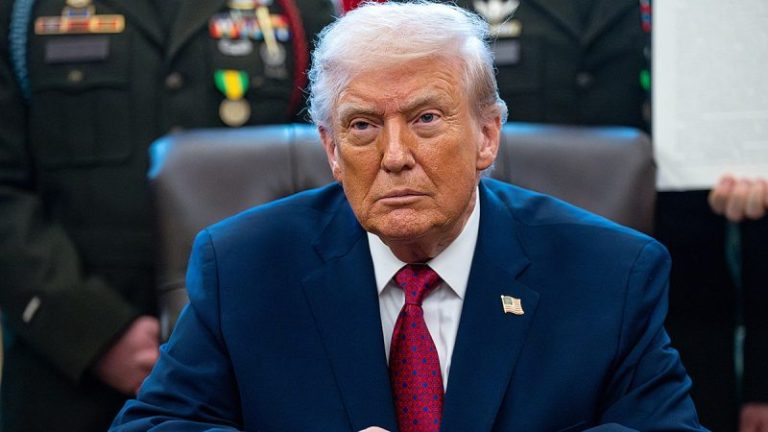
The response was swift. In Washington, the Trump administration moved to reassess US critical minerals security, singling out rare earths as a strategic vulnerability.

“An overreliance on foreign critical minerals and their derivative products could jeopardize US defense capabilities, infrastructure development, and technological innovation,” the White House said, underscoring a shift from market-driven concern to national security imperative.

For Jon Hykawy, president and chief executive at Stormcrow Capital, the Trump administration’s rare earths ambitions and its understanding of the minerals markets was the most impactful trend of 2025, commenting, “By far the biggest impact was the implication from re-elected US President Donald Trump that rare earths and other critical materials, to be found in Ukraine or Greenland or Canada or wherever, are the most bigly important things, ever.’

The seasoned market analyst also questions the administration’s broader goals.

“Critical materials are, to me, what is necessary for ensuring that important projects can be completed,’ he said.

‘But President Trump has also decided that climate change is a scam, that electrified vehicles and wind power are terrible and coal and oil are where it’s at,’ Hykawy continued.

‘In that case, whether or not Trump has even the concept of a plan regarding what a rare earth actually is, and he isn’t using ‘rare earth’ as a catch-all phrase for ‘weird metal that I don’t know how to spell,’ then rare earths or lithium are not critical materials, as far as the USA should be concerned: if you don’t need ‘em, they ain’t critical.”

China’s rare earths chokehold exposes supply chain fault lines

By mid-year, the impact of China’s controls was being felt most acutely in the automotive sector. European suppliers warned of production shutdowns as licensing delays rippled through tightly integrated supply chains.

The Asian nation controls roughly 70 percent of global rare earths mine output, as well as 85 percent of refining capacity and about 90 percent of magnet manufacturing.

That concentration left markets highly exposed when Beijing escalated restrictions again in October, expanding export controls to cover a total of 12 rare earths and associated permanent magnets.

Although some measures were later paused through November 2026, earlier dual-use restrictions stayed in place, reinforcing the perception that rare earths are now a tool of geopolitical leverage.

“At its core, China has shown a greater willingness to use its dominance in critical minerals to advance its trade and geopolitical influence, potentially causing significant disruptions to global supply chains for industries like automotive, aerospace, defense, and electronics,” states a S&P Global Energy report.

Against that backdrop, efforts to diversify supply accelerated.

In the US, government support moved from rhetoric to capital. The Department of Defense committed US$400 million to MP Materials (NYSE:MP) to expand processing at Mountain Pass and build a second domestic magnet plant, securing a US-based source of permanent magnets for defense applications.

Days later, Apple (NASDAQ:AAPL) announced a US$500 million agreement with MP to supply recycled rare earth magnets for hundreds of millions of devices starting in 2027, tying supply chain security to sustainability.

As Hykawy explained, these developments are setting the stage for ex-China supply:

“We are at the beginning of producing, processing and utilizing rare earths in a supply chain entirely outside of China. There is absolutely nothing that prevents us from building that western supply chain except time and money. Rare earth deposits of all types, including ionic clays and their relatively inexpensive production of heavy rare earths, are readily available outside of China.”

He went on to note that there has been a misconception about the impacts of rare earths production, paired with a lack of investment and expertise that has prevented a faster buildout.

“It’s a media cliché that rare earth mining and processing is somehow much more destructive to the environment than other types of mining, but that’s also just plain wrong,” Hykawy added.

“Unfortunately, building that supply chain will take money and, especially, time, because we need the people who know how to do all of this, and there is no substitute for the time required to give them their required experience.”

Rare earths supply security and growing demand

As global demand for rare earths accelerates and supply chain risks heighten, experts believe the sector’s importance on the global stage will keep intensifying.

During a Benchmark Week presentation, Michael Finch of Benchmark Mineral Intelligence explained that rare earths have “become far more strategic in nature” over recent years, with applications spanning electric vehicles, consumer electronics, wind energy, robotics and modern military systems.

While permanent magnets remain a headline driver, non-magnetic uses now account for a larger share of total demand, underscoring the material’s broad industrial importance.

Demand projections for rare earths forecast robust growth, underpinned key segment expansion.

According to Finch’s data an average 100 kW EV traction motor contains roughly five kilograms of neodymium-praseodymium and about one kilogram of dysprosium oxide, illustrating how electrification is fueling consumption.

Additionally, permanent magnet applications are projected to grow at an 8.5 percent compound annual rate through 2030, with magnetic and non-magnetic uses expected to reach parity over the next decade.

Military demand is also a significant driver.

“(There are) 418 kilograms of rare earths going into an F 35 type two fighter (jet), 2.6 metric tons going into a type 51 (naval) destroyer, and 4.6 metric tons going into a Virginia class submarine,” said Finch.

As stated, supply remains heavily concentrated in China which controls 91 percent of the overall supply chain, from mining to permanent magnets. Finch emphasized that this concentration creates a single-country risk, noting, “When a country owns so much of a supply chain, it’s easy to use it as a bargaining chip.”

The global rare earths supply chain is gradually diversifying. North America and Africa are emerging as key growth regions, with projects expected to significantly expand non-Chinese production in the coming decade.

Finch pointed to Africa, which could account for up to 7 percent of global supply after 2030, driven by low capital intensity and favorable mining costs. Despite this progress, he cautioned that complete self-sufficiency outside China remains a distant prospect, emphasizing the need for rapid investment and strategic coordination to secure supply.

Rare earths investment bolstered by government support

In addition to the Department of Defense’s MP Materials investment, the US government has established a price floor for NdPr oxide, the high-value rare earths ingredient inside permanent magnets.

During a fireside chat at Benchmark Week, Ryan Corbett, CFO of MP Materials, explained the impact of the price floor in support of the burgeoning US supply chain. He told the audience that the deal is “absolutely transformational,’ and pointed to China’s ability to control pricing by flooding or starving the market. “What good is it to invest billions of dollars if the second you turn your refinery on, prices go from US$170 to US$45?” said Corbett.

In October, the Trump administration announced another strategic investment aimed at reshoring critical supply chains through a US$1.4 billion public-private partnership with Vulcan Elements and ReElement Technologies.

Under the agreement, the Commerce Department will provide US$50 million in CHIPS Act incentives for neodymium-iron-boron magnet production in exchange for an equity stake, alongside up to US$700 million in conditional Defense Department loans to support facilities targeting up to 10,000 metric tons of annual output.

On the private investment side, Rare earths developer Pensana (LSE:PRE,OTCPL:PNSPF) secured a US$100 million strategic investment to advance its mine-to-magnet ambitions in the US, at the end of 2025.

Although the rare earths sector saw several multimillion-dollar deals in 2025, exploration capital remains scarce.

According to S&P Global’s Senior Principal Analyst, Mining Studies & Mine Economics, Paul Manalo the rare earths account for 1 percent of global exploration budgets, however, that number has improved in recent years.

“For the sixth consecutive year, budgets for rare earths were up reaching US$155 million in 2025; it’s the highest level since 2012,” Manalo said during the S&P Global Market Intelligence 2026 Corporate Exploration Strategies webinar.

Although exploration budgets are growing, the expert said 80 percent of that capital is being deployed in only four countries: Australia, Brazil, USA and Canada. “Just like in other minor metals, the juniors are the primary drivers for exploration of rare earths, with only a few majors dabbling in it,” Manalo told listeners, adding, “There are few rare earth mines outside of China, so most pending exploration is for late stage projects.”

The government funding and strategic stockpile proposal were acknowledged as a good starting point by Stormcrow Capital’s Hykawy, who also cautioned that they may not be as meaningful as markets anticipate.

“I give the efforts so far an ‘A’ for enthusiasm but a ‘C-‘ for effectiveness. From what I have seen, the powers-that-be are beavering away to create a supply chain that can provide what the world is demanding, today,” he said.

“Unfortunately, many of their efforts can’t bear fruit for 5 years or more, and none of these agencies seemed to think it worthwhile to try and evaluate what will be required in 5 or 10 years.”

More long-term foresight is needed.

“Technology giveth, but technology also taketh away, and while no one can be sure what the technology-driven need will be in 5 or 10 years, we should at least try to incorporate that into planning,” he said.

“If the wrong projects are being backed, the economics for that producer or processor in 5 or 10 years are not going to look good and money and time will have been completely wasted.”

Securities Disclosure: I, Georgia Williams, hold no direct investment interest in any company mentioned in this article.

This post appeared first on investingnews.com

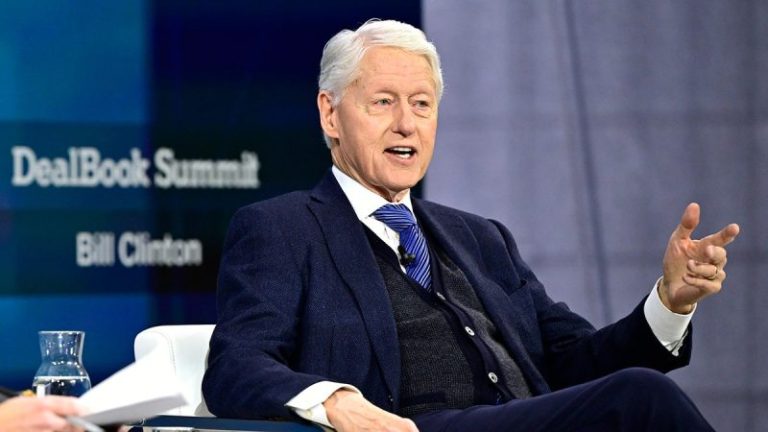
Former President Bill Clinton has been summoned to appear on Capitol Hill Tuesday morning, as Republicans threaten a possible criminal referral if the ex-commander-in-chief skips out.

He and former Secretary of State Hillary Clinton have both been subpoenaed to appear before the House Oversight Committee for separate closed-door depositions for the panel’s investigation into Jeffrey Epstein.

Clinton was scheduled to appear Tuesday morning at 10 a.m., but it’s not clear whether he will do so. The deposition is expected to move forward regardless.

A spokeswoman for the committee told Fox News Digital on Friday that neither had confirmed their scheduled dates at that point.

‘The Clintons have not confirmed their appearances for their subpoenaed depositions. They are obligated under the law to appear, and we expect them to do so. If the Clintons do not appear at their depositions, the House Oversight Committee will initiate contempt of Congress proceedings,’ the spokeswoman said.

Both Clintons were originally scheduled to appear before the committee in October, but their deposition dates were postponed while the panel was in talks with their attorneys.

Their deposition dates were delayed again when House Oversight Committee Chairman James Comer, R-Ky., was informed the former first couple would be attending a funeral.

‘They’re saying now that he’s going to a funeral on that day, so we’ve been going back and forth with the lawyer,’ Comer told Fox News Digital in December. ‘We’re going to hold him in contempt if he doesn’t show up for his deposition.’

The House Oversight Committee would need to advance a contempt resolution before it’s considered by the entire chamber. If a simple majority votes to hold someone in contempt of Congress, a criminal referral is then traditionally made to the Department of Justice.

A criminal contempt of Congress charge is a misdemeanor that carries a punishment of up to one year in jail and a maximum $100,000 fine if convicted.

In the absence of mutually agreed-upon new dates, new subpoenas were issued for Bill and Hillary Clinton to appear on Jan. 13 and Jan. 14, respectively.

They were two of 10 people who Comer initially subpoenaed in the House’s Epstein investigation after a unanimous bipartisan vote directed him to do so last year.

Clinton was known to be friendly with the late pedophile before his federal charges but was never implicated in any wrongdoing related to him.

Fox News Digital reached out to the Clintons’ lawyer and Bill Clinton’s spokesperson to ask whether he would appear Tuesday, but did not receive a response.

This post appeared first on FOX NEWS

As protests spread across Iran and the government responds with lethal force, amid increasing reports claiming thousands have been killed, a growing question is being debated by analysts and Iranians alike: Is the Islamic Republic facing its most serious threat since the 1979 revolution, or does it still retain enough coercive power to survive?

For Mehdi Ghadimi, an Iranian journalist who spent decades protesting the regime before being forced to leave the country, this moment feels fundamentally different from anything that came before.

‘From 1999, when I was about fifteen, until 2024, when I was forced to leave Iran, I took part in every street protest against the Islamic Republic,’ Ghadimi told Fox News Digital. ‘For roughly half of those years, I supported the reformist movement. But after 2010, we became certain that the Islamic Republic is not reformable, that changing its factions is a fiction.’

According to Ghadimi, that realization gradually spread across Iranian society, culminating in what he describes as a decisive shift in the current unrest.

‘For the first time in the 47 years of struggle by the Iranian people against the Islamic Republic, the idea of returning to the period before January 1979 became the sole demand and the central point of unity among the people,’ he said. ‘As a result, we witnessed the most widespread presence of people from all cities and villages of Iran in the streets, on a scale unprecedented in any previous protests.’

Ghadimi claimed the chants on the streets reflected that shift. Instead of demanding economic relief or changes to dress codes, protesters openly called for the fall of the Islamic Republic and the return of the Pahlavi dynasty.

‘At that point, it no longer seemed that we were merely protesting,’ he said. ‘We were, in fact, carrying out a revolution.’

Still, Ghadimi was clear about what he believes is preventing the regime’s collapse.

‘The answer is very clear,’ he said. ‘The government sets no limit for itself when it comes to killing its own people.’

He added that Tehran appears reassured by the lack of consequences for its actions. ‘It has also been reassured by the behavior of other countries that if it manages to survive, it will not be punished for these blatant crimes against humanity,’ he said. ‘The doors of diplomacy will always remain open to them, even if their hands are stained with blood.’

Ghadimi described how the regime cut off internet access to disrupt coordination between protesters and opposition leadership abroad. He said that once connectivity was severed, the reach of video messages from the exiled Prince Reza Pahlavi dropped dramatically.

While Iranian voices describe a revolutionary moment, security and policy experts caution that structural realities still favor the regime.

Javed Ali, an associate professor at the Gerald R. Ford School of Public Policy, said the Islamic Republic is facing far more serious threats to its grip on power than in years past, driven by a convergence of military, regional, economic and diplomatic pressures.

‘The IRGC is in a much weaker position following the 12-day war with Israel last summer,’ Ali said, citing ‘leadership removals, ballistic missile and drone capabilities that were used or damaged, and an air and radar defense network that has been significantly degraded.’

Ali said Iran’s regional deterrence has also eroded sharply. ‘The so-called Axis of Resistance has been significantly weakened across the region,’ he said, pointing to setbacks suffered by Hamas, Hezbollah, the Houthis and Shiite militias allied with Tehran.

Internally, Ali said demographic pressure is intensifying the challenge. ‘Iran’s younger population is even more frustrated than before with deteriorating economic conditions, ongoing social and cultural restrictions and repeated violent crackdowns on dissent,’ he said.

Ali also pointed to shifting external dynamics that are limiting Tehran’s room to maneuver, including what he described as a stronger U.S.-Israel relationship tied to the Netanyahu-Trump alliance. He added that there are ‘possible joint operations already underway to support the protest movement inside Iran.’

Israeli security sources, speaking on background, said Israel has no such interest in intervening in a way that would allow Tehran to redirect domestic unrest outward.

‘Everyone understands it is better to sit and wait quietly and not attract the fire toward Israel,’ one source said. ‘The regime would like to make this about Israel and the Zionist enemy and start another war to repress internal protests.’

‘It is not Israel against Iran,’ the source added. ‘We recognize that the regime has an interest in provoking us, and we do not want to contribute to that.’

The source said a collapse of the Islamic Republic would have far-reaching consequences. ‘If the regime falls, it will affect the entire Middle East,’ the official said. ‘It could open a new era.’

Ali said Iran is increasingly isolated diplomatically. ‘There is growing isolation from Gulf monarchies, the fall of Assad in Syria and only muted support from China and Russia,’ he said.

Despite those pressures, Ali cautioned that Iran’s coercive institutions remain loyal.

‘I think the IRGC, including Basiji paramilitary elements, along with the Ministry of Intelligence, are still loyal to the regime out of a mix of ideology, religion, and self-interest,’ he said, citing ‘power, money and influence.’

Whether fear of collapse could drive insiders to defect remains unclear. ‘Whether there are insiders willing to flip because of a sense of imminent collapse of the clerical structure is hard to know,’ Ali said.

He placed the probability of an internal regime collapse at ‘25% or less,’ calling it ‘possible, but far less probable.’

For now, Iran appears caught between two realities: a population increasingly unified around the rejection of the Islamic Republic, and a security apparatus still willing to use overwhelming force to preserve it.

As Ali noted, pressure alone does not bring regimes down. The decisive moment comes only when those ordered to enforce repression decide it is no longer in their interest to do so.

Despite the scale of unrest, Ghadimi cautioned that the outcome remains uncertain.

‘After these four hellish days, without even knowing the fate of our friends and loved ones who went into the streets, or whether they were alive or not, it is truly difficult for me to give you a clear assessment and say whether our revolution is now moving toward victory or not,’ he said.

He recalled a message he heard repeatedly before leaving Iran, across cities and social classes.

‘The only thing I consistently heard was this: ‘We have nothing left to lose, and even at the cost of our lives, we will not retreat one step from our demand for the fall of the Islamic Republic,’’ Ghadimi said. ‘They asked me to promise that now that I am outside Iran, I would be their voice.’

‘That spirit is what still gives my heart hope for victory,’ he added. ‘But my mind tells me that when mass killing carries no punishment, and when the government possesses enough bullets, guns and determination to suppress it, even if it means killing millions, then victory would require a miracle.’

This post appeared first on FOX NEWS

A bipartisan group of lawmakers is introducing a bill aimed at restricting any unauthorized military action by President Donald Trump, amid growing debate over his comments about acquiring Greenland ‘one way or the other.’

Rep. Bill Keating, D-Mass., is leading the legislation along with Reps. Steny Hoyer, D-Md., Brendan Boyle, D-Pa., and Don Bacon, R-Neb., according to POLITICO.

‘This is about our fundamental shared goals and our fundamental security, not just in Europe, but in the United States itself,’ Keating said in a statement to the outlet.

The group involved in the effort is soliciting broader support for the legislation and say they hope additional Republicans will back the effort to restrict funding for any unauthorized military action against U.S. allies.

In a letter to colleagues, Keating said ‘this legislation takes a clear stand against such action and further supports NATO allies and partners,’ according to POLITICO.

While the measure does not specifically name any specific countries, it is clearly in response to Trump’s repeated threats against Greenland.

Keating said the decision to omit Greenland’s name was meant to broaden the legislation’s focus. He said he met with the Danish Ambassador and the head of Greenland representation.

‘This isn’t just about Greenland. This is about our security,’ Keating said.

Keating also said he believes slashing funding is the most impactful way to disincentivize Trump administration officials from taking action.

‘War powers are important, but we’ve seen with Democratic and Republican presidents that that’s not as effective,’ he said. ‘It’s hard to get around having no funds or not allowing personnel to do it.’

This comes after the Senate advanced a bipartisan resolution last week that would limit Trump’s ability to conduct further attacks against Venezuela after the U.S. military’s recent move to strike the country and capture its president, Nicolás Maduro. The Upper Chamber could pass the measure later this week, although its future in the House remains uncertain despite some support from Republicans.

On Greenland, administration officials are openly weighing options such as military force to take the Danish territory, a move that would violate NATO’s Article V, which states that an attack on one member is an attack on all of them and could end the alliance of more than 75 years.

‘We are going to do something on Greenland, whether they like it or not,’ Trump said on Friday. ‘Because if we don’t do it, Russia or China will take over Greenland, and we’re not going to have Russia or China as a neighbor.’

Greenland Prime Minister Jens-Frederik Nielsen and four party leaders reaffirmed last week that the self-governing island has no interest in becoming part of the U.S.

‘We don’t want to be Americans, we don’t want to be Danes, we want to be Greenlanders,’ the leaders said, adding that Greenland’s ‘future must be decided by the Greenlandic people.’

Danish Prime Minister Mette Frederiksen, French President Emmanuel Macron, German Chancellor Friedrich Merz, British Prime Minister Keir Starmer, as well as the leaders of Italy, Spain and Poland, also signed a letter stating: ‘Greenland belongs to its people. It is for Denmark and Greenland, and them only, to decide on matters concerning Denmark and Greenland.’

The chance of expanding U.S. control over Greenland has drawn mixed reactions from Congress. While most Democrats have opposed the idea, some Republicans have voiced support for pursuing closer ties with the territory.

Rep. Randy Fine, R-Fla., who introduced legislation to make it the 51st U.S. state, although he said the best way to acquire Greenland is voluntarily.

‘I think it is in the world’s interest for the United States to exert sovereignty over Greenland,’ Fine told Fox News Digital.

This post appeared first on FOX NEWS

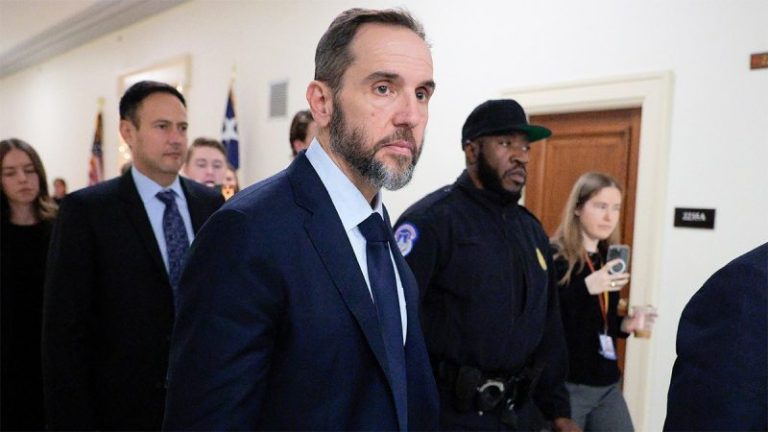
Former special counsel Jack Smith will testify in a hearing before the House Judiciary Committee next week, giving Republican and Democratic lawmakers on the panel a chance to grill him in a public setting on his prosecutions of President Donald Trump.

Smith will appear before the committee on Jan. 22, one month after he sat for a closed-door deposition with the committee and testified for eight hours about his special counsel work, a source familiar told Fox News Digital.

Smith had long said he wanted to speak to the committee publicly, and although Chairman Jim Jordan, R-Ohio, first demanded the deposition, the chairman also said an open hearing was on the table.

Smith investigated Trump and brought two indictments against him over the 2020 election and alleged retention of classified documents. Trump pleaded not guilty and aggressively fought the charges, and Smith dropped both cases when Trump won the 2024 election, citing a Department of Justice policy that discourages prosecuting sitting presidents.

In a public hearing, House lawmakers will be able to question Smith in five-minute increments, whereas in the deposition, each party questioned Smith in one-hour sessions. Politico first reported that Smith would appear for a hearing sometime this month.

Smith gave little new information during his initial meeting with the committee and defended his work.

‘I made my decisions in the investigation without regard to President Trump’s political association, activities, beliefs, or candidacy in the 2024 presidential election,’ Smith said, according to a transcript of the deposition. ‘We took actions based on what the facts, and the law required, the very lesson I learned early in my career as a prosecutor.’

Smith said he followed DOJ policy when his team made the controversial decision to subpoena numerous Republican senators’ and House members’ phone records as part of his 2020 election probe. Smith noted the subpoenas sought a narrow set of data.

‘If Donald Trump had chosen to call a number of Democratic senators [to delay the election certification proceedings], we would have gotten toll records for Democratic senators. So responsibility for why these records, why we collected them, that’s — that lies with Donald Trump,’ Smith said.

The Republicans have said the subpoenas were unconstitutional violations of the speech or debate clause, and they have broadly said the Biden DOJ abused its authority by bringing, in their view, politicized criminal charges against a former president and presidential candidate.

Trump, who has long decried Smith as a ‘thug’ and said he belongs in jail, has said he welcomes Smith at a public hearing.

Asked about Smith’s appearance next week, a representative for Smith provided a statement from one of his lawyers, Lanny Breuer.

‘Jack has been clear for months he is ready and willing to answer questions in a public hearing about his investigations into President Trump’s alleged unlawful efforts to overturn the 2020 election and his mishandling of classified documents,’ Breuer said.

This post appeared first on FOX NEWS

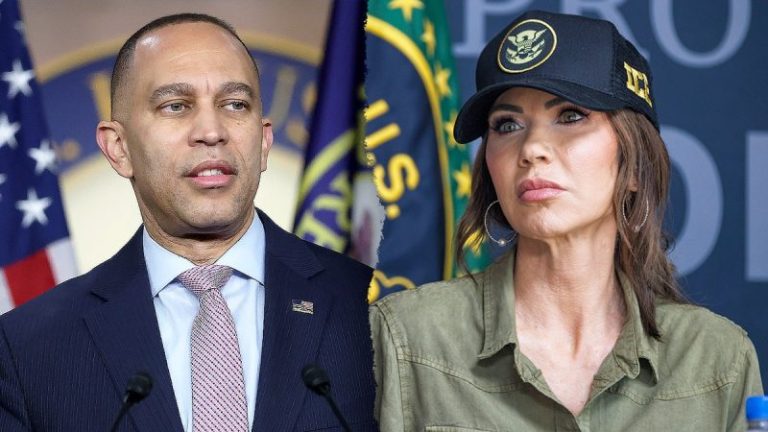
House Democratic Leader Hakeem Jeffries, D-N.Y., directed some heated remarks at a Trump administration Cabinet official whose department has been dominating headlines in recent weeks.

‘What is clear is that Kristi Noem is completely and totally unqualified. She should have never been confirmed by Senate Republicans,’ Jeffries said of the Department of Homeland Security (DHS) secretary during a Monday press conference. ‘It’s disgraceful that she’s there. She should be run out of town as soon as possible.’

Criticism against Noem, DHS, and Immigrations and Customs Enforcement (ICE) has intensified on the left in the wake of a deadly ICE-involved shooting in Minneapolis last week.

An ICE agent shot and killed a U.S. citizen, 37-year-old Renee Nicole Good, who allegedly presented a threat to ICE agents as they attempted to conduct enforcement operations. Partisan fissures have since erupted over which side was acting improperly when the deadly incident occurred.

‘Kristi Noem, the Department of Homeland Security and ICE, they’re totally out of control. And the American people want these extremists to be reined in,’ Jeffries said on Monday.

He said Good ‘should be alive today’ and accused both Noem and the ICE agent who shot Good of a ‘depraved indifference toward human life.’

Video of last week’s incident appears to show Good’s car making contact with the ICE agent who shot her before he opened fire. Arguments have since raged over whether she was deliberately getting in the way or even weaponizing her car, or whether she was trying to drive away.

Federal officials like Noem have defended the agent as acting in self-defense while accusing Good of trying to actively impede ICE activity in the Democrat-controlled city.

Democrats, including Minneapolis Mayor Jacob Frey and Minnesota Gov. Tim Walz, have accused ICE and Republican officials of stoking fear and tension in the city while demanding the federal government cease current operations there immediately.

Now Democrats in Congress have been threatening to withhold support from funding DHS unless significant reforms are made — a threat Jeffries alluded to during his press conference.

‘What’s in front of us right now is a spending bill that will go either one of two ways. Either Republicans will continue their my-way-or-the-highway approach as it relates to the Homeland Security bill — and if that happens, then it’s going to be on them to figure out a path forward,’ Jeffries began.

‘Alternatively, particularly in the face of the tragedy…there’s some commonsense measures that need to be put in place so that ICE can conduct itself in a manner that is at least consistent with every other law enforcement agency in the United States of America, at the state, local and federal level.’

The deadline to finish federal funding and avert a partial government shutdown is at the end of day on Jan. 30.

Fox News Digital reached out to DHS for a response.

This post appeared first on FOX NEWS

Here’s a quick recap of the crypto landscape for Monday (January 12) as of 9:00 a.m. UTC.

Get the latest insights on Bitcoin, Ether and altcoins, along with a round-up of key cryptocurrency market news.

Bitcoin and Ether price update

Bitcoin (BTC) was priced at US$90,643.88, down by 0.2 percent over 24 hours.

Bitcoin price performance, January 12, 2025.

Chart via TradingView

Ether (ETH) was priced at US$3,111.86, up by 0.3 percent over the last 24 hours.

Altcoin price update

  • XRP (XRP) was priced at US$2.05, down by 2.5 percent over 24 hours.
  • Solana (SOL) was trading at US$139.67, up by 2.1 percent over 24 hours.

Today’s crypto news to know

South Korea lifts 9-year ban on corporate crypto

South Korea has lifted a nine-year ban on corporate crypto investing, allowing public companies and professional investors to allocate up to 5% of their equity capital to digital assets.

The country’s Financial Services Commission (FSC) said eligible assets will be limited to the top 20 cryptocurrencies by market capitalization traded on the country’s five licensed exchanges.

The shift reverses years of policy that kept institutional money out of the market and left crypto trading dominated by retail investors.

Regulators estimate that restrictive rules contributed to roughly US$110 billion in crypto capital outflows in 2025. Meanwhile, legislators framed the move as part of the government’s 2026 economic growth strategy aimed at modernizing capital markets and retaining domestic investment.

While stablecoins are not yet included, authorities said discussions on their treatment are ongoing.

Coinbase warns it may pull support from US Senate Crypto Bill

Coinbase is threatening to withdraw its backing for a major US Senate crypto bill if lawmakers impose limits on stablecoin rewards beyond enhanced disclosure requirements.

According to Bloomberg, the dispute centers on proposed language that would restrict platforms from offering yield on stablecoins unless they operate as regulated banking institutions.

The company argues that such provisions would give banks an unfair advantage and undermine competition from crypto-native firms.

The warning comes ahead of a January 15 markup set by Senate Banking Committee Chair Tim Scott, after repeated legislative delays throughout 2025.

Coinbase CEO Brian Armstrong has previously said banks are likely to lobby for exclusive control over stablecoin yield as adoption grows. While Coinbase has applied for a national trust charter that could eventually allow it to offer rewards under stricter rules, the firm is pushing to preserve non-bank models.

Dubai bans privacy tokens, tightens stablecoin rules

Dubai’s financial regulator has banned privacy-focused crypto tokens and tightened its stablecoin framework as part of a broader overhaul of digital asset rules.

The Dubai Financial Services Authority (DFSA) said privacy coins are incompatible with anti–money laundering and sanctions compliance standards and will no longer be permitted in the Dubai International Financial Centre.

Under the updated regime, only fiat-backed stablecoins supported by high-quality, liquid assets will qualify as stablecoins, while algorithmic models will be treated as ordinary crypto tokens.

The rules take effect January 12 and reflect a shift away from regulator-approved token lists toward firm-led suitability assessments. Licensed companies will now be responsible for determining whether crypto assets meet regulatory standards and must keep those assessments under ongoing review.

Securities Disclosure: I, Meagen Seatter, hold no direct investment interest in any company mentioned in this article.
Securities Disclosure: I, Giann Liguid, hold no direct investment interest in any company mentioned in this article.
This post appeared first on investingnews.com