Author

admin

Browsing

Department of Justice officials are facing threats of legal action after the department missed the Epstein Files Transparency Act’s stated deadline to publish all its documents related to Jeffrey Epstein – but the law may lean in the DOJ’s favor.

DOJ officials have continued to review and upload the files more than a week after the congressionally mandated Dec. 19 due date, spurring Democrats and some Republicans to call for a range of consequences, from contempt to civil litigation. The DOJ is, however, defending the drawn-out release process, suggesting that rushing to publish piles of unexamined material would also flout the law.

Deputy Attorney General Todd Blanche said in a recent interview on ‘Meet the Press’ there was ‘well-settled law’ that supported the DOJ missing the transparency bill’s deadline because of a need to meet other legal requirements in the bill, like redacting victim-identifying information.

The bill required the DOJ to withhold information about potential victims and material that could jeopardize open investigations or litigation. Officials could also leave out information ‘in the interest of national defense or foreign policy,’ the bill said, while keeping visible any details that could embarrass politically connected people.

Last week, the DOJ revealed that two of its components, the FBI and the U.S. attorney’s office in the Southern District of New York, had just gathered and submitted more than 1 million additional pages of potentially responsive documents related to Epstein’s and Ghislaine Maxwell’s sex trafficking cases for review.

The ‘mass volume of material’ could ‘take a few more weeks’ to sift through, the DOJ said in a statement on social media, adding that the department would ‘continue to fully comply with federal law and President Trump’s direction to release the files.’ 

The DOJ’s concerns about page volume and redaction requirements echo those frequently raised in similar litigation surrounding compliance with Freedom of Information Act requests, where courts have stepped in to balance competing interests of parties in the cases rather than attempting to force compliance on an unrealistic timetable.

The conservative legal watchdog Judicial Watch has seen mixed success over the years in bringing FOIA lawsuits, showcasing the court’s role in mediating such disputes.

Judicial Watch brought several lawsuits against the government over Hillary Clinton’s private email server scandal, leading a federal judge at one point to allow the conservative watchdog to move forward with questioning Clinton aides as part of a discovery process as it sought records on the matter. The decision was later reversed at the appellate court level.

In a separate case, the appellate court sided with Judicial Watch by reversing a lower court ruling as part of a longstanding legal battle the watchdog waged with the DOJ over obtaining Acting Attorney General Sally Yates’ emails. The D.C. Circuit Court found that the DOJ could not withhold email attachments from Yates’ account and ordered further review on the matter.

In the current controversy over the Epstein files, lawmakers are pressuring the DOJ by threatening a combination of political and legal remedies over the 30-day deadline and over what they view as excessive redactions. 

Senate Minority Leader Chuck Schumer, D-N.Y., vowed to bring a resolution up for a vote when the Senate returns from the holidays that would direct the Senate to initiate a lawsuit against the DOJ for failing to comply with the transparency act’s requirements.

‘The law Congress passed is crystal clear: release the Epstein files in full, so Americans can see the truth,’ Schumer said. ‘Instead, the Trump Department of Justice dumped redactions and withheld the evidence — that breaks the law.’

Reps. Ro Khanna, D-Calif., and Thomas Massie, R-Ky., who spearheaded the transparency bill, warned that they plan to pursue contempt proceedings against Attorney General Pam Bondi in light of the DOJ missing the deadline and making perceived over-redactions.

A group of mostly Democratic senators also called on the DOJ inspector general to investigate the department’s compliance with the law.

The DOJ has maintained that releasing unreviewed documents would violate the law, saying last week that it had ‘lawyers working around the clock to review and make the legally required redactions.’

This post appeared first on FOX NEWS

President Donald Trump said Sunday that peace talks to end the war in Ukraine are close to completion after a meeting in Florida with Ukrainian President Volodymyr Zelenskyy, with both leaders citing major progress on a 20-point plan while acknowledging unresolved disputes over territory, ceasefire terms and Ukrainian approval.

Trump and Zelenskyy spoke to reporters following their meeting at Mar-a-Lago, describing weeks of negotiations involving U.S., Ukrainian, European Union and NATO officials that have moved a potential peace framework close to the finish line, though several high-stakes issues remain unresolved.

Trump said negotiations have intensified over the past month and suggested discussions are far more advanced than at any previous point in the war, while cautioning that final agreements depend on resolving a small number of difficult questions.

‘We could be very close,’ Trump said. ‘There are one or two very thorny issues, very tough issues. But I think we’re doing very well. We made a lot of progress today, but really, we’ve made it over the last month. This is not a one-day process. It’s very complicated stuff.’

Zelenskyy echoed that assessment, confirming that negotiators have largely agreed on the framework of a deal and crediting sustained diplomacy across multiple international meetings leading up to the Florida talks.

He said negotiations have taken place over several weeks in cities including Geneva, Miami, Berlin and at Mar-a-Lago in Palm Beach, with American and Ukrainian teams working toward a shared peace framework.

‘We discussed all the aspects of the peace framework, which includes – and we have great achievements – a 20-point peace plan, 90% agreed,’ Zelenskyy said.

Both leaders said European and NATO officials were closely involved in the process, with a joint call held following the meeting that included senior leaders from across the continent and international institutions.

Zelenskyy said teams are expected to meet again in the coming weeks to finalize remaining issues and that Trump has agreed to potentially host further talks in Washington with European leaders and a Ukrainian delegation.

Despite the progress, territory – particularly the status of Donbas – remains one of the most difficult unresolved issues, with Trump and Zelenskyy acknowledging differing positions between Ukraine and Russia.

Trump suggested that time could be a critical factor in negotiations, warning that delays could result in further territorial losses as fighting continues.

‘Some of that land has been taken,’ Trump said. ‘Some of that land is maybe up for grabs, but it may be taken over the next period of a number of months. Are you better off making a deal now?’

Zelenskyy stressed that any final agreement would need to comply with Ukrainian law and reflect the will of the Ukrainian people, potentially requiring parliamentary approval or a national referendum.

‘Our society, too, has to choose and decide who has to vote, because it’s their land – the land not of one person,’ Zelenskyy said. ‘It’s the land of our nation for a lot of generations.’

Trump said polling shows strong public support for ending the war and reiterated his desire to bring the conflict to a close, citing the scale of casualties on both sides.

‘We want to see it ended,’ Trump said. ‘I want it ended because I don’t want to see so many people dying. We’re losing massive numbers of people – the biggest by far since World War II.’

This post appeared first on FOX NEWS

FBI Director Kash Patel said the agency has surged additional personnel and investigative resources to Minnesota as part of an ongoing effort to ‘dismantle large-scale fraud schemes exploiting federal programs.’

Patel said Sunday that the bureau moved resources into the state before recent online attention intensified, pointing to the Feeding Our Future investigation, which uncovered a $250 million scheme that siphoned federal food aid intended for children during the COVID-19 pandemic. 

The case has already resulted in 78 indictments and 57 convictions, with prosecutors also charging defendants in a separate plot to bribe a juror with $120,000 in cash, Patel said, adding that the investigation remains ongoing.

‘The FBI believes this is just the tip of a very large iceberg. We will continue to follow the money and protect children, and this investigation very much remains ongoing,’ he wrote on X. ‘Furthermore, many are also being referred to immigrations officials for possible further denaturalization and deportation proceedings where eligible.’

Patel’s announcement comes in the wake of a viral video posted on social media Friday by independent journalist Nick Shirley that highlighted alleged fraud involving Minnesota childcare and learning centers. 

In the video, many of the facilities appeared non-operational despite allegedly receiving millions of dollars in government aid.

Republican lawmakers, including House Majority Whip Tom Emmer, R-Minn., and Rep. Mike Lawler, R-N.Y., as well as Vice President JD Vance, have responded to the viral video, with Emmer accusing Gov. Tim Walz of sitting ‘idly by while billions were stolen from hardworking Minnesotans.’

Shirley’s video also follows a group of Minnesota state staff members who accused Walz in November of failing to act on widespread fraud warnings and retaliating against whistleblowers.

An X account calling itself Minnesota Staff Fraud Reporting Commentary, which says it consists of more than 480 Minnesota state staff members, wrote that Walz is ‘100% responsible for massive fraud in Minnesota.’

‘We let Tim Walz know of fraud early on, hoping for a partnership in stopping fraud but no, we got the opposite response. Tim Walz systematically retaliated against whistleblowers using monitoring, threats, repression, and did his best to discredit fraud reports,’ the group claimed. ‘In addition to retaliating against whistleblower[s], Tim Walz disempowered the Office of the Legislative Auditor, allowing agencies to disregard their audit findings and guidance.’

Walz addressed the fraud at a press conference in late November, saying it ‘undermines trust in government,’ and ‘undermines programs that are absolutely critical in improving quality of life.’

‘If you’re committing fraud, no matter where you come from, what you look like, what you believe, you are going to go to jail,’ he added.

The New York Times reported that what initially appeared to many Minnesotans as an isolated case of pandemic-era fraud has broadened into a much wider concern for state and federal officials.

The Times reported that over the past five years, according to law enforcement authorities, several fraud schemes proliferated in parts of Minnesota’s Somali community. A number of individuals allegedly created companies that billed state agencies for millions of dollars’ worth of social services that were never delivered.

This post appeared first on FOX NEWS
Generally speaking, nobody outside of Washington, D.C., brunch spots cares very much what happens at think tanks. But recent upheavals at the Heritage Foundation are not only making news, they are potentially framing what the Republican Party will look like after President Trump leaves office.

The current kerfuffle at Heritage, the nation’s leading conservative think tank, began on Oct. 30, when its president, Kevin Roberts, gave a speech defending Tucker Carlson for interviewing a snarky young Holocaust denier.

‘The Heritage Foundation didn’t become the intellectual backbone of the conservative movement by canceling our own people or policing the consciences of Christians, and we won’t start doing that now,’ Roberts said.

A pitter-patter of outraged resignations came almost immediately, even after Roberts apologized for his remarks, but last week, almost two months later, nearly an entire division of Heritage’s legal and economic experts jumped ship to former Vice President Mike Pence’s Advancing American Freedom (AAF).

The significant question in all of this is whether Roberts playing footsie with antisemites is the real or only reason why so many top experts joined the exodus to Pence’s outfit, and there is some reason to be dubious.

Take for example Trump’s zealous use of tariffs in international trade. This kind of protectionism is constitutionally anathema to exactly the type of conservative economist who prowled the halls of Heritage, but the think tank itself was standing by the president’s policies.

Add to this that Heritage seems to be leaning heavily into Vice President JD VanceJD Vance’s 2028 presidential ambitions, in fact Roberts’ original video may have been intended for the veep who is close with Carlson and has made fighting globalism and saving small industrial towns the centerpiece of his national message.

The problem is that most of the longtime Heritage economists really like globalism and think saving ‘Nowhere, Ohio’ from oblivion is a pipe dream. Now, they truly have no seat at the table, either at Heritage or in the Trump administration.

Such tensions also exist in foreign policy and immigration, and a cynic might suggest that the Heritage bleedout is just another example of conservatives with strong ideological differences from Trump deciding it’s no longer working to cozy up to him, and taking whatever current moral outrage is available as an offramp.

This is exactly what Pence did after the Capitol riots of Jan. 6, 2021, leading him to found AAF, which, by the way, is as anti-tariffs as the day is long.

In this fight for the soul of the Republican Party and conservative movement, both Heritage and AAF are redefining what a think tank is and what it does, in important ways.

Traditionally, wealthy donors would give money to guys with good hair to get elected and also fund bald guys at think tanks, who were rarely seen or heard from, to produce the actual policy. But voters have seen through this, leading the think tanks to more direct outreach to the public.

In the 2024 election, Heritage’s ‘Project 2025’ was a headline story for months, something completely unprecedented in the history of presidential politics for a think tank. Today, through moves such as hiring Moms for Liberty co-founder Tiffany Justice, Heritage is committing to more populism and activism and less back-room algebra.

AAF is starting to play this game too. The think tank put out a satirical X post comparing the flood of Heritage staffers coming their way to a college football team dominating in the transfer portal, another hint that more than moral outrage was at play here.

The headwind that AAF is likely to run into with conservative voters in their anti-populism efforts is that populism is popular, and globalism, along with many other core tenets of the pre-Trump GOP, isn’t.

The best chance for AAF, and it’s not a bad one, is to focus on lowering prices by lowering tariff. But a conservative think tank yelling that prices are too high while the GOP holds the White House and Congress is a nightmare for Republican midterm hopes.

The more vital question is what American voters want more, deeper discounts on foreign goods from China or functional communities where they can raise their families? For AAF to succeed it must address the latter, not just the former.

In Vance’s, and increasingly Heritage’s, vision of America, our small industrial towns see a revival through tariffs and foreign investment. In AAF’s vision, those towns may continue to wither, but Americans are free to move to where the jobs and abundance are.

Neither proponents of these visions can guarantee the success of their proposed programs, but the ‘save our towns’ side is currently in power and ascending. If AAF wants to change that, it needs more than moral outrage. It needs to convince Americans that globalism really wasn’t so bad, and that it is time to return to it.

This post appeared first on FOX NEWS

President Donald Trump is scheduled to meet with Israeli Prime Minister Benjamin Netanyahu at Mar-a-Lago on Monday afternoon, with talks expected to focus on renewed tensions with Iran and the possibility of advancing to additional stages of the Gaza peace plan.

Before meeting with the president, Netanyahu is slated to meet with Secretary of State Marco Rubio on Monday morning.

Dr. Dan Diker, president of the Jerusalem Center for Security and Foreign Affairs, told Fox News Digital that President Trump has likely been pressuring Netanyahu since the peace plan’s implementation, noting that the American leader has little patience for Middle Eastern timelines, which he said are far longer than those in the U.S. and the real estate sector.

‘The problem is that Hamas knows all it has to do is survive and continue controlling the western part of Gaza while attacking Israel, as it has been doing from Gaza’s tunnel network, in order to ratchet up tensions between Israel and the U.S.,’ Diker said.

Netanyahu’s mission during the visit, he continued, will be first to lay out Israel’s threat assessment regarding Iran, Hezbollah and Hamas as extremely serious, and to impress upon the president that Tehran is rebuilding its military capabilities. He is also likely to seek to persuade Trump to allow Israel to take the steps it deems necessary to defeat Hamas.

Israeli opposition leader and former prime minister Yair Lapid told Fox News Digital that ‘We [Israel] should be coordinating with President Trump on all the major fronts, but the top priority has to be the management of stage two in Gaza.’

Lapid added, ‘Israel needs to achieve the disarmament of Hamas and the removal of the threat from Gaza, and that requires the implementation of President Trump’s plan.’

During the meeting, Netanyahu will reportedly present Trump with plans for a potential strike on Iran. Israel has warned Washington that a recent Iranian Revolutionary Guard Corps missile drill could be masking preparations for an attack, a concern that IDF Chief of Staff Lt. Gen. Eyal Zamir conveyed to U.S. Central Command chief Adm. Brad Cooper during recent meetings in Tel Aviv.

In a Saturday interview reported by the country’s media, Iranian President Masoud Pezeshkian said his country is engaged in what he described as a ‘total war‘ with the U.S., Israel and Europe. The Times of Israel reported him saying, ‘In my opinion, we are at total war with the United States, Israel and Europe,’ Pezeshkian said. ‘They want to bring our country to its knees.’

Axios reported that U.S. intelligence assesses there is no immediate threat, while Israeli defense officials say forces remain on heightened alert.

According to Dr. Meir Javedanfar, a lecturer on Iran and the Middle East at Reichman University, Netanyahu’s plan is expected to call for strikes on Iran’s missile program.

‘Israel will probably hope that such a wide-scale attack would further undermine the legitimacy of Iran’s supreme leader, thereby creating greater political instability within the country. This is especially true given that after the recent war with Israel, Iran’s economy has deteriorated significantly, and the regime is not taking the necessary steps to address these problems,’ he said.

Israeli Minister for Settlement and National Missions Orit Strook stressed the importance of completing full Gaza demilitarization before moving forward with further stages of the plan.

She referenced Trump’s address to the Israeli Knesset in October, noting that he highlighted his role in building international support for Gaza’s demilitarization and securing a U.N. Security Council resolution calling for the full dismantling of weapons, tunnels and terror infrastructure.

‘Hamas wakes up every day with a mission to hurt us,’ Strook told Fox News Digital. ‘The IDF will not withdraw even one meter, and no rehabilitation framework will be established until full demilitarization is completed.

‘If, God forbid, the opposite happens in the meeting, it will be a failure of the peace plan, a failure for Trump himself — who would be settling for fake demilitarization— and a failure for us. We will not be able to say that we won this war if Hamas remains armed,’ she added.

Trump is nevertheless expected to soon unveil the second stage of his Gaza framework, despite Hamas’s failure to return the remains of Israel Police Master Sgt. Ran Gvili, who was killed during the Oct. 7, 2023 massacre, and whose body was taken to Gaza by Hamas terrorists.

Fox News Digital’s Sophia Compton contributed to this report.

This post appeared first on FOX NEWS

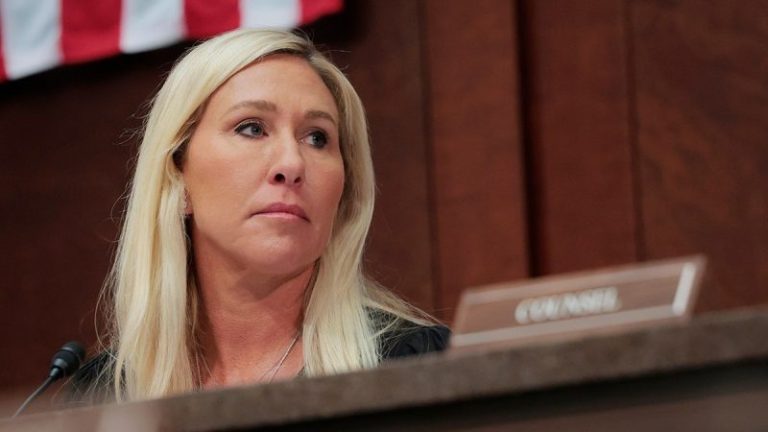
Rep. Marjorie Taylor Greene, R-Ga., on Sunday called for President Trump to only focus on America’s needs as the president meets with Ukrainian President Volodymyr Zelenskyy and Israeli Prime Minister Benjamin Netanyahu.

The president has been heavily involved in the Russia-Ukraine and Israel-Hamas conflicts since returning to the White House.

Trump met with Zelenskyy on Sunday at Mar-a-Lago to discuss a peace plan aimed at ending the Russia-Ukraine war that began with an invasion by Moscow in February 2022.

Netanyahu arrived in Florida on Sunday ahead of their scheduled meeting on Monday at Trump’s estate to address Israel’s conflicts in the Middle East. It will be the sixth meeting of the year between the two leaders.

Greene, responding to Trump’s meeting with Zelenskyy and Netanyahu, said that the Trump administration should address the needs of Americans rather than becoming further involved in global conflicts.

‘Zelensky today. Netanyahu tomorrow,’ she wrote on X.

‘Can we just do America?’ the congresswoman continued.

The congresswoman has been a vocal critic of supplying U.S. military aid to foreign countries amid the conflicts in Europe and the Middle East.

She has also referred to Zelenskyy as ‘a dictator who canceled elections’ and labeled Israel’s military campaign in Gaza as a genocide and humanitarian crisis.

This comes after Taylor Greene, who is set to resign from the House in January, had a public spat with Trump over the past few months as Trump took issue with the Georgia Republican’s push to release documents related to the investigations into deceased sex predator Jeffrey Epstein.

Trump had withdrawn his endorsement of Greene and called her a ‘traitor’ over the public feud.

This post appeared first on FOX NEWS

Don Durrett: Gold, Silver Price Targets and 15 ‘Must-Own’ Silver Stocks

Kicking off the list in the fifth spot is Don Durrett of GoldStockData.com.

In this January interview, Don shared his silver and gold price outlook for 2025, as well as his 15 ‘must-own’ silver stocks. We don’t have time here for the full list, but I’ll leave the link to the video below. For now, here’s Don talking about why he’s so bullish on silver and gold stocks.

Peter Grandich: Gold Mines Set to Print Cash as Price Hits New Highs

Peter Grandich of Peter Grandich & Co. is next.

This interview is from all the way back in February, when gold was still around US$2,800 per ounce. Peter talked about how US$5,000 was no longer sounding outlandish to him, and also explained how the higher gold price could impact mining companies.

Vince Lanci: Silver’s London Liquidity Crisis — What’s Happening, What’s Next

Vince Lanci of Echobay Partners is always a popular guest, and in mid-October he helped break down unusual dynamics in silver, which had broken through US$50 per ounce.

Ed Steer: Silver Rally Now Unstoppable, Price to Hit Triple Digits

Ed Steer of Ed Steer’s Gold and Silver Digest comes in at number two. This interview is also from mid-October, and in it Ed weighed in on the silver market’s complex inner workings. Ed also gave his thoughts on the precious metal’s long-term prospects.

Rick Rule: Gold Strategy, Oil Stocks I Own, ‘Sure Money’ in Uranium

Finally, our most popular interview of 2025 was with none other than Rick Rule of Rule Investment Media. In this early November conversation, he said he had recently sold 25 percent of his junior gold stocks; he also explained why he did it and how he redeployed that capital.

Securities Disclosure: I, Charlotte McLeod, hold no direct investment interest in any company mentioned in this article.

This post appeared first on investingnews.com

Jeffrey Christian, managing partner at CPM Group, shares his outlook for gold and silver in 2026, explaining why he expects higher prices for the metals.

‘We think that 2026 is going to be a more hostile environment than 2025, and that will cause investors to buy more gold and silver. So we’re expecting gold and silver prices to spike higher than they are today at times during 2026,’ he explained.

Securities Disclosure: I, Charlotte McLeod, hold no direct investment interest in any company mentioned in this article.

This post appeared first on investingnews.com

It was an off-year when it comes to elections, but 2025 was on fire on the campaign trail, as next year’s looming midterm showdowns took shape.

While it was never expected to match the intensity of the tumultuous 2024 battles for the White House and Congress, this year’s off-year elections grabbed outsized national attention and served as a key barometer leading up to the 2026 midterm contests for the House and Senate majorities.

Here are five of the biggest moments that shaped the campaign trail.

5. Trump pushes mid-decade congressional redistricting

Aiming to prevent what happened during his first term in the White House when Democrats reclaimed the House majority in the 2018 midterms, President Donald Trump in June first floated the idea of rare but not unheard of mid-decade congressional redistricting.

The mission was simple: redraw congressional district maps in red states to pad the GOP’s razor-thin House majority to keep control of the chamber in the 2026 midterms, when the party in power traditionally faces political headwinds and loses seats.

Trump’s first target: Texas.

A month later, when asked by reporters about his plan to add Republican-leaning House seats across the country, the president said, ‘Texas will be the biggest one. And that’ll be five.’

The push by Trump and his political team triggered a high-stakes redistricting showdown with Democrats to shape the 2026 midterm landscape in the fight for the House majority.

Republican Gov. Greg Abbott of Texas called a special session of the GOP-dominated state legislature to pass the new map.

But Democratic state lawmakers, who broke quorum for two weeks as they fled Texas in a bid to delay the passage of the redistricting bill, energized Democrats across the country.

Among those leading the fight against Trump’s redistricting was Democratic Gov. Gavin Newsom of California.

California voters earlier this month overwhelmingly passed Proposition 50, a ballot initiative which will temporarily sidetrack the left-leaning state’s nonpartisan redistricting commission and return the power to draw the congressional maps to the Democratic-dominated legislature.

That is expected to result in five more Democratic-leaning congressional districts in California, which aimed to counter the move by Texas to redraw their maps.

The fight quickly spread beyond Texas and California.

Right-tilting Missouri, North Carolina and Ohio have drawn new maps as part of the president’s push.

Republicans are looking to GOP-controlled Florida, where early redistricting moves are underway in Tallahassee. A new map could possibly produce up to five more right-leaning seats. But conservative Gov. Ron DeSantis and GOP legislative leaders don’t see eye-to-eye on how to move forward.

‘We must keep the Majority at all costs,’ Trump wrote on social media this month.

In blows to Republicans, a Utah district judge this month rejected a congressional district map drawn up by the state’s GOP-dominated legislature and instead approved an alternate that will create a Democratic-leaning district ahead of the 2026 midterm elections.

And Republicans in Indiana’s Senate defied Trump, shooting down a redistricting bill that had passed the state House.

But Trump scored a big victory when the conservative majority on the Supreme Court greenlighted Texas’ new map.

Other states that might step into the redistricting wars — Democratic-dominated Illinois and Maryland, and two red states with Democratic governors, Kentucky and Kansas.

4. Jay Jones text messages revealed, rocking Virginia’s elections

Virginia Democrats were cruising toward convincing victories in the commonwealth’s statewide elections when a scandal sent shockwaves up and down the ballot.

Democratic attorney general nominee Jay Jones instantly went into crisis mode after controversial texts were first reported earlier by the National Review in early October.

Jones acknowledged and apologized for texts he sent in 2022, when he compared then-Virginia House Speaker Todd Gilbert to mass murderers Adolf Hitler and Pol Pot, adding that if he was given two bullets, he would use both against the GOP lawmaker to shoot him in the head.

But Jones faced a chorus of calls from Republicans to drop out of the race.

And the GOP leveraged the explosive revelations up the ballot, forcing Democratic Party nominee, former Rep. Abigail Spanberger, back on defense in a campaign where she was seen as the frontrunner against Republican rival Lt. Gov. Winsome Earle-Sears.

Earle-Sears didn’t waste an opportunity to link Spanberger to Jones. And during October’s chaotic and only gubernatorial debate, where Earle-Sears repeatedly interrupted Spanberger, the GOP gubernatorial nominee called on her Democratic rival to tell Jones to end his attorney general bid.

‘The comments that Jay Jones made are absolutely abhorrent,’ Spanberger said at the debate. But she neither affirmed nor pulled back her support of Jones.

While the scandal grabbed national headlines, in the end it didn’t slow down the Democrats, as Spanberger crushed Earle-Sears by 15 points. Democrats won the separate election for lieutenant governor by 11 points and Jones even pulled off a 6-point victory over Republican incumbent Jason Miyares.

3. Democrats overperform at the ballot box

Just eight days into Trump’s second term in the White House, demoralized Democrats had something to cheer about.

Democrat Mike Zimmer defeated Republican Katie Whittington in a special state Senate election in Iowa, flipping a Republican-controlled vacant seat in a district that Trump had carried by 21 points less than three months earlier.

Zimmer’s victory triggered a wave of Democrats overperforming in special elections and regularly scheduled off-year ballot box contests.

Among the most high profile was the victory by the Democratic candidate in Wisconsin’s high-stakes and expensive state Supreme Court showdown.

With inflation, the issue that severely wounded them in the 2024 elections, persisting, Democrats were laser focused on affordability, and the wins kept coming.

In November’s regularly scheduled elections, they won the nation’s only two gubernatorial showdowns — in New Jersey and Virginia — by double digits. And they scored major victories in less high-profile contests from coast to coast.

The year ended with Democrats winning a mayoral election in Miami, Florida for the first time in a quarter-century, and flipping a state House seat in Georgia.

The Democratic National Committee, in a year-end memo, touted, ‘In 2025 alone, Democrats won or overperformed in 227 out of 255 key elections — nearly 90% of races.’

But Democrats are still staring down a brand that remains in the gutter, with historically low approval and favorable numbers.

Among the most recent to grab headlines: Only 18% of voters questioned in a Quinnipiac University survey this month said they approved of the way congressional Democrats were handling their job, while 73% percent disapproved.

That’s the lowest job approval rating for the Democrats in Congress since the Quinnipiac University Poll began asking this question 16 years ago.

2. Democrats’ primary problem

The Democrats overperformed in this month’s special congressional election in a GOP-dominated seat in Tennessee — losing by nine points in a district that Trump carried by 22 points just a year ago,

But there were plenty of centrist Democrats who argued that state Rep. Aftyn Behn, the Democratic nominee in the race, was too far to the left for the district.

Republicans repeatedly attacked Behn over her paper trail of past comments on defunding the police.

And the U.S. Senate campaign launch this month in red-leaning Texas by Rep. Jasmine Crockett, a progressive champion and vocal Trump critic and foil, compounded the argument by centrists.

‘The Democratic Party’s aspirations to win statewide in a red state like Texas simply don’t exist without a centrist Democrat who can build a winning coalition of ideologically diverse voters,’ Liam Kerr, co-founder of the Welcome PAC, a group which advocates for moderate Democratic candidates, argued in a statement to Fox News Digital.

And the center-left Third Way, in a memo following the Tennessee special election, argued that ‘there are two projects going on in the Democratic Party right now. One is winning political power so we can stop Trump’s calamity. The other is turning blue places bluer.’

‘If far-left groups want to help save American democracy, they should stop pushing their candidates in swing districts and costing us flippable seats,’ the memo emphasized.

1. Mamdani wins NYC mayoral primary

It was the story that has dominated campaign politics for the past six months.

Zohran Mamdani‘s convincing June 24 victory in New York City’s Democratic Party mayoral primary was the political earthquake that rocked the nation’s most populous city and sent powerful shockwaves across the country.

The capturing of the Democratic nomination by the now-34-year-old socialist state lawmaker over frontrunner former Gov. Andrew Cuomo and nine other candidates propelled Mamdani to a general election victory.

Mamdani’s primary shocker, and later, his general election victory, energized the left.

But it also handed Republicans instant ammunition as they worked to link the first Muslim New York City mayor with a far-left agenda to Democrats across the country, as the party aimed to paint Democrats as extremists.

But Trump, who had repeatedly called Mamdani a ‘communist,’ appeared to undercut that narrative with a chummy Oval Office meeting with the mayor-elect last month.

This post appeared first on FOX NEWS