Author

admin

Browsing

Senate Republicans appear to be closing in on a plan to counter Senate Democrats’ proposal to extend expiring Obamacare subsidies as a vote on credits at the end of the week draws closer.

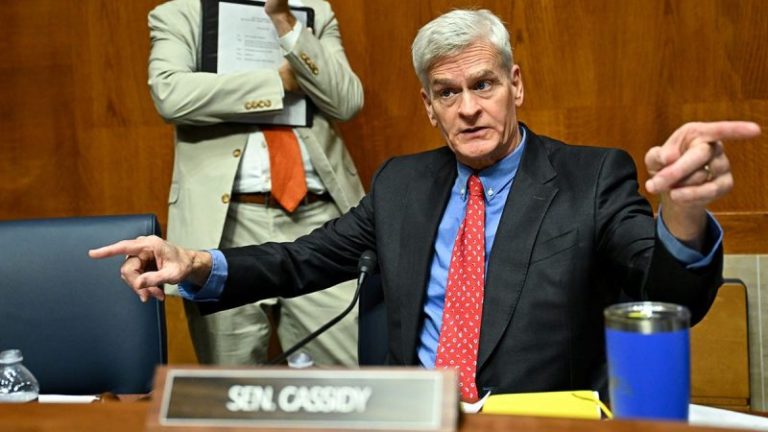
Senate Health, Education, Labor and Pensions chair Bill Cassidy, R-La., and Senate Finance Committee Chair Mike Crapo, R-Idaho, unveiled their proposal to tackle the Obamacare issue that would abandon the subsidies for Healthcare Savings Accounts (HSAs).

The lawmakers have been leading Senate Republicans’ planning for a counter-proposal to Senate Minority Leader Chuck Schumer, D-N.Y., and Senate Democrats’ legislation, which would extend the Biden-era subsidies for three years.

Cassidy and Crapo pitched the legislation as ‘an alternative to Democrats’ temporary COVID bonuses, which send billions of tax dollars to giant insurance companies without lowering insurance premiums.’

The long-awaited proposal would funnel the subsidy money directly to HSAs rather than to insurance companies, an idea that has the backing of President Donald Trump and is largely popular among Senate Republicans.

‘Instead of 100% of this money going to insurance companies, let’s give it to patients. By giving them an account that they control, we give them the power,’ Cassidy said in a statement. ‘We make health care affordable again.’

Crapo contended that the legislation would build off of Trump’s marquee legislative package, the ‘big beautiful bill,’ from earlier this year and would ‘help Americans manage the rising cost of health care without driving costs even higher.’

‘Giving billions of taxpayer dollars to insurers is not working to reduce health insurance premiums for patients,’ he said in a statement.

Whether the bill gets a vote in the upper chamber this week remains in the air, given the growing number of Obamacare subsidy plans floated by Senate Republicans. But Senate Majority Leader John Thune, R-S.D., signaled that he thought their plan could work.

‘It represents an approach that actually does something on affordability and lowers costs,’ Thune said.

‘But there are other ideas out there, as you know, but I think if there is going to be some meeting of minds on this, it is going to require that Democrats sort of come off a position they know is an untenable one, and sit down in a serious way,’ he continued.

Cassidy and Crapo’s plan would seed HSAs with $1,000 for people ages 18 to 49 and $1,500 for those 50 to 65 for people earning up to 700% of the poverty level. In order to get the pre-funded HSA, people would have to buy a bronze or catastrophic plan on an Obamacare exchange.

The legislation also ticks off several demands from Senate Republicans in their back and forth with Senate Democrats over the subsidies that are unlikely to gain any favor from Schumer and his caucus.

Shortly after the legislation was unveiled, Schumer charged in a post on X that ‘Republicans are nowhere on healthcare, and the clock is ticking.’

Included in Cassidy and Crapo’s bill are provisions reducing federal Medicaid funding to states that cover undocumented immigrants, Requirements that states verify citizenship or eligible immigration status before someone can get Medicaid, a ban on federal Medicaid funding for gender transition services and nixing those services from ‘essential health benefits’ for ACA exchange plans, and inclusion Hyde Amendment provisions to prevent taxpayer dollars from funding abortions through the new HSAs.

Senate Republicans are expected to discuss the several options on the table, including newly-released plans from Sens. Susan Collins, R-Maine, and Bernie Moreno, R-Ohio, and Sen. Roger Marshall, R-Kan., respectively, during their closed-door conference meeting Tuesday afternoon.

When asked if there could be a compromise solution found among the proposals, Cassidy said, ‘That’s going to be the will of the conference, if you will.’

This post appeared first on FOX NEWS

Republican Rep. Marjorie Taylor Greene of Georgia announced Tuesday that she intends to vote against the proposed fiscal year 2026 National Defense Authorization Act, saying the legislation spends too much taxpayer money on foreign priorities. 

Greene said in a post on X that the NDAA is ‘filled with American’s hard earned tax dollars used to fund foreign aid and foreign country’s wars.’

Greene pointed to the rising national debt, which, according to fiscaldata.treasury.gov, is more than $38.39 trillion.

‘These American People are $38 Trillion in debt, suffering from an affordability crisis, on the verge of a healthcare crisis, and credit card debt is at an all time high. Funding foreign aid and foreign wars is America Last and is beyond excuse anymore. I would love to fund our military but refuse to support foreign aid and foreign militaries and foreign wars. I am here and will be voting NO,’ Greene declared in her post.

But House Speaker Mike Johnson has praised the proposed NDAA.

‘This year’s National Defense Authorization Act helps advance President Trump and Republicans’ Peace Through Strength Agenda by codifying 15 of President Trump’s executive orders, ending woke ideology at the Pentagon, securing the border, revitalizing the defense industrial base, and restoring the warrior ethos,’ Johnson said in part of a lengthy statement.

Greene plans to leave office early next month, in the middle of her two-year term.

This post appeared first on FOX NEWS

President Donald Trump rolled out a $12 billion farm aid package to support farmers, according to the White House. 

The aid package will provide up to $11 billion toward the U.S. Department of Agriculture’s (USDA) new Farmer Bridge Assistance Program, which is designed to provide single payments to row crop farmers, while the remaining $1 billion will go to farmers whose crops do not qualify for the program. 

Further details will be hashed out as the USDA continues to evaluate market conditions, according to the White House. 

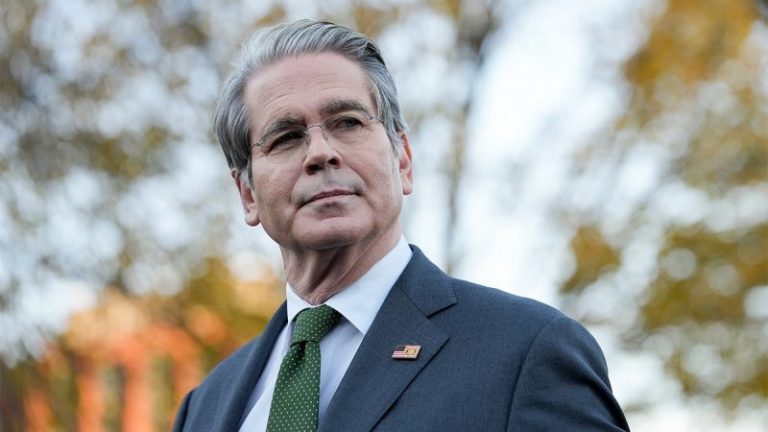
The president unveiled the new aid package at a Monday roundtable at the White House. Those who appeared at the event included Treasury Secretary Scott Bessent, Secretary of Agriculture Brooke Rollins, as well as corn, soybean, rice and other types of farmers. 

The announcement comes as the U.S. and China have gone head-to-head on trade negotiations in 2025, and after China reined in its soybean purchases from the U.S. amid ongoing tariff negotiations between Beijing and Washington, D.C. 

However, Trump and Chinese President Xi Jinping met in South Korea in October, where the two hashed out a series of agreements concerning trade. Specifically, Trump said he agreed to cut tariffs on Chinese imports by 10% — reducing the rate from 57% to 47% — because China said it would cooperate with the U.S. on addressing the U.S. fentanyl crisis.

Since those talks, China has started to boost its purchases of soybeans again. China purchased at least 840,000 metric tons of soybeans for delivery in December and January, Reuters reported in November. That purchase marked the largest shipment since at least January, Reuters reported. 

Meanwhile, Bessent said that China so far is upholding its end of the bargain on the trade deal, including provisions to buy 12 million tons of soybeans by the end of February 2026.

‘China is on track to ‍keep every ⁠part of the deal,’ Bessent said at The New ‍York Times Dealbook Summit Wednesday. 

Trump also voiced optimism about China’s soybean purchases, and signaled Beijing may purchase more than the original 12 million tons by February 2026. 

‘I spoke with President Xi recently, very recently,’ Trump said Monday. ‘And I think he’s going to do even more than he promised to do. So I think the relationship is a very good one. I think he’s going to do more than he promised to do. And what he promised to do is a lot. So we’re very happy with that.’

China is the primary foreign purchaser of U.S. soybeans, and bought approximately half of U.S. soybean exports in 2024, totaling approximately $12.6 billion out of $25.8 billion in total U.S. exports, according to the U.S. Census Bureau and USDA. China also imported nearly 27 metric tons of soybeans that year. 

Trump is helping the agriculture industry by ‘negotiating new trade deals to open new export markets for our farmers and boosting the farm safety net for the first time in a decade,’ White House spokeswoman Anna Kelly said in a Monday statement to Fox News Digital.

Trump has previously issued an aid package to farmers. When Trump’s first administration rolled out tariffs, China issued their own retaliatory tariffs that cost the federal government billions of dollars in government aid to farmers.

Bloomberg News first reported the aid package Sunday. 

Fox News’ Olivianna Calmes contributed to this report. 

This post appeared first on FOX NEWS

George Washington Plunkitt was born into poverty in 1842 but rose through the ranks of the Democratic Party machine of New York, the famed ‘Tammany Hall,’ to become a state representative and a state senator. He also became quite wealthy along the way.

Plunkitt always defended his machine and its methods — and the money they made him. Plunkitt would gladly defend the practices of Tammany, rebutting charges of corruption with the standard reply that ‘nobody thinks of drawin’ the distinction between honest graft and dishonest graft. There’s all the difference in the world between the two.’

Plunkitt’s brazenness lives on in the modern-day machines of the left, found in the deep-blue jurisdictions of the country. With the focus on the bilking of Minnesota taxpayers by the Somali community of the Twin Cities (many citizens, many not), voters across the country are still in shock as the story has unfolded since 2022. The lights shone on the Gopher State should get much brighter now, and after that, I have a follow-up that will make the swamp of the Twin Cities seem like a puddle.

The Minnesota story has been hiding in plain sight, with superb reporters from one of the original blogs of more than 20 years ago, Powerline, poring over the scandal for years.

Powerline’s founders John Hinderaker and Scott Johnson, and more recently their colleague Bill Glahn, have continued to dig and report, dig and report, dig and report on the ‘Somali connection.’

In recent weeks, the story caught fire with the help of reporting by Ryan Thorpe and Christopher Rufo of the Manhattan Institute’s City Journal and by Fox News. That ‘Minnesota is drowning in fraud,’ as Thorpe and Rufo put it, has now become a national story. Pray that it is the first of many.

‘There’s an honest graft, and I’m an example of how it works,’ Boss Plunkitt would say. ‘I might sum up the whole thing by sayin’: I seen my opportunities and I took ‘em.’

Turns out the defendants, the indicted and the convicted in the Gopher State saw their opportunities as well, and they put Tammany to shame when it came to scale and speed.

The conmen of Minnesota bilked the state out of vast piles of cash through a variety of plays, the most infamous of which is, for the moment, ‘Feeding Our Future.’ It took truly extraordinary efforts by Minnesota Gov. Tim Walz and the state’s attorney general, Keith Ellison, to turn their eyes the other way to allow that scam and soon others to flourish. The possessed girl in ‘The Exorcist’ had nothing on Walz and Ellison when it came to turning their heads.

We have former Attorney General Eric Holder and former White House Counsel Dana Remus to thank for elevating the massive fraud ring run primarily out of the Somali American and Somali community in the Twin Cities to the nation’s attention.

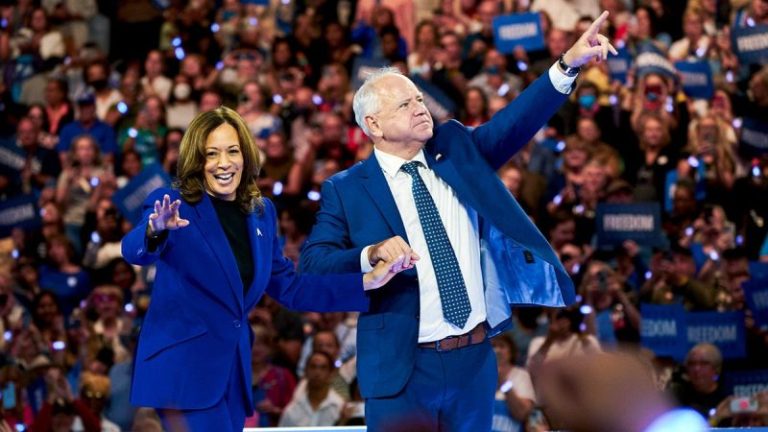
Why? Because that pair made Walz much more than an obscure governor of a deep-blue state. That duo was primarily responsible for ‘vetting’ the 2024 Democratic nominee for vice president as one of Democratic presidential candidate Kamala Harris’ potential running mates. The dynamic duo of Holder and Remus either wholly missed the massive cons run on Walz’s watch or judged them not significant enough to derail his candidacy.

During ‘Brat Summer,’ the legacy media abandoned its past practices and joined in the effort to push the worst pair of candidates to the finish since Alf Landon and Frank Knox got blown out by FDR in the 1936 referendum on Roosevelt’s New Deal.

Holder blessed Walz, and Holder’s fans in the Manhattan–Beltway corridor followed suit. Media elites blessed Holder’s judgment in turn.

Big mistake.

Now Walz is part of the national Democratic Party’s brand and refuses to go away, choosing to concentrate his efforts on running for a third term as governor next year — and apparently hoping he might be the party’s standard-bearer in 2028. Instead, ‘Feeding Our Future’ broke out of the Minnesota news ghetto and onto the national stage.

‘Run Tim Run’ should be the GOP’s chant, alongside ‘Run Gavin Run,’ because just like Walz, California Gov. Gavin Newsom has some industrial-level explaining to do.

No, I’m not referring to the California governor’s French Laundry debacle. And no, not the devastating fires that tore through L.A. in January. Not even his indicted former chief of staff. No, the exact parallel to Walz’s woe is the Newsom administration’s handling of COVID-era relief for the unemployed — a statewide con run by political cons.

The Pandemic Unemployment Assistance program (PUA), like the Lost Wages Assistance plan, was devised and funded by Congress to keep alive Americans left unemployed or with their businesses shuttered by COVID lockdowns. Like standard unemployment programs, these COVID-era programs were primarily run through state unemployment insurance offices and other state agencies.

The COVID lockdowns were unprecedented, and the public health ‘authorities’ responsible for advising and administering them should never be taken seriously again.

Many of those bureaucrats, drunk on new authority, stepped forward when elected officials sought guidance on what to do about the mysterious and deadly disease imported from China. (Their dismissal of the lab-leak theory speaks to their actual, as opposed to presumed, expertise.)

When lockdowns became the solution du jour, Congress rightly understood that they were shutting down the livelihoods of tens of millions of Americans and flooded the country with life-saving money — three times.

It was not just the Minnesota Somali community that had ‘seen their opportunities and took ‘em.’ So, too, did the cons of California: the real, honest-to-goodness cons of the California penal system — inmates for whom available time to scheme and scam is abundant.

Ask your favorite AI engine, ‘How much fraud was perpetrated against the California Employment Development Department during COVID?’ The answers will vary, but the floor on the cost of the fraud is $20 billion. The ceiling is more than $30 billion.

The Golden State’s EDD is ‘run’ by a director, and Gov. Newsom, who took office in 2018, has appointed two: Rita Saenz and Nancy Farias. COVID arrived on Newsom’s watch, and he and his appointees should own the fraud that followed. They make the Walz–Ellison team look like pikers when it comes to ignoring fraud.

In his first term, President Trump stood up Operation Warp Speed, and Congress rightly decided to (1) spend federal dollars to lessen the lockdown pain and (2) leave the payment of most public benefits to state agencies, while COVID business loans were handled by private-sector banks as the Federal Reserve and Treasury Department innovated in a variety of ways to prevent an economic crash.

The years following the mishap at the Wuhan lab demonstrated the vast incompetence of the American administrative state but also the necessity of a federal government to pick up the tab when ‘scientists’ lose their collective minds and, for example, counsel the closure of schools.

The official timeline has COVID appearing in Wuhan in December 2019 and reaching U.S. shores a month later. We may never know when the first cases were diagnosed by the Chinese Communist Party, and we are not in a position to investigate the horrific fraud and consequent disaster for which General Secretary Xi Jinping is responsible.

But President Trump could order a six-month deep dive into the financial fraud that followed in the U.S., not just in Minnesota and California — though those are the ‘patient zeroes’ for never allowing a crisis to pass without enriching the state’s worst actors.

Could President Trump stand up a time-limited panel to investigate fraud perpetrated on state agencies during COVID? Yes. Might that panel torch a few GOP reputations along the way? Inevitably.

But the interest in the Minnesota Somali shakedown should be a demand signal for accountability across the country.

President Trump often acts in the mold of Teddy Roosevelt, who, like 45–47, was never afraid of a headline — provided he provoked it.

Now is the time for the president to ask a handful of the smartest, most respected people in the country to sort through the wreckage of the COVID era’s many state governments’ responsibilities and ‘initiatives’ and report in rapid fashion — and in clear English — the scale of fraud perpetrated upon state agencies.

Make your search-and-publicize team smart and fast. Putting Johnson and Hinderaker as co-chairs of a strike team devoted to compiling the facts as we know them today would ensure accuracy and fine writing.

And give them a deadline: Aug. 31, 2026. Voters deserve to know how their state governments worked during COVID — or didn’t — before they vote again.

This post appeared first on FOX NEWS

Perth, Australia (ABN Newswire) – Locksley Resources Limited (ASX:LKY,OTC:LKYRF) (FRA:X5L) (OTCMKTS:LKYRF) announced the successful completion of a heavily oversubscribed capital raising (‘Placement’), securing firm commitments to raise approximately A$17 million via a placement of new shares at A$0.24 per share to domestic and international professional and institutional investors.

HIGHLIGHTS

– A$17 million raised at A$0.24 per share through an oversubscribed placement to domestic and international institutional and sophisticated investors

– Cornerstone U.S. institutional support provides strong strategic validation of Locksley’s role in advancing onshore supply of antimony and rare earths for U.S. national security and industrial supply chains

– Strengthened balance sheet enables rapid progression of Locksley’s U.S. Mine to Market strategy while complementing ongoing engagement with federal funding and grant programs

– Funding accelerates drilling, downstream technology development, and project execution, while deepening engagement with U.S. institutional partners and key government agencies

– Locksley Investor Webinar – See link below

The Placement was led by well established U.S. institutional investors, providing a strong endorsement of Locksley’s strategy to deliver a fully integrated U.S. based ‘Mine to Market’ critical minerals supply chain. Their participation brings not only capital but aligned sector expertise and ongoing engagement that supports the Company’s downstream development objectives within the United States.

The raise was conducted under the Company’s refreshed placement capacity pursuant to ASX Listing Rules 7.1 and 7.1A, following shareholder approval at the Annual General Meeting held on 28 November 2025.
Strategic Execution Enabled by the Placement

Proceeds from the Placement will accelerate execution across the following:

– Rapid Advancement of drilling, assay programs and structural mapping to define mineralisation across the Mojave Project

– Acceleration of downstream processing and American-made conversion planning for antimony products

– Enhanced positioning for engagement with federal level funding initiatives, supporting Locksley’s role within the U.S. critical minerals ecosystem

– Accelerated progression toward first-mover status in restoring domestic U.S antimony supply, aligned with national security and industrial demand

– Continuous parallel execution of permitting, stakeholder engagement, engineering and project scheduling

Locksley Managing Director, Kerrie Matthews, commented:

‘The depth of support across both international and Australian institutional markets represents a strong validation of our strategic pathway. In particular, the strong level of U.S. participation aligns directly with our downstream ambitions and reinforces the commercial relevance of our development plan.

The involvement of leading U.S. institutional investors is more than capital allocation; it is a strategic endorsement of Locksley’s emerging role within the domestic U.S critical minerals sector. This support comes at a time when the U.S administration is emphasising critical minerals as a national security priority and seeking to reduce reliance on foreign-controlled processing capacity.

With this institutional backing, Locksley is positioned to advance its contribution to a U.S. based supply chain for antimony and rare earths.

Importantly, this funding allows us to execute at pace while continuing to progress federal engagement initiatives. The capital secures our ability to accelerate exploration, development planning, and downstream partnerships, unlocking the full potential of the Mojave Project.

We are delighted to welcome these new investors to the register and look forward to working with partners who can support our long-term growth agenda.’

Investor Webinar – U.S Development Progression & Execution Strategy

Locksley invites shareholders and investors to attend a live Investor Webinar to discuss recent milestones and provide an update on the advancement of its U.S Mine to Market execution pathway and upcoming development milestones.

ZOOM WEBINAR: TUESDAY, 9th DECEMBER 2025 at 1:00pm AEDT / 10:00am AWST
REGISTRATION LINK:
https://www.abnnewswire.net/lnk/85LT5VD6

Placement Details:

The Placement was managed by Alpine Capital Pty Ltd and Titan Partners Group, a division of American Capital Partners, acting as Joint Lead Managers.

Settlement of the Placement is expected to occur on or around 11 December 2025, with new shares to rank equally with existing fully paid ordinary shares. An Appendix 2A and cleansing notice will be released to the ASX in due course.

The Placement is structured under a single tranche comprising 70,833,334 new Securities to raise approximately A$17,000,000, conducted under the placement capacity of the Offer in accordance with ASX LR 7.1 & LR 7.1A.

About Locksley Resources Limited:

Locksley Resources Limited (ASX:LKY,OTC:LKYRF) (FRA:X5L) (OTCMKTS:LKYRF) is an ASX listed explorer focused on critical minerals in the United States of America. The Company is actively advancing exploration across two key assets: the Mojave Project in California, targeting rare earth elements (REEs) and antimony. Locksley Resources aims to generate shareholder value through strategic exploration, discovery and development in this highly prospective mineral region.

Mojave Project

Located in the Mojave Desert, California, the Mojave Project comprises over 250 claims across two contiguous prospect areas, namely, the North Block/Northeast Block and the El Campo Prospect. The North Block directly abuts claims held by MP Materials, while El Campo lies along strike of the Mountain Pass Mine and is enveloped by MP Materials’ claims, highlighting the strong geological continuity and exploration potential of the project area.

In addition to rare earths, the Mojave Project hosts the historic ‘Desert Antimony Mine’, which last operated in 1937. Despite the United States currently having no domestic antimony production, demand for the metal remains high due to its essential role in defense systems, semiconductors, and metal alloys. With significant surface sample results, the Desert Mine prospect represents one of the highest-grade known antimony occurrences in the U.S.

Locksley’s North American position is further strengthened by rising geopolitical urgency to diversify supply chains away from China, the global leader in both REE & antimony production. With its maiden drilling program planned, the Mojave Project is uniquely positioned to align with U.S. strategic objectives around critical mineral independence and economic security.

Tottenham Project

Locksley’s Australian portfolio comprises the advanced Tottenham Copper-Gold Project in New South Wales, focused on VMS-style mineralisation

Source:
Locksley Resources Limited

Contact:
Kerrie Matthews
Chief Executive Officer
Locksley Resources Limited
T: +61 8 9481 0389
Kerrie@locksleyresources.com.au

Jane Morgan
Investor and Media Relations
T: +61 (0) 405 555 618
jm@janemorganmanagement.com.au

News Provided by ABN Newswire via QuoteMedia

This post appeared first on investingnews.com

Questcorp Mining Inc. (CSE: QQQ,OTC:QQCMF) (OTCQB: QQCMF) (FSE: D910) (the ‘Company’ or ‘Questcorp’) announces that it will offer (the ‘Offering’) up to 5,769,231 flow-through units (each, an ‘FT Unit’), at a price of $0.13 per FT Unit, for gross proceeds of up to $750,000, by way of non-brokered private placement. Each FT Unit will consist of one common share of the Company, issued as a flow-through share within the meaning of the Income Tax Act (Canada), and one-half-of-one share purchase warrant (each whole warrant, a ‘Warrant’). Each Warrant will entitle the holder to purchase an additional common share of the Company at a price of $0.20 for a period of twenty-four months.

The Company anticipates the net proceeds raised from the Offering will be used to conduct exploration of the Company’s North Island Copper Property, located on Vancouver Island, British Columbia.

The Company may pay finders’ fees to eligible parties who have assisted in introducing subscribers to the Offering. All securities issued in connection with the Offering will be subject to restrictions on resale for a period of four-months-and-one-day in accordance with applicable securities laws. Completion of the Offering remains subject to receipt of regulatory approval.

Final Tranche Closing

The Company also announces that it has closed the final tranche of its previously announced non-brokered private placement and has issued a further 1,266,667 units (each, an ‘NFT Unit‘), at a price of $0.15 per NFT Unit, for gross proceeds of $190,000. Each NFT Unit consists of one common share, and one-half of one Warrant.

No finders’ fees were paid in connection with closing of the final tranche. All securities issued in the final tranche are subject to restrictions on resale until April 9, 2026 in accordance with applicable securities laws.

About Questcorp Mining Inc.

Questcorp Mining Inc. is engaged in the business of the acquisition and exploration of mineral properties in North America, with the objective of locating and developing economic precious and base metals properties of merit. The Company holds an option to acquire an undivided 100% interest in and to mineral claims totaling 1,168.09 hectares comprising the North Island Copper Property, on Vancouver Island, British Columbia, subject to a royalty obligation. The Company also holds an option to acquire an undivided 100% interest in and to mineral claims totaling 2,520.2 hectares comprising the La Union Project located in Sonora, Mexico, subject to a royalty obligation.

Contact Information

Questcorp Mining Corp.

Saf Dhillon, President & CEO

Email: saf@questcorpmining.ca
Telephone: (604) 484-3031

This news release includes certain ‘forward-looking statements’ under applicable Canadian securities legislation. Forward-looking statements are necessarily based upon a number of estimates and assumptions that, while considered reasonable, are subject to known and unknown risks, uncertainties, and other factors which may cause the actual results and future events to differ materially from those expressed or implied by such forward-looking statements. Such factors include, but are not limited to: general business, economic, competitive, political and social uncertainties, uncertain capital markets; and delay or failure to receive board or regulatory approvals. There can be no assurance that the geophysical surveys will be completed as contemplated or at all and that such statements will prove to be accurate, as actual results and future events could differ materially from those anticipated in such statements. Accordingly, readers should not place undue reliance on forward-looking statements. The Company disclaims any intention or obligation to update or revise any forward-looking statements, whether as a result of new information, future events or otherwise, except as required by law.

To view the source version of this press release, please visit https://www.newsfilecorp.com/release/277245

News Provided by Newsfile via QuoteMedia

This post appeared first on investingnews.com

For Social Security it has been a miserable year. 

After President Donald Trump unleashed Elon Musk and DOGE on the Social Security Administration, the agency lost more staff in a shorter period of time than ever before in its 90-year history. Fortunately, public outcry and pushback from congressional Democrats saved Social Security from a 50% cut to staffing and the closure of scores of field offices as Trump and his administration had announced back in March. So, somehow, those dedicated workers remaining at the Social Security Administration have still managed to keep the agency running — without missing a single monthly benefit payment. 

There are not many public or private insurers in the world who can claim to never have missed a monthly benefit payment in 90 years. 

This is good news for 71 million Americans — many of whom depend on their earned benefit every month as a lifeline. But we are not out of the woods yet. The agency has been gutted. Enormous damage has been done to customer service and to the agency’s ability to process claims.

Just as many are demanding that Trump’s deep cuts to healthcare be restored, so too must Trump’s deep cuts to Social Security be restored, as the two are inextricably linked. Sixty-four million Medicare recipients will see a reduction in their Social Security benefits in 2026 due to Trump’s Medicare price hikes that will cut into their Social Security cost-of-living adjustment (COLA), making life more expensive for seniors. This is the greatest erosion of the Social Security COLA in nearly a decade, and the first time that Medicare premiums exceeded $200 per month. 

With the Social Security Administration’s staffing now reduced to a 60-year low and baby boomers swelling the number of active beneficiaries to an all-time high, the agency is struggling badly, and the American people are paying the price. Wait times to get to a person in a field office or to talk to a person on the 1-800 line have become longer and longer.  

As the Trump administration claims that things have never been better, millions of Americans are having a very different experience. In fact, more people today now die waiting in line for their initial disability determination than at any time since President Dwight Eisenhower signed the disability portion of the act into law in 1956. Even just recently, Trump and DOGE risked 300 million Americans’ personal data from the Social Security Administration. They have robbed Americans of customer service and peace of mind.

Conditions have grown so bad – Nancy Altman, president of Social Security Works, has called for Social Security Commissioner Frank Bisignano’s resignation. It proves to be a telling illustration of the deep concern experts have for the damage done to the agency. 

None of this had to happen. It was made to happen. As a candidate, Trump vowed all through the campaign that he would protect Social Security. Instead, he wrecked the program’s customer service, took a chainsaw to its functions and maligned its reputation with false claims of waste, fraud and abuse.

In a time of great political division, Social Security remains the most strongly supported program in America. In fact, 80% of Americans are concerned whether Social Security will be available when they retire and want it to be strengthened, made better — not hacked to pieces, privatized or liquidated. 

This is a democracy moment. Social Security should be a bipartisan issue. All lawmakers — Republicans, Democrats and Independents alike — need to come together to deliver on its promise of a secure retirement after a lifetime of hard work. 

This post appeared first on FOX NEWS
 

Congress released a $900 billion defense bill that reshapes U.S. economic and military competition with China by imposing new investment restrictions, banning a range of Chinese-made technologies from Pentagon supply chains, and expanding diplomatic and intelligence efforts to track Beijing’s global footprint. 

The legislation, which authorizes War Department spending at $8 billion above the White House’s request, includes a 4% pay raise for enlisted service members, expands counter-drone authorities, and directs new investments in the Golden Dome missile defense shield and nuclear modernization programs. 

It also extends Pentagon support to law enforcement operations at the southwest border and strengthens U.S. posture in the Indo-Pacific, including funding for Taiwan’s security cooperation program.

In a victory for conservative privacy hawks like House Judiciary Committee Chairman Jim Jordan, R-Ohio, the legislation includes a non-defense provision that would mandate FBI disclosure when the bureau was investigating presidential candidates and other candidates for federal office.

That measure was the subject of party in-fighting last week when Rep. Elise Stefanik, R-N.Y., whom Speaker Mike Johnson, R-La., had appointed chairwoman of House GOP leadership, publicly accused the speaker of kowtowing to Democrats and allowing that provision to be removed.

Johnson said he was blindsided by Stefanik’s anger and was unaware of her concerns when she had made them public.

Stefanik later claimed victory on X, stating the provision had been reinstated after a conversation between herself, Johnson and President Donald Trump. 

Coverage of in vitro fertilization (IVF) for military families, which became a flashpoint in recent days, is not included in the final NDAA. Neither are provisions preempting states from regulating AI or banning a U.S. central bank digital currency (CBDC). 

Republicans have pushed the CBDC prohibition as a privacy and civil-liberties measure, arguing that a government-issued digital dollar could give federal agencies the ability to monitor or restrict individual transactions. 

House aides said the anti-CBDC language became tied to a separate housing-policy package known as ‘Road to Housing,’ and the concessions required to keep both items together were unacceptable.

The bill also establishes a new ‘Artificial Intelligence Futures Steering Committee’ charged with producing long-range forecasts and policy recommendations for advanced AI systems, including artificial general intelligence.

The legislation takes aim at long-standing bottlenecks in the defense industrial base by authorizing new investment tools, expanding multi-year procurement for high-demand munitions and platforms, and overhauling portions of the acquisition system to speed the fielding of commercial and emerging technologies. 

Alongside those reforms, lawmakers approved new ‘right-to-repair’ style requirements that force contractors to provide the technical data the Pentagon needs to maintain and sustain major weapons systems—a change intended to reduce vendor lock-in and ease chronic maintenance delays across the fleet.

One major section of the bill establishes a far-reaching outbound investment screening system, requiring U.S. companies and investors to alert the Treasury Department when they back certain high-risk technologies in China or other ‘countries of concern.’ The measure gives Treasury the ability to block deals outright, forces detailed annual reporting to Congress, and grants new authorities to sanction foreign firms tied to China’s military or surveillance networks. Lawmakers cast the effort as a long-overdue step to keep U.S. capital from fueling Beijing’s development of dual-use technologies.

The bill also includes a procurement ban targeting biotechnology providers that would bar the Pentagon from contracting with Chinese genetic sequencing and biotech firms linked to the People’s Liberation Army or China’s security services. 

Additional sourcing prohibitions restrict the War Department from purchasing items such as advanced batteries, photovoltaic components, computer displays, and critical minerals originating from foreign entities of concern, further tightening U.S. supply chains away from China. They also require the department to phase out the use of Chinese-made computers, printers and other tech equipment.

Beyond economic measures, the NDAA directs the State Department to deploy a new cadre of Regional China Officers at U.S. diplomatic posts around the world, responsible for monitoring Chinese commercial, technological, and infrastructure activities across every major geographic region, including Beijing’s Belt and Road Initiative.

The NDAA contains several Israel-related provisions, including a directive for the Pentagon to avoid participating in international defense exhibitions that bar Israeli involvement. It authorizes funding for  Iron Dome, David’s Sling, and Arrow – the missile defense programs the U.S. operates with Isra

The bill also requires biennial reports comparing China’s global diplomatic presence to that of the United States. The Pentagon is separately directed to strengthen U.S. posture in the Indo-Pacific by extending the Pacific Deterrence Initiative and expanding cooperative training and industrial-base initiatives with regional allies, including Taiwan and the Philippines.

The legislation reauthorizes the Ukraine Security Assistance Initiative at $400 million per year for fiscal years 2026 and 2027. Congress will also require more frequent reporting on allied contributions to Ukraine to track how European partners support Kyiv.

The bill repeals two long-dormant war authorizations tied to earlier phases of U.S. military involvement in Iraq, while leaving the primary post-9/11 counterterrorism authority untouched. Lawmakers said the final text includes repeals of the 1991 Gulf War AUMF and the 2002 Iraq War AUMF, both of which successive administrations have said are no longer operationally necessary. The 1991 authorization approved the U.S.-led effort to expel Iraqi forces from Kuwait, and the 2002 authority permitted the invasion of Iraq under President George W. Bush.

Both parties have debated winding down these authorizations for years, arguing they no longer reflect current U.S. missions in the Middle East. Presidents from both parties, including Trump, have maintained that modern military operations in the region do not rely on either statute and that the commander in chief already holds sufficient Article II authority to defend U.S. personnel when required. Repeal also answers long-running concerns in Congress about outdated war authorities being used as secondary legal justifications for actions far from their original intent, such as the 2020 strike on Iranian Gen. Qassem Soleimani.

The NDAA does not touch the 2001 Authorization for Use of Military Force, which remains the central legal basis for U.S. counter-terror operations against al-Qaeda, ISIS, and associated groups. That post-9/11 statute continues to underpin nearly all active U.S. counter-terror missions worldwide.

House aides said leaders in their chamber hoped to consider the bill as soon as this week. It will first need to go through the House Rules Committee, the final gatekeepers before legislation gets a chamber-wide vote. It could hit that panel as early as Tuesday afternoon.

Then it will head for a vote in the Senate before reaching Trump’s desk for his signature.

This post appeared first on FOX NEWS

Chechen leader Ramzan Kadyrov’s threats against Ukraine following a drone strike echo a 2022 plot to infiltrate Kyiv and target President Volodymyr Zelenskyy, a former Ukrainian government official has said.

The leader’s latest threat came after a Ukrainian drone reportedly struck a high-rise building near Kadyrov’s home in Grozny on Nov. 5.

The strike prompted the Chechen strongman to vow retaliation in an online video post, according to Reuters.

‘This new threat would just be another assassination threat for Zelenskyy. The Chechens are really serious about revenge,’ a former government official told Fox News Digital.

‘But in Kyiv they are not panicking about this like they were in 2022,’ the former official said under condition of anonymity.

‘Zelenskyy is now better protected, feels more powerful and is less fragile,’ they said.

The recent Ukrainian strike, reported by Reuters, hit the 28-story Grozny-City tower that sits roughly 830 meters from Kadyrov’s home.

Kadyrov, who is loyal to Russia, later allegedly confirmed the attack in a Telegram post, stating there were no casualties, but he condemned the strike as making ‘no tactical sense.’ 

He also warned that retaliation was imminent.

‘Starting tomorrow and in the course of the week, the Ukrainian fascists will be feeling a stern response,’ he threatened.

Unlike Ukraine’s strike, he added, ‘we will not be making a cowardly strike on peaceful targets,’ per Reuters.

Ukrainian attacks have hit sites in Chechnya before now, including a police barracks and a training academy. Chechen units were also deployed during Russia’s 2022 invasion and were among the Kremlin’s most loyal forces.

At the time of the 2022 invasion, the official said there was intense anxiety in Kyiv.

‘At the beginning of the large-scale invasion in 2022, Chechens were sent to Kyiv to murder top politicians,’ the former official said.

‘This included Volodymyr Zelenskyy and top politicians from the government and security services and Parliament, and many other agencies.

‘Zelenskyy and Yermak were very scared,’ they claimed. ‘They were calling from the office, asking some people in the military and security service to secure the metro station in Kyiv.’

The source said one metro station in Kyiv was a potential infiltration route for the Chechens into Zelenskyy’s presidential bunker.

At the time, the station in Kyiv that was deep underground and near the presidential bunker, was viewed as the most vulnerable entry route, the source said.

‘They were afraid that Chechens would get to the bunker through this metro station, but in the end the Chechens were killed before they reached Kyiv.

‘They tried to reach Kyiv, somehow downtown, somehow via the river, but it’s quite a complicated way to get there,’ the former official said.

Meanwhile, with the Nov. 5. Grozny strike landing so close to his home, Kadyrov, already one of Putin’s most aggressive enforcers, is signaling a harsher stance as attacks reach inside Russian territory.

The Moscow Times reported that the drone struck a building that houses regional government offices, including the Chechen Security Council and agencies connected to tourism and religious affairs.

Despite the rhetoric, the former Ukrainian official claimed Zelenskyy is unfazed this time around.

‘These days, Zelenskyy isn’t afraid of Kadyrov’s actions against him or the Ukrainian people. Zelenskyy is feeling very powerful right now,’ they added.

Fox News Digital has reached out to Zelenskyy’s office for comment.

This post appeared first on FOX NEWS